

























































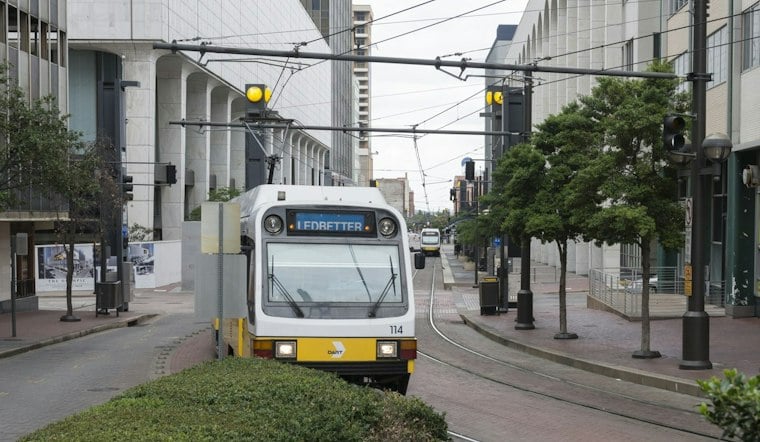
North Texas transportation leaders are drafting a wish list for the 2027 Texas Legislature that starts with a big number: about $200 million a year in state sales tax revenue they want sent back to the region instead of staying in Austin. The push comes from the Regional Transportation Council, the policy board steering transportation planning for a part of the state adding hundreds of thousands of new residents every few years.
Michael Morris, transportation director for the North Central Texas Council of Governments, said long-standing regional priorities could gain traction under incoming state leadership, according to The Dallas Morning News. Morris made the comments as officials begin shaping their agenda for the 90th Texas Legislature, which convenes Jan. 12 and will determine transportation funding decisions for 2028-29, as detailed by Fort Worth Report.
Funding all types of North Texas transportation projects is the top goal of the council's draft 2027 legislative priorities, the Fort Worth Report's account states. Rather than push for new taxes, Morris said the 45-member council wants existing state transportation funds redistributed more favorably to the region, including roughly $200 million a year in sales tax revenue currently collected but not returned to North Texas.
What the Region Is Asking For
The draft framework also calls for $100 million annually from the Texas Mobility Fund and $50 million each year from the Congestion Mitigation and Air Quality Improvement Program, per the same report. On top of that, the council wants a $100 million annual state budget rider dedicated to regional rail services, including the Heartland Flyer line connecting Fort Worth and Oklahoma City.
Officials are also seeking the return of $90 million in air quality fees to counties for local projects, the outlet reports. Morris said Texas may use up to half of the region's federal air-quality funds for other purposes, and he suggested conversations could emerge about returning more of that money to metropolitan regions for local transportation and air-quality work.
Morris spoke about the priorities at the Oak Cliff Chamber of Commerce Transportation Summit in Dallas on Oct. 23, where he said the council strongly advocates local control and control by local elected officials. He wants more state transportation money flowing directly to metropolitan planning organizations and local transportation officials rather than being routed through other channels.
A Political Landscape in Flux
Morris's optimism follows an election in which Democrats won the Texas governor's office, the lieutenant governor's office and control of the Texas House, while Republicans retained control of the Texas Senate. He said the shift could change the political environment surrounding the Texas Transportation Commission, the five-member panel that governs the Texas Department of Transportation, and around state transportation policy more broadly.
Still, Morris characterized the council's proposals as policy positions rather than political positions, and said the Regional Transportation Council sits in the middle of the road of good government policy, which he believes could help it regain traction regardless of which party holds power. He pointed to public-private partnerships and innovative financing methods as topics that could return to discussion. Stephen Mason, the council's chairman and mayor of Cedar Hill, leads the 45-member board, which the North Central Texas Council of Governments describes as the independent transportation policy body of the Metropolitan Planning Organization.
Growth Is Driving the Urgency
The stakes are tied directly to how fast North Texas is growing. The region is expanding from roughly 9 million residents toward an expected 12 million by 2050, according to the Dallas Morning News account; a separate report citing regional leaders put that long-range projection at growth from 8 million to 12 million residents by 2050, as detailed by dallasnews.com. North Central Texas Council of Governments data show the region added 203,786 residents in 2025 alone, pushing its population to an estimated 8,952,590 as of January 1, 2026, per the council's own figures.
That growth has come with a construction boom: the region added 42,582 multifamily housing units and 42,445 single-family homes in 2025, the council reports. NCTCOG has also identified a broader funding shortfall, and its Transportation Funding 101 primer lays out potential ways to close that gap.
Morris said North Texas cannot solve its congestion problems with a single transportation strategy and will need a variety of tools, including greater housing density around rail stations to make better use of the existing network. Local initiatives under the council's plan will seek transit-oriented development to boost housing density near 80 or more rail stations across the region, the Fort Worth Report notes.
How DART Fits the Bigger Picture
The Regional Transportation Council's push mirrors separate reform efforts underway at Dallas Area Rapid Transit. DART plans to pursue its own state legislative reforms in 2027, including a proposal to return 10% of sales tax contributions to all member cities over six years with help from the Regional Transportation Council, according to dallasnews.com's earlier report. DART is also expected to ask lawmakers to establish a regional rail authority that would combine several transit systems and to consider new revenue sources such as a vehicle registration fee.
The North Central Texas Council of Governments, which provides regional planning, coordination and technical expertise supporting the Regional Transportation Council, is a voluntary association of 238 local governments spanning 16 counties. Its broader Transit 2.0 plan calls for $217 billion in transportation projects through 2050, underscoring the scale of investment regional officials say will be needed as North Texas keeps adding residents, homes and traffic in the years ahead.





