

























































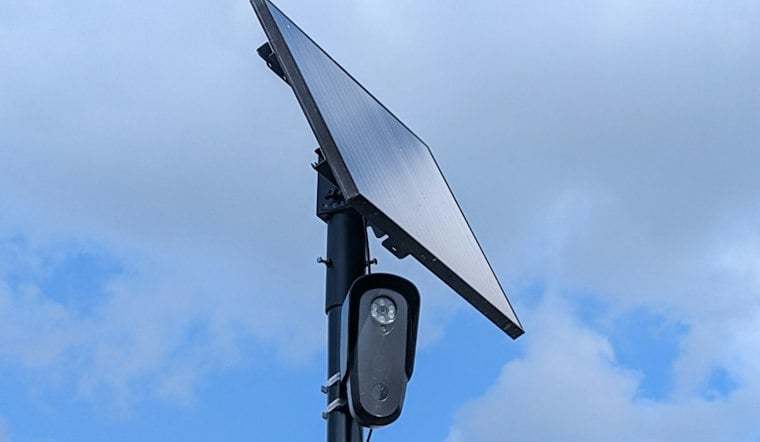
Norwalk is on track to swap out its Flock Safety license plate readers for cameras made by Axon Enterprise, under a proposed five-year, $5.5 million contract that would also fund new Tasers, body and dash cameras, a real-time crime center and a drone program for 911 calls. The city's Finance and Claims Committee unanimously approved the deal on Thursday, sending it to the full Common Council for a final vote.
The proposal would replace the city's 11 existing Flock cameras with Axon units installed at the same locations, according to Norwalk Current. Police Chief James Walsh told the committee on November 12 that the city is keeping the ALPR program in its current footprint and is not expanding it, according to reporting from The Hour. Norwalk signed its original Flock contract and installed those cameras in 2023.
What the $5.5 Million Buys
Beyond the plate readers, the Axon contract covers upgrades to the department's existing Axon equipment, including body-worn cameras, Tasers and dash cameras, along with a new virtual reality training module. It also funds a real-time crime center, which Axon describes as a centralized technology hub inside the police department that feeds live data to officers in the field, per The Hour's reporting. Walsh rated the contract's importance to policing and public safety at 9.5 out of 10, and said that without it, Norwalk would fall behind within two to three years, according to The Hour.
The package also includes drones deployed as part of a first-responder program, which Walsh said would launch when an emergency call comes in. Chief Financial Officer Jared Schmitt told the committee the new contract will cost roughly $1.1 million more over five years than the current Flock arrangement, an increase he said would be largely offset by savings, including more than $955,000 from cutting Flock cameras and other currently budgeted expenses, according to Norwalk Current.
Drones for Emergencies, Not Surveillance, Walsh Says
Walsh said the drones would not be used as a surveillance tool and do not rely on artificial intelligence. Instead, he said, they are meant only to get eyes on a situation, such as a structure fire, before first responders arrive. On the data side, Walsh said the proposed Axon cameras would not have any built-in federal access, and that Norwalk plans to use Axon data safeguards giving the city ownership of its own data. He added that every one of the department's license plate reader searches is already audited monthly for a valid purpose tied to a case number.
Not everyone at the meeting was reassured. Resident Jack Pavia raised concerns about the cost of the new cameras and their potential impact on the city budget, and said he worries about federal encroachment through recorded license plate reader footage. Rob Pratt, who said he has opposed automated license plate readers since the program began, urged the committee to delay approval for further public discussion and debate. Other residents asked the committee to postpone its decision on the contract altogether, per The Hour's account of the meeting. Flock Safety did not respond to an emailed request for comment, The Hour reported.
Part of a Wider Connecticut Shift
Norwalk's potential switch lands amid a broader reconsideration of license plate reader technology across Connecticut. Windsor did not renew its Flock Safety contract in July, and South Windsor, Killingworth and Manchester followed in ending their ties with the company, according to The Hour. Orange's Board of Selectmen voted unanimously this month not to renew its own Flock contract, after the town voted in August to pause any expansion of its license plate reader program.
By October, at least six Connecticut communities, including Windsor, Killingworth, Ledyard, Milford, Newtown and South Windsor, had ended or suspended ALPR use in 2026, according to CT Mirror. The outlet reported that three-quarters of Connecticut law enforcement agencies have collectively deployed 1,564 fixed ALPRs, with Flock supplying roughly 40% of them statewide. Connecticut's Police Officer Standards and Training Council has also issued an advisory recommending a seven-day default retention period for ALPR reads not otherwise preserved for an identified investigative purpose.
Norwalk would not be alone in choosing Axon as a replacement. Nationally, at least 56 municipalities deactivated, canceled or rejected Flock contracts in 2026, according to advocacy group DeFlock as cited by The Guardian, which reported that Axon had capitalized on Flock's troubles by replacing its competitor in at least seven municipalities across five states. Longmont's council voted unanimously to approve Axon cameras in March, adding requirements for data protection, transparency and a one-year evaluation, though the contract had not been finalized when The Guardian reported on it. Denver approved a similar swap in March, with Axon cameras set to retain data for 21 days there, shorter than the company's stated 30-day default. Syracuse's Common Council approved a five-year, $422,636.28 Axon contract in February after moving to revoke Flock's authorization, according to CNY Central. Fairfield already uses Axon rather than Flock for its own ALPR cameras, CT Mirror has reported.
What Happens Next
With the Finance and Claims Committee's unanimous approval in hand, the decision now moves to the full Common Council, which is set to meet next on November 24. Walsh has framed the vote as a choice about whether Connecticut's fifth-largest city keeps pace with evolving police technology, while residents like Pavia and Pratt continue to press for more scrutiny of the cost and privacy tradeoffs before any final sign-off.



