

























































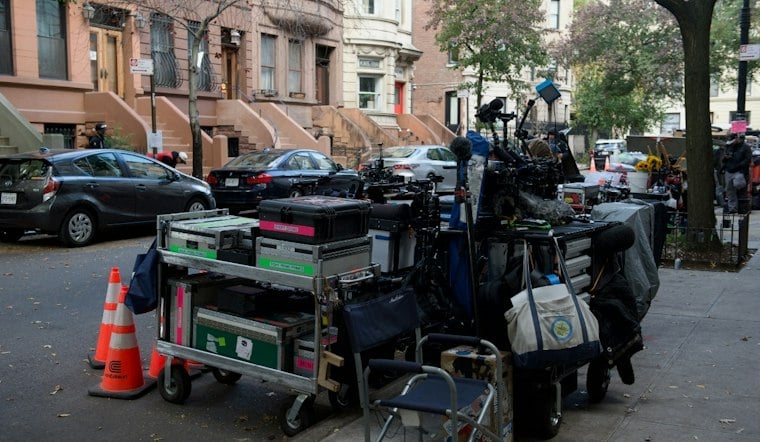
New York taxpayers are paying $68,538 for every full-time film job created by the state's film tax credit program, according to an estimate from watchdog group Reinvent Albany. The figure lands as New York's biggest industry-specific tax break, which hands out roughly $700 million a year for film and television production or post-production work, faces renewed scrutiny over whether the money actually pays for itself.
A Program Built on Billions, Returning Cents on the Dollar
As NEWS10 ABC reports, New York paid out $3 billion in film and television tax credits between 2018 and 2022 and recovered only about $1 billion in state tax revenue from the ripple effects of that spending, leaving the state with a roughly $2.1 billion net loss over that five-year stretch. A state-commissioned analysis by PFM Group Consulting found that for every dollar New York gave up in credits during that period, the program generated just 15 cents in direct state tax revenue — a figure that rises to 31 cents once indirect and induced jobs, meaning employees who don't work directly on a production but whose jobs stem from it, are factored in, according to Gothamist.
Reinvent Albany, which has tracked the program for years, says that assessment assumes every subsidized production would have skipped New York entirely without the incentive. The group also points to a separate, state-funded REMI analysis that paints a rosier picture: for 2021 and 2022, REMI estimated the credit generated $1.70 in combined state and local tax revenue for every dollar given up.
Studios Keep Cashing In as Credits Roll On
Despite the mixed returns, the money keeps flowing. New York taxpayers paid almost $1.2 billion in film and television subsidies in 2025, according to the station's reporting, with the biggest checks going to major studios: NBCUniversal/Comcast received $371 million across 25 projects, Warner Bros. Discovery took in $185.1 million across 10 projects, and Paramount/Skydance collected $137.1 million across 13 projects. Lionsgate and Netflix each received more than $100 million as well. Many of those 2025 payouts went to older projects that had already wrapped, per the same report, and some credits flowed even to productions with no in-state hiring at all — Netflix's One Piece received $1.72 million in state credits despite zero hires, the station reports.
New York lawmakers raised the base film and TV tax credit rate from 25 percent to 30 percent in 2023, and the Hollywood Reporter notes the state also increased the overall cap on its film and TV subsidy to $800 million, nearly double the 2022 amount — though the dossier does not reconcile that figure with the separately reported $700-million-a-year program size. The program is a $700 million-a-year tax break, and reporting is split on whether it runs through 2034 or has been extended to 2036.
Jobs Created, But at What Cost
The watchdog's per-job math draws on figures showing New York's film and television crews represented about 17,500 full-time jobs in 2025, logging 36.4 million eligible work hours. Separately, REMI's analysis of projects that started in 2023 and 2024 found that 93 percent of crew and editing pay and 95 percent of background actor pay stayed in-state, while 52 percent of top creative and management salaries went to out-of-state workers. Post-production work alone cost taxpayers $112,093 per full-time editing job in 2025. Film and post-production credits combined worked out to $70,139 per job across 18,167 full-time positions, by the same accounting.
Reinvent Albany identified six movies that cost taxpayers more than $100,000 per full-time job created, including the Warner Bros. Discovery production Companion, which the group says cost $114,548 per full-time job in Putnam County. Other high-cost films cited include Clean, Smile 2, The Accused, Too Many Christmases, and Queens of Christmas. The group has also criticized the economic multiplier used in the REMI analysis as grossly exaggerated and unrealistic.
How New York Stacks Up Nationally
New York isn't alone in grappling with these numbers. A 2018 study surveying state film and TV tax-credit programs nationwide found an average return of just 27 cents per dollar spent, Reinvent Albany notes, while a 2015 Maryland report found that state's program returned only 10 cents per dollar. By comparison, PFM estimated New York's Excelsior Jobs Program generates $4.25 in direct and indirect tax revenue for every dollar invested — a stark contrast to the film credit's returns.
Film and TV production employment grew 31.1 percent nationally between 2012 and 2022, but just 8.2 percent in New York over the same period, according to the study cited by the Empire Center for Public Policy. New York still ranks second nationally in film jobs behind California, holding a 17 percent share of the national total, according to PFM's findings reported by the Empire Center. A separate government-watchdog estimate previously pegged a proposed New York film credit's cost at $66,819 per job, which Reinvent Albany has compared with an estimated $19,329 per year for a job tied to Amazon's failed HQ2 project — a comparison the group has used to argue film jobs cost roughly three times more than the scuttled Amazon deal.
Officials Defend the Program
Citizens Budget Commission research director Sean Campion has argued that New York's broader economic development spending lacks evidence of effectiveness, saying the film tax credit evidence in particular shows no return on the state's investment. Campion has urged lawmakers to prioritize living costs, job training, schools, roads, and lower business costs over business subsidies like the film credit.
A spokesperson for Governor Hochul's office defended the program, saying the credits preserve good jobs, local spending, and economic opportunity in communities across New York. Supporters of the credit also point to PFM findings that film jobs continued growing in Michigan, Florida, and Indiana even after those states ended their own tax breaks — though New York's own spending in the sector rose sharply in the third quarter of 2026, up 87 percent to an estimated $1.61 billion, according to data from ProdPro cited in the reporting, trailing California by just $147 million for the quarter.



