

























































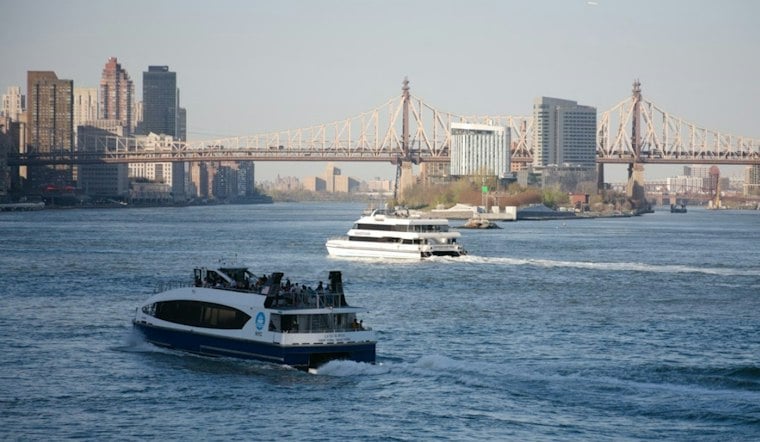
NYC Ferry is putting its quieter winter schedule to work, turning a portion of its fleet into temporary marine science classrooms for New York City public school students. The Floating Classroom program aims to serve more than 10,000 K-12 students a year, with 90-minute voyages built around marine biology, climate change and New York Harbor careers.
The partnership brings together NYC Ferry, the New York City Economic Development Corporation, Hornblower Group and the Billion Oyster Project, according to Oceanographic Magazine. As part of the arrangement, the Billion Oyster Project will now serve as NYC Ferry's Marine Restoration and Education Partner, leading voyages with its own educators. As reported by New York Daily News, the program is expected to run weekdays from 10 a.m. to 3 p.m. between Labor Day and Memorial Day, with capacity for 300 students each day, and city agencies and nonprofits plan to announce the initiative at a news conference at the Dumbo ferry terminal in Brooklyn Bridge Park. The Floating Classroom ferry will travel into New York Harbor toward Governors Island as part of the voyages.
Why the Harbor Doubles as a Lesson Plan
Ann Fraioli, education director at the Billion Oyster Project, told the Daily News that many New Yorkers have never actually experienced their own harbor, and that students learn differently when they can see marine life and water quality firsthand. The organization says it has already reached more than 66,000 students and engaged 1,793 teachers across a network of more than 109 partner schools, per Oceanographic Magazine. Its website states it has built more than 80 classroom-tested lessons centered on New York Harbor and offers teacher training that carries CTLE credit, according to the Billion Oyster Project. The nonprofit says its broader goal is to reach one million students by 2030.
Those lessons extend beyond the water itself. The Billion Oyster Project's STEM education materials note that students explore marine science, restoration, aquaculture, environmental stewardship and waterfront careers through its programming. The group also partners with the Urban Assembly New York Harbor School, a maritime-focused public high school that prepares students for careers on the water. More than 50 graduates of that school now work at NYC Ferry as captains and deckhands, the Daily News reports, and the ferry service's Vessel Operations interns train on board alongside NYC Ferry crew, according to Oceanographic Magazine.
A Maritime High School on Governors Island
The Harbor School itself has roots that predate the ferry partnership. It relocated to Governors Island in 2010, moving into a renovated former Coast Guard building, and its curriculum focuses on marine science, technology and policy, according to Governing. Every morning, more than 500 students, faculty and staff converge on the Battery Maritime Building in Lower Manhattan to catch the ferry, and students can take an eight-minute boat ride to reach classes, as Hakai Magazine notes. The school's Harbor SEALs program conducts an ongoing study of the harbor's health, documenting debris and monitoring water quality, and students can take paid summer internships with the Billion Oyster Project, with some graduates landing full-time jobs there afterward.
The oyster-restoration work tied to those programs has scale behind it. The Billion Oyster Project says 25 million oysters have been replanted in the estuary since 2008, per Hakai Magazine.
Filling Winter's Empty Seats
The timing lines up with NYC Ferry's slow season. The service says ridership tends to decrease in the winter months, with its highest ridership typically in July and August, according to NYC Ferry. During colder months, the agency runs less weekend and off-peak service while maintaining the same level of peak weekday frequency, and its Winter 2026 schedule took effect November 2, adjusting weekend service on all routes to match seasonal ridership patterns, per the same source.
The push for hands-on, outside-the-classroom learning also comes as city schools weigh how students spend their time away from screens. NYC public schools are seeking to curb excessive screen time following the COVID-19 pandemic, and the Daily News reports that Mayor Mamdani and Kamar Samuels announced a ban on solo screen time through second grade, along with 30-to-45-minute limits in grades 3 through 5 and 6 through 8. A local parent movement has pushed for projects that promote play and learning outside traditional classrooms, the outlet notes, a backdrop that helps explain the appeal of trading desks for ferry decks and harbor views.





