

























































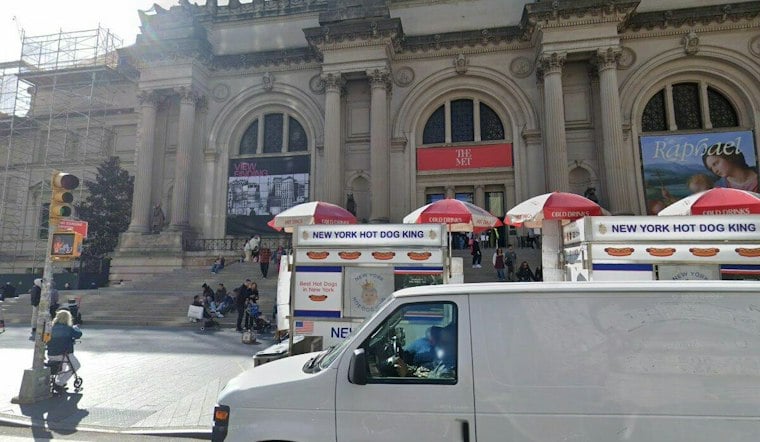
A coalition of community organizations wants Mayor Zohran Mamdani to make good on a promise many New Yorkers do not realize already exists: free admission at 17 of the city's biggest cultural institutions, including The Met, the Brooklyn Museum, the American Museum of Natural History and the Bronx Zoo. The push, known as the Free Admission Campaign, says these places were meant to be open to residents without a price tag attached, and it is now asking the mayor's administration to put that in writing and enforce it.
The campaign sent a letter to Mamdani and his administration on Tuesday, urging him to codify free admission for New Yorkers at the 17 institutions, according to a release distributed via PR Newswire. The letter was signed by the Community Service Society of New York, Grand Street Settlement, NYC Community Board 11, The Workers Circle and the Alliance for Quality Education, and it arrives alongside a public petition that organizers say has collected more than 800 signatures.
According to amNewYork, the campaign argues that existing laws and agreements already include free-admission provisions for these venues, but that state and city officials have not put mechanisms in place to ensure those commitments are actually enforced. The campaign is asking institutions to honor commitments that organizers say vary from venue to venue, and is calling on government leaders to clarify and enforce those obligations so New Yorkers have consistent access rights across the board.
Why Free Days Are Hard to Find
Some of the 17 institutions already offer free days, free hours or pay-what-you-wish admission, but the campaign says those options often come with restrictions and are not always easy to find. Campaign founder Pat Nicholson said New Yorkers should know what they are entitled to and feel welcome walking in the door, and that pay-what-you-wish policies can feel uncomfortable for people who cannot actually afford to pay. Nicholson has also estimated that the institutions receive roughly $700 million a year in public subsidy because they are allowed to operate on public parkland and in city-owned buildings rent-free, per the same report.
That framing echoes a point made in a 2023 opinion piece in City & State New York, which noted that the Metropolitan Museum of Art was the first of the 17 institutions to move to a pay-what-you-wish-but-you-must-pay-something policy. That shift traces back further still: according to Hyperallergic, a 2016 legal settlement led the Met to change its signage language from recommended to suggested admission. The same outlet reported that the Brooklyn Botanic Garden has given away 20% of its daily general-admission tickets since 2020 without requiring proof of a New York address.
A Dispute Over the Bronx Zoo's Free Days
Nowhere is the underlying disagreement sharper than at the Bronx Zoo. A November 2023 report commissioned by the Free Admission Campaign concluded that the zoo appeared to be obligated to provide three free admission days per week, while acknowledging more information was needed to fully determine its obligations, according to the Bronx Times. The zoo disputed that conclusion, telling the outlet that state law does not require more than one free day per week.
In practice, the zoo currently offers free admission on Wednesdays, but the Bronx Times reported that those tickets require advance registration, are limited to four per visit, and do not cover every attraction on site. New York Education Law §258, as published by the New York State Senate, states that trustees of an institution supported wholly or partly by public money may close collections at certain hours for specified purposes and charge admission then, so long as free public use is preserved at reasonable or specified hours — language that leaves room for interpretation rather than a single fixed answer.
The Case for Codifying Access
Organizers say the institutions were intended as park amenities for New Yorkers, created to function as a kind of park education campus supporting the public school system and free access to art, culture, history, science and nature. The city is home to hundreds of cultural institutions altogether, including galleries, theaters, dance companies, museums, concert halls, zoos and botanical gardens, and admission policies vary by institution and can depend on a visitor's age or residence. Some venues also require separate ticket purchases for special exhibitions and programs even when general admission is free or discounted.
The city's Department of Cultural Affairs says it supports more than 1,000 cultural nonprofit organizations spread across the boroughs, many of which already offer free or reduced-cost programming, the department has noted, per amNewYork's reporting. The agency has also said individual venues are responsible for any changes to their own admission policies. amNewYork reported it was awaiting a response from the mayor's office on whether the administration would review its agreements with the 17 institutions and work to ensure free admission for city residents.
Voices Behind the Letter
David Jones, president and CEO of the Community Service Society of New York — an organization that works to help underserved communities build economic opportunity — said cultural access should not depend on a person's ability to pay, especially amid rising living costs. Yvonne Stennett, executive director of the Washington Heights-based Community League of the Heights, said cultural and educational experiences enrich the lives of children and families, and that honoring free-admission agreements could help bring those opportunities to the communities that would benefit most.


