

























































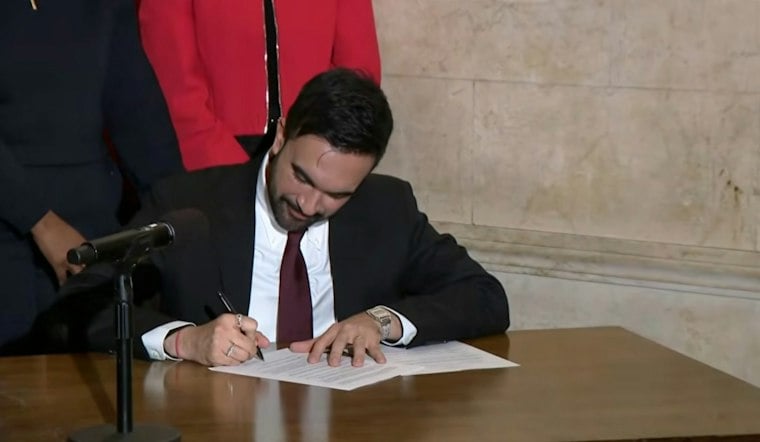
New York City lawmakers have cleared the way for community groups to leapfrog private investors when distressed apartment buildings go up for sale, under a bill Mayor Zohran Mamdani says he plans to sign. The Community Opportunity to Purchase Act, or COPA, is designed to stabilize and expand the city's supply of affordable, community-controlled homes.
The City Council approved the measure on Thursday, October 22, with 38 members voting yes, nine voting no and two abstaining, according to The New York Times. Mamdani said the same day that he would sign it, a plan reaffirmed in the CBS News segment. The bill, formally known as Intro 905-A, was introduced by Councilmember Sandy Nurse, a Brooklyn Democrat, and carried 33 Council sponsors along with the mayor's backing, per Gothamist's reporting on the Mamdani-backed housing bill.
COPA applies to residential properties with at least four units that are in financial or physical distress, as well as buildings with fewer than 100 units that carry certain affordable-housing mandates, the Times reports. At a September hearing, city housing commissioner Dina Levy estimated that roughly 2,100 residential buildings across the five boroughs could fall under the law's scope, according to the same account.
How the Purchase Window Actually Works
Under the mechanics laid out by the Times, qualified buyers get 20 days to submit a statement of interest once a covered property hits the market. The seller then has five days to hand over additional information, after which buyers have 70 days to put together an actual offer. The first qualified buyer to make an offer is also given a chance to match any competing bid from a buyer not on the qualified list, a provision meant to keep community groups from simply being outbid by deeper-pocketed investors.
The Council passed an earlier version of COPA last year, but then-Mayor Eric Adams vetoed it just days before leaving office, the outlet's report notes. The revised bill that passed last month picked up support this time from the Real Estate Board of New York, which described it as a more targeted and practical version of the earlier proposal. Cole Schotz, a law firm tracking the legislation, reports that the law is expected to take effect one year after enactment.
A Response to a Growing Vacancy Problem
The bill's backers frame it as part of a broader push by cities and states to assert more control over corporate landlords and the housing market amid high housing costs nationwide, the Times reports. That framing lands against a backdrop of rising vacancy: up to 57,000 rent-stabilized units currently sit empty citywide, a 70 percent increase since 2019, according to the New York State Division of Homes and Community Renewal as cited by Commercial Observer.
New York's version of the law was modeled on one San Francisco adopted in 2019, which gave local nonprofits a first right to buy multifamily buildings when they came up for sale, the Times notes. An op-ed published on Next City reported that by December 2025, San Francisco's COPA purchases had preserved 436 homes for more than 1,000 residents, while the city's broader real estate market remained active, with some of the fastest building sales in the country. The same piece described the West Coast model as giving vetted nonprofits early notice of a sale, a short window to submit a first offer, and the ability to match third-party bids, with properties moving quickly to the open market if no qualified nonprofit steps forward.
That op-ed also claimed San Francisco's law has faced no legal challenges and that the local real estate industry simply folded its requirements into standard business practice, though those specific claims come from the op-ed itself rather than independent verification. The New York City Council's own announcement describes COPA as a new tool to stabilize and preserve affordable housing, giving community groups a mechanism to intervene before distressed buildings land in the hands of out-of-town investors or speculative buyers.





