

























































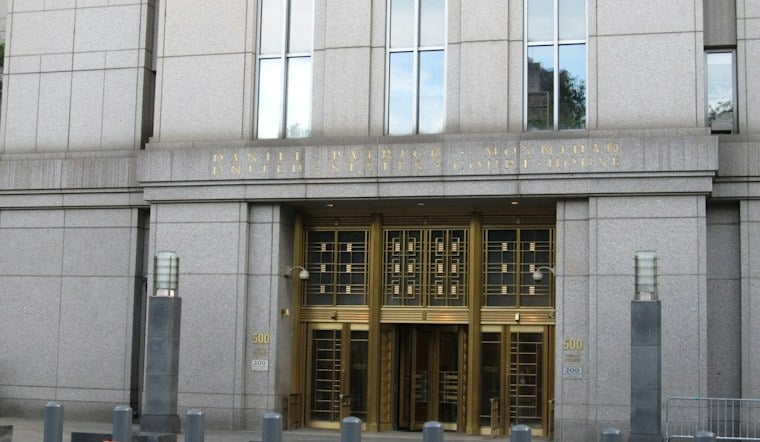
A Manhattan renter is suing one of the country's biggest rental guarantor companies, claiming exclusive deals with landlords forced her to pay steep fees just to get approved for an apartment. Naifa Al-Anbar filed a proposed class action against Guarantr Inc., which does business as TheGuarantors, in Manhattan federal court on November 18, alleging the company's contracts with building owners block renters from shopping around for a cheaper alternative.
Al-Anbar says she had to apply for TheGuarantors' rental approval services in June to secure a Manhattan apartment, after her landlord required it under what the lawsuit describes as an exclusive agreement, as reported by Gothamist. Her complaint claims those exclusive arrangements bar landlords from entering similar referral deals with competing services and prevent applicants from comparison shopping for a better price, according to the complaint filed in Al-Anbar v. Guarantr Inc. The suit alleges one clause in TheGuarantors' landlord contracts states, “You shall not enter into any similar referral arrangements.”
The financial stakes described in the complaint are significant. It alleges renters can pay up to 250% of one month's rent for TheGuarantors' services, and cites an example in which a $3,000-a-month apartment could cost a renter $7,500 upfront. Gothamist reported that TheGuarantors typically charged fees ranging from 50% of monthly rent to a much higher amount in 2024, while the company has said it considers each applicant's financial profile, potential monthly rent, and other factors when pricing its service, per Gothamist's reporting.
Why Renters Turn to Guarantor Companies at All
The underlying problem the lawsuit points to is familiar to many New Yorkers: landlords typically require tenants to earn at least 40 times the monthly rent, the complaint states, using a hypothetical Manhattan studio renting for roughly $3,500 a month as an example — a threshold that would equate to needing an income of $140,000. That's nearly double the city's median income of about $80,000, per Census data cited by Gothamist. With Manhattan's median asking rent around $5,000 a month and Brooklyn's near $4,000, per StreetEasy figures cited by Gothamist, many applicants simply cannot clear that bar.
That gap is exactly where institutional guarantors step in, offering to guarantee a tenant's rent for an upfront fee instead of requiring a personal co-signer. TheGuarantors executive Jesse Schmidt described the product, per Gothamist, as a resource for renters who cannot meet income requirements or find a co-signer, and said the company had agreements with owners and managers of about 700,000 New York City apartments as of 2024. It remains unclear how many of those agreements are exclusive, according to Gothamist's reporting. Brick Underground has reported that institutional guarantors such as Insurent, TheGuarantors, Rhino and PandaGuarantee carry income requirements far less strict than landlords' 40-times-rent standard, and that their one-time cost is generally equal to one month's rent — well below the 250% figure alleged in Al-Anbar's suit. The outlet has also noted that use of third-party guarantors has climbed to levels one broker said he'd never seen before, with institutional guarantors now accepted by thousands of buildings citywide, a trend that accelerated during the pandemic. More than 65% of New York City residents are renters, according to StreetEasy.
A Second Antitrust Fight in Delaware
Al-Anbar's case isn't the only legal challenge TheGuarantors is facing. Competitor Cosign filed a separate antitrust complaint against the company in Delaware federal court on November 11, alleging TheGuarantors used exclusionary contracts and smear tactics to protect what it calls a monopoly, according to MLex. Cosign's lawsuit claims TheGuarantors controls roughly two of every three rental approval services contracts nationwide, with a market share of nearly 90% in Washington, D.C., nearly 82% in New Jersey and about 78% in Pennsylvania, Gothamist reported. Cosign's lawsuit does not list contract share figures specific to New York, according to Gothamist. Al-Anbar's complaint separately alleges TheGuarantors holds at least a 66% national market share.
Attorney Blake Yagman, who is representing plaintiffs in the case, said exclusive dealing removes price competition and prevents tenants from shopping around for alternative guarantor or surety services, Gothamist reported. Yagman told the outlet he had used TheGuarantors himself to secure an apartment after law school and said the company raised prices after obtaining more exclusive agreements with owners and managers. He is seeking a court order banning the exclusive deals and allowing tenants to access multiple guarantor services, according to Gothamist's reporting. TheGuarantors did not respond to requests for comment about the new lawsuit and its allegations, per the same account.
City Officials Already Eyeing Tenant Fees
The lawsuit lands as City Hall has been turning up scrutiny on rental costs more broadly. Mayor Zohran Mamdani has sought to crack down on tenant fees and this year launched Rental Ripoff tenant resource fairs and hearings aimed at learning about the costs renters face, Gothamist reported. A Department of Consumer and Worker Protection spokesperson, Milo Gringlas, said the agency is aware that consumers are allegedly required by landlords to use third-party guarantor products and remains concerned about potential deception and consumer harm, according to Gothamist.
That scrutiny follows other recent moves to rein in rental costs in the city. The New York City Council approved the Fairness in Apartment Rental Expenses Act in 2025, which prohibits brokers from charging tenants fees unless the tenants explicitly hired them — aiming to limit renters' upfront costs and shift the burden to landlords, according to Gothamist, in a city where broker fees are typically set at 15% of annual rent. New York State tenant protection laws enacted in 2019 also limit landlord security deposit charges and require landlords to return deposits, or provide formal withholding reasons, within 14 days, Gothamist reported. Whether similar guardrails will eventually apply to guarantor fees remains an open question as both the Al-Anbar and Cosign cases move through federal court.




