

























































Keith McNally, the 75-year-old restaurateur credited with shaping downtown Manhattan nightlife, says he broke his hip and shoulder after getting swept up in a chaotic street protest during a trip to Paris. McNally posted a hospital-bed photo of himself on Instagram, telling followers he went to the French capital to see the Cézanne exhibition and instead found himself caught in a riot.
According to the New York Post, McNally said a stroke has already left him barely able to walk or run, and that he was pushed down during the chaos, breaking his hip and shoulder. He told the Post in a separate statement that he had accidentally gotten caught up in a protest that turned chaotic when people ran as police arrived. McNally said a doctor has instructed him to lie horizontally for eight to 12 weeks to recover, and that he regrets nothing about the incident.
A Famous Name in Downtown Dining
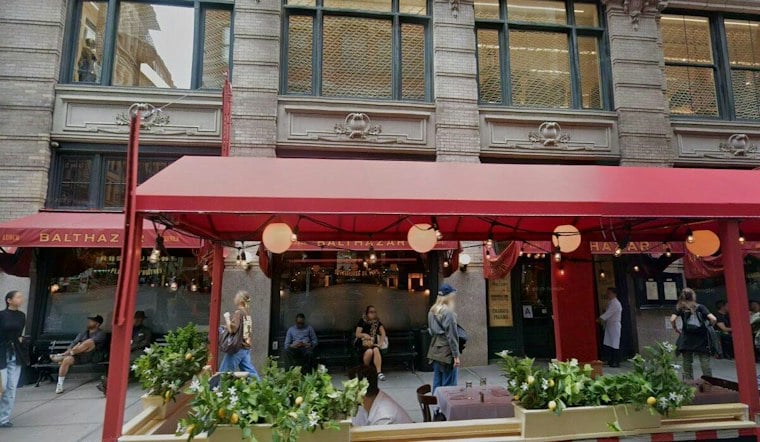
McNally is known for shaping nightlife in Lower Manhattan, opening Balthazar, Minetta Tavern, Pastis, Pravda and other venues beginning in the 1980s. The New York Times once dubbed him “the restaurateur who invented downtown.” He published a memoir, “I Regret Almost Everything,” in 2025, a title that now reads with some irony given his latest remarks about the Paris incident.
Weeks of Unrest in the French Capital
The seed report notes that protests in Paris have concerned poor school conditions and the cost of living, and have continued since September 2026. The specific demonstration referenced took place in Paris on November 7, 2026, one of several large gatherings that have rattled the city in recent months.
On that day, France’s interior ministry counted 146,000 demonstrators nationwide, including 46,000 in Paris, while a youth inter-union group claimed far higher turnout of 250,000 nationwide and 75,000 in the capital, according to Le Monde. The authorized march proceeded calmly along a route from Place de la République to Place de la Nation via Boulevard Voltaire, a path confirmed by Le Parisien, but tensions broke out during the dispersal. The Paris police prefecture said about 200 people it described as violent attacked law enforcement and set trash bins on fire, per the same Le Monde report, which also put the nationwide arrest count at 232 by 6 p.m. that day.
Heavy Security Deployment Ahead of the March
Authorities had braced for the demonstration well in advance. The Paris police prefecture banned undeclared gatherings in several parts of the capital beforehand, according to Le Parisien. France's interior minister also announced a nationwide weekend deployment of 70,000 police officers and gendarmes, along with 25 Centaure intervention vehicles and 15 water-cannon vehicles, though the outlet noted no specific details were given for the Paris deployment itself.
A separate Thursday demonstration called by unions and backed by student movements drew sharply divergent crowd estimates, ranging from 65,000 according to police to 350,000 according to social organizations, Le Parisien reported.
A National Tally of Arrests
The scale of the unrest has drawn scrutiny from France's own government. Justice Minister Gérald Darmanin told parliament this week that police had arrested or detained about 15,000 people during the recent wave of cost-of-living and high-school protests, according to Le Monde's English-language coverage. Darmanin said 7,184 of those detentions stemmed from protests over inflation and salaries since October 17, while another 8,000 were tied to high-school student protests over school conditions. He added that the October 17 demonstrations, when serious riots erupted in several cities, accounted for roughly two-thirds of all arrests and detentions recorded.





