

























































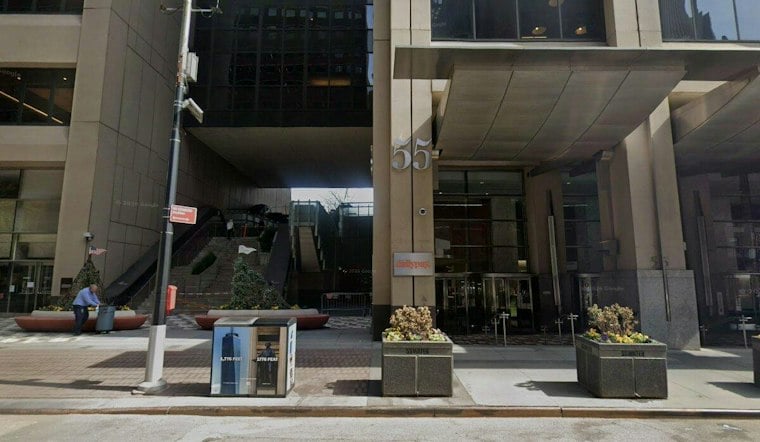
The company now running nearly every red-light, speed, bus-lane and weight-limit camera in New York City is facing fresh questions about its past relationship with Flock Safety, a surveillance firm that dozens of municipalities nationwide have cut ties with over privacy concerns. Verra Mobility, which signed a five-year, $998 million contract with the city's Department of Transportation earlier this year, has said its hardware has never been integrated with Flock. But a state assemblywoman from Queens says the company needs to be upfront about whatever connection did exist.
A Nearly $1 Billion Deal to Watch the Streets
Verra Mobility finalized the contract with the New York City Department of Transportation in February, covering the city's red-light, speed and bus-lane enforcement systems along with cameras that enforce weight limits on the Brooklyn-Queens Expressway. The deal, effective since January 1, took over after Verra's prior city contract expired in December 2025 and came with an option to extend for another five years. The company said it was chosen through a competitive request-for-proposals process, and the program is meant to grow red-light camera coverage from 150 locations to 600 signalized intersections across the five boroughs.
According to the New York Post, which first reported on the matter, Verra Mobility was listed as a Flock partner on Flock's website until earlier this year, and a blurb on Flock's site had described Verra's automated traffic enforcement systems as integrated with the Flock platform. That blurb has since been deleted, and the Post reported that other vendor names — Sensys Gatso, RedSpeed and Altumint — also appear to have been removed from Flock's website. The Post reported that a Verra Mobility representative said the company's hardware has never actually been integrated with Flock's systems.
Florida Bids and a Company's Denial
Per the Post's reporting, Verra Mobility and Flock joined forces on bids for government contracts as recently as 2025, including pursuits of traffic-enforcement work for schools and municipalities in Florida. The Post reported that Verra sought a contract in Greenacres, Florida in April 2025 for school-zone speed-safety cameras, and that a public-meeting agenda from that year described Verra's system as integrated with Flock and other data providers. A Verra Mobility representative told the Post that the company has since stopped pursuing Florida bids that involved Flock.
Verra has also said that under its New York City contract terms, it cannot share city camera data with third parties such as Flock, and that the city's Department of Transportation owns all data collected by the cameras under the five-year agreement, the Post reported. A Flock representative did not respond to the Post's request for comment.
A Lawmaker Pushes for Transparency
New York State Assemblywoman Nily Rozic, who represents Queens and chairs the Assembly's Consumer Protection Committee, told the Post that companies must be transparent about their relationship with Flock. She said transparency and accountability should be non-negotiable when companies are monitoring city streets, and that removing information about a vendor's practices raises questions that require clear answers.
Rozic and other state lawmakers are scheduled to hold a hearing in Albany next month on potentially limiting the use of license-plate readers. She said the hearing should address these concerns and help balance responsible use of technology with privacy and oversight, according to the Post's reporting.
Flock's Mounting Troubles Beyond New York
Flock, which has said it holds contracts with more than 5,000 law enforcement agencies nationwide, has faced a wave of local backlash over the past year. NPR reported in February that at least 30 localities had deactivated their Flock cameras or canceled their contracts since the beginning of 2025, driven partly by revelations that federal agencies, including U.S. Border Patrol, had searched data gathered by local Flock cameras. Flock acknowledged pilot programs with U.S. Customs and Border Protection and Homeland Security Investigations, while maintaining that each customer has sole authority over if, when and with whom its information is shared, per NPR's reporting.
In New York, at least six upstate municipalities have canceled or declined to renew their contracts with Flock, including Syracuse and Ithaca. The Ithaca Common Council voted on March 4 to end the city's agreement with Flock, citing privacy and data-sharing concerns, according to WSKG. That same report named Austin, Texas; Flagstaff, Arizona; Eugene, Oregon; and the Village of Saranac Lake, New York as other municipalities that have voted to stop or pause their relationships with the company.
A National Pattern of Cities Pulling Back
The retreat from Flock extends well beyond New York. The Los Angeles Times reported that dozens of cities and counties nationwide have ended or paused their Flock relationships, with at least a handful signing on with the rival firm Axon instead. The crowdsourced DeFlock database puts the number even higher, estimating that about 100 cities have deactivated their Flock cameras, rejected new deals, or canceled existing agreements, per the Los Angeles Times. Los Angeles itself declined to renew its Flock agreement over concerns that license-plate data could be funneled to immigration enforcement, and its City Council has since approved a pilot program attaching hundreds of Axon license-plate readers to city streetlights, according to the same report.
Not every city has moved the same direction, and the response has been far from uniform. The Guardian reported that some municipalities are shutting down their cameras and physically removing them from lightpoles, while others are signing new contracts with Flock but demanding stronger language governing how data gets shared. The American Civil Liberties Union has gone further, alleging that Flock has repeatedly misled city councils, police departments and the public about its business practices, safety record and privacy protections — and noting that Flock changed its standard terms and conditions at least four times in the seven months leading up to a February 16 agreement, according to the ACLU.
Elsewhere, the fallout has played out in messier terms. In Virginia, Henrico Police announced their intent to terminate the county's Flock contract, but more than three weeks later, all 128 cameras remained physically installed, with officials saying they had simply been deactivated, according to the Henrico Citizen. In Pittsburgh, meanwhile, USA Today drew a distinction between that city's red-light camera program — which is run by Verra Mobility — and the license-plate-reader technology Flock sells, underscoring that not every automated traffic camera on American streets is tied to the embattled surveillance company.





