

























































New York City's bill for covering its own employees and retirees just crossed $10 billion, and city officials say the number keeps climbing faster than paychecks or inflation. The City Council says the city's total spend on employee and retiree premiums reached $10.03 billion in Fiscal Year 2025, up 15% over the past two years — a jump that lands squarely on a city budget already stretched thin.
Premiums Climb Year After Year
According to a statement from the New York City Council, spending on active-employee and pre-Medicare-retiree premiums alone hit $10.03 billion in FY2025, a 7.3% increase from FY2024 and a 15.3% jump over two years. That figure had been $8.7 billion in FY2023 and $9.34 billion in FY2024, a 7.4% increase from the prior year. Spending on Medicare-eligible retiree coverage followed a similar trajectory, rising from $539.5 million in FY2023 to $571.5 million in FY2024 — up 5.9% — and then to $643.1 million in FY2025, a 12.5% year-over-year increase and 19.2% climb over two years. The city provides medical coverage for 1.2 million municipal workers and retirees.
A newly surfaced report attributes the rising costs to something other than more frequent trips to the doctor. As reported by Crain's New York Business, prices — not usage — are behind rising costs for city workers, with outpatient costs identified as a major driver of the city's overall health spending.
Wild Price Swings for the Same Procedure
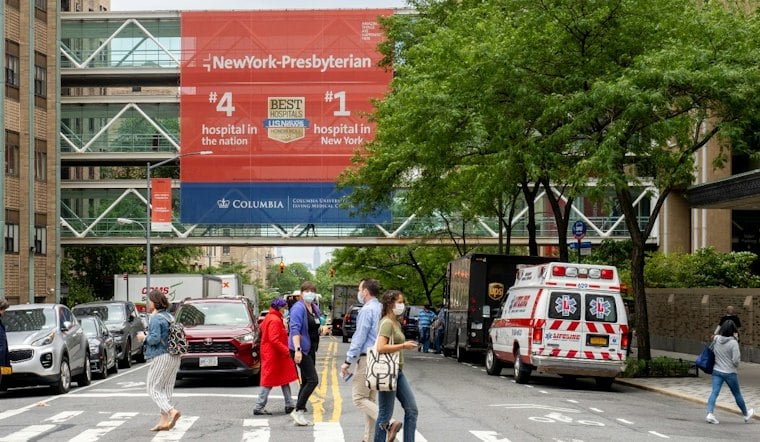
Just how much prices can swing for identical care in the same city is striking. The Lown Institute found that a C-section negotiated with insurer Emblem at St. Barnabas Hospital cost $7,332, while the same procedure at NewYork-Presbyterian for patients with Healthfirst insurance ran $63,753. The same analysis found that average prices for inpatient procedures at NYC Health + Hospitals, the city's public system, were 76% of Medicare rates, while NewYork-Presbyterian averaged 336% of Medicare — a gap the Lown Institute says reflects that prices, not utilization, are the main driver of rising costs.
That price variation isn't unique to New York. The same report cited a Patient Rights Advocate finding that appendectomy prices at Indiana hospitals varied by 27 times, and cervical spinal fusion prices at Kansas hospitals varied by 177 times — a sign that wide pricing swings for identical procedures are a national pattern, not just a five-borough problem.
New York's Costs Already Among the Nation's Highest
New York's overall healthcare spending was already notably high well before this latest premium jump. The Community Service Society of New York found that by 2020, the state's per-capita health care spending reached $14,000 — 37% above the national average and the second-highest rate in the country. The same report found hospital care spending in New York rose 73% from 2010 to 2020, far outpacing the 31% rise in median household income and the 17% increase in the Tri-State-area consumer price index over that span, with hospital prices appearing to be a significant driver of the increase.
The costs of individual coverage reflect that same pressure. New York's average annual family health insurance premium hit $26,400 in 2023, tying Massachusetts for the second-highest in the nation, the Community Service Society report found.
Outpatient Visits Cost Four Times More Than a Doctor's Office
Where care happens matters enormously for the final bill. A Brown University School of Public Health analysis of 2022 insurance claims, cited by WAER, found that outpatient hospital visits in New York cost an average of $452 per patient, compared with just $108 at a doctor's office. The Greater New York Hospital Association has said facility fees charged at hospital-based outpatient sites help cover funding shortfalls from Medicaid and Medicare, the station reported.
Private-sector workers haven't necessarily felt the full weight of rising premiums directly out of pocket, even as the headline numbers climb. The Lown Institute noted that while premiums rose across every market examined, private-sector employee contributions actually decreased in 2024 — meaning employers, including the city as an employer, are absorbing a larger share of the increase.
The dossier underlying the city's figures does not establish whether the often-cited $10.3 billion headline for the city's total healthcare spending last year refers to the same measure as the $10.03 billion in employee and retiree premiums reported by the Council. What is clear is that whichever figure is used, the city's health costs have become one of the most closely watched pressures on its budget heading into the next fiscal cycle.





