

























































Nearly half of the NYPD officers who moonlight as off-duty private security guards exceeded weekly work limits and were often denied the pay they were owed, according to a city investigation released Thursday. The findings land just over a year after an off-duty officer working one of these details was killed in a mass shooting in Midtown Manhattan, a tragedy that pushed city investigators to take a hard look at how the program is run.
Watchdog Says NYPD Failed to Police Its Own Side-Hustle Program
The Department of Investigation Office of the Inspector General released the report Thursday, finding that the NYPD allegedly failed to adequately police its private-security program, known as Paid Detail. As amNewYork reported, the inquiry found that nearly half of NYPD Paid Detail officers exceeded weekly work limits and were often denied their pay. Officers moonlighting as private security reportedly bypassed preventative measures and were scheduled over weekly work limits at least once over a three-year span, per the investigation.
Paid Detail allows uniformed, off-duty officers to work private security jobs, a program that has existed since it launched in the spring of 1998 and remains open to members of the force from police officer up through captain, according to amNY's earlier reporting on the program. The department collects a 10% administrative fee from each assignment, and the NYPD reportedly collected $3.5 million in Paid Detail administrative fees during the first eight months of fiscal year 2026. A 2025 internal document listed hourly pay rates alongside those fees: police officers and detectives earn $49 per hour with a $4.90 administrative fee, sergeants receive $61 per hour with a $6.10 fee, lieutenants earn $68 per hour with a $6.80 fee, and captains and higher ranks earn $87 per hour with an $8.70 fee.
Vendors Routinely Late on Payments, Rarely Punished
Paid Detail vendors are meant to pay officers within 15 days and become delinquent after 30 days, but the NYPD rarely suspends vendors that fall behind on payments, the investigation found. A 2025 New York Post report said nearly 6,000 Paid Detail officers went unpaid for millions of dollars of work from vendors including Target.
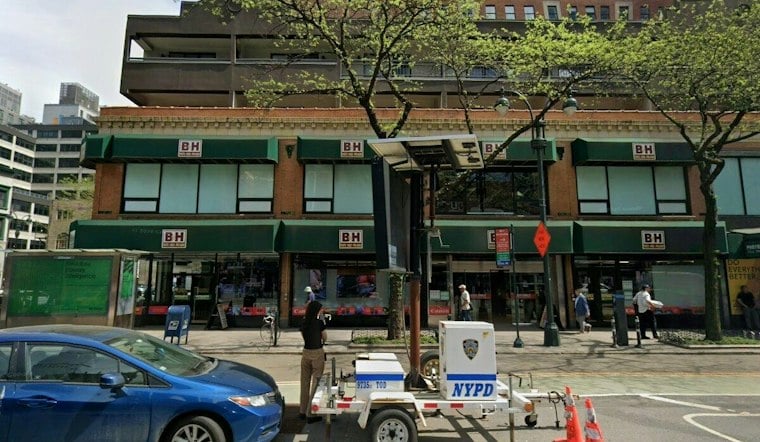
That echoes a pattern documented in recent class-action lawsuits alleging that vendors failed to pay participating officers. One proposed class action alleged that New York City, the NYPD and Paid Detail vendors had routinely failed to pay off-duty, uniformed security guards until weeks or months after their regularly scheduled paydays, according to classaction.org. That same lawsuit cited an officer who worked an 11.5-hour detail at B&H Photo on May 22, 2018, and wasn't paid until around six weeks later. Whole Foods eventually agreed to pay $185,000 to settle its part of the case, which involved nearly 400 New York City police officers, while TD Bank agreed to a far larger $8,718,906 settlement covering officers who provided services at its locations between July 3, 2014 and September 22, 2023. A separate lawsuit, reported by Bloomberg Law, alleged that Target Corporation, The New York Times Company and the NYPD failed to pay officers for off-duty security work in a case that sought to represent as many as 6,000 officers.
Eleven Recommendations Follow Deadly Midtown Shooting
The Department of Investigation's review grew out of public attention following the July 2025 fatal shooting in Midtown Manhattan, in which four people were killed, including off-duty NYPD Officer Didarul Islam, who was working a Paid Detail assignment at 345 Park Ave. at the time. The resulting report includes 11 recommendations for the NYPD, including that the department investigate how officers bypassed weekly work-limit safeguards and establish clearer procedures for vendors who fail to pay. DOI Commissioner Nadia I. Shihata said the recommendations aim to strengthen Paid Detail policies and safeguard participating officers.
Police Benevolent Association President Patrick Hendry, whose union's officers have worked without a contract since August 2025, said Paid Detail is no substitute for adequately staffing and compensating police officers. Hendry said he believes better city salaries would reduce officers' reliance on paid-detail work to make ends meet. The NYPD provided no comment on the findings.




