

























































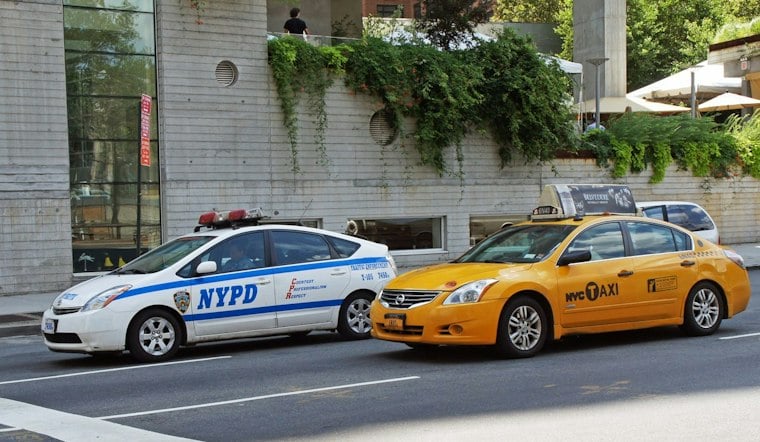
New York City police officers were told late last week to stop writing tickets for spitting outside the subway system and for idling cars unless someone specifically complained, according to internal NYPD guidance described in new reporting. The department says the instructions amount to a routine reminder about enforcement rules, not a response to media coverage, even as fresh research shows summonses for minor offenses have been climbing sharply since their pandemic-era low.
The guidance, reported by Gothamist, told officers to stop giving out tickets for spitting except in the transit system, and for vehicle idling except in response to specific complaints. Per the Queens Daily Eagle, the NYPD also reminded officers that jaywalking is no longer a criminal offense and that tickets can no longer be issued for it, a change that lines up with the city's 2024 move to decriminalize jaywalking under a rule adopted by the city aligning traffic enforcement with Local Law 98 of 2024. Vehicle idling itself remains separately restricted under city code, which generally bars letting an engine idle for more than three minutes with certain exceptions, according to the New York City Administrative Code.
The NYPD said the guidance was part of regular instructions and reminders to officers and denied it was issued in response to media coverage, according to the Queens Daily Eagle. A department spokesperson said enforcement checks exist to ensure policing follows the law and department priorities, the outlet reported.
Advocates Say Minor Offenses Shouldn't Be a Priority
The Legal Aid Society praised the decision to scale back enforcement of minor offenses, with a spokesperson for the organization saying such low-level violations should not have been NYPD priorities in the first place, per the Queens Daily Eagle. The outlet also reported that enforcement of these low-level offenses has disproportionately targeted Black and brown communities.
That disparity shows up starkly in the numbers. Black and Hispanic New Yorkers received 84% of docketed summonses in 2023 and 78% in 2024, according to a report from the Data Collaborative for Justice, even though Black and Hispanic residents together make up 51% of the city's population. In Queens specifically, the same research found Hispanic residents received criminal summonses at 11.4 times the rate of white residents in 2024, up from 5.5 times the rate in 2021.
Summonses Have More Than Quadrupled Since the Pandemic Low
The timing of the new guidance follows research the Data Collaborative for Justice released on Nov. 4, which found that criminal summonses issued citywide fell to a pandemic-era low of just over 22,000 in 2021 before rebounding to more than 106,000 in 2025, according to the Queens Daily Eagle. The research group's brief separately reported that the NYPD submitted 90,054 criminal summonses to the courts in 2023 and 78,848 in 2024, a 12% decline, though the 2024 total was still more than three times the 2021 low of 24,854 the brief cited. Officers are now on pace to issue 101,192 criminal summonses in 2026, a figure the research group's analysis suggests will mark a slight decline, per a separate report from Gothamist.
Broken-windows policing, the strategy underlying this enforcement, targets minor offenses out of a belief that doing so prevents people from committing larger, more serious crimes in the future, according to a report from Bolts. The approach saw renewed use under Mayor Eric Adams after reaching historic lows, and the Queens Daily Eagle reported it has continued under Mayor Zohran Mamdani — despite Mamdani having pledged during his mayoral campaign to reverse the NYPD's pursuit of quality-of-life offenses. By 2015, the city's outlet noted the department issued over 150,000 criminal summonses annually for five offenses it examined, and more recently issued more than 90,000 civil summonses for minor infractions in 2024, nearly three times the just-over 11,000 issued in 2019.
A Mayor's History Haunts the Ticket Numbers
The enforcement spike isn't unprecedented in city history. More than 530,000 tickets were issued in 2007 under then-Mayor Michael Bloomberg, the Queens Daily Eagle reported, a figure that current totals still fall well short of even amid the recent rebound.
Most summonses, however, don't end in any real legal consequence. In 2024, 69% of docketed criminal summonses were dismissed at the court appearance and 22% were resolved with an adjournment in contemplation of dismissal, leaving just 9% that ended in conviction, according to the Data Collaborative for Justice report. The group's brief also found that 20% of 2024 summonses were defective and rejected before arraignment because of a technical issue, up from 16% in 2023 — meaning fewer than 10% of summonses overall result in a conviction.
Michael Rempel, executive director of the Data Collaborative for Justice, said a summons can still cost people hours of time and wages regardless of the outcome, according to the Queens Daily Eagle. Rempel said the organization hopes its automatically updating tool will help policymakers and the public access timely information on enforcement trends, the outlet reported. The NYPD is expected to release summons data for the third quarter of 2026 in the coming weeks.
Court Monitors Saw Arrests Where Tickets Could Have Worked
Court Watch NYC and other criminal justice groups monitored arraignments during a week in August, observing 360 arraignments during the week of Aug. 10, the Queens Daily Eagle reported. Of those, 130 involved low-level accusations for which police could have issued tickets instead of making arrests, while 83 involved felony charges that did not qualify for a desk appearance ticket, according to the same monitoring effort.
Queens Borough President Donovan Richards said the city should reexamine low-level offense enforcement as a way to reduce the population at Rikers Island, per the Queens Daily Eagle. Richards said continuing arrests for low-level offenses would prevent Rikers Island from closing, the outlet reported.



