

























































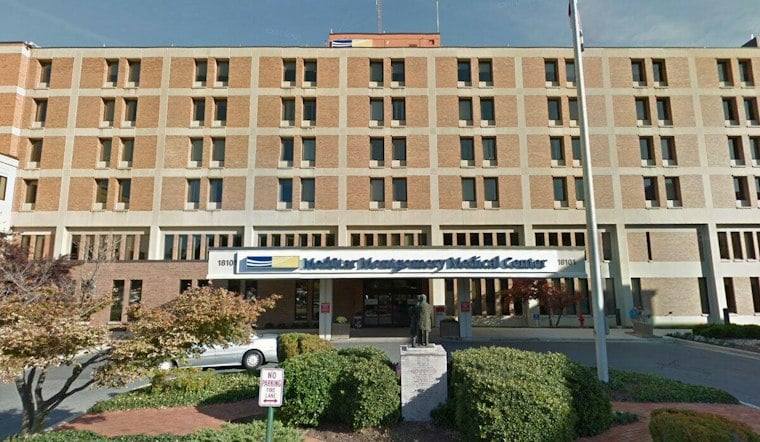
Stroke patients at MedStar Montgomery Medical Center in Olney can now get a genetic test back in as little as five hours, fast enough for doctors to adjust medication before they ever leave the hospital. The hospital has joined MedStar Health's pharmacogenomics program, which uses a patient's genetic makeup to help pick the right blood-clot prevention drug the first time around.
The expansion to MedStar Montgomery means Olney patients now have access to the same testing technology used at MedStar's larger stroke centers in the Washington and Baltimore regions, according to a MedStar Health news release. The program initially launched at MedStar Georgetown University Hospital, MedStar Washington Hospital Center, and MedStar Franklin Square Medical Center, and MedStar says it is among the first hospital systems in the country to put pharmacogenomics into everyday stroke care. As The MoCo Show first reported, the addition gives Olney-area patients a tool previously limited to MedStar's bigger regional hospitals.
Why a Cheek Swab Matters After a Stroke
The test centers on a gene variant called CYP2C19, which can affect how well a patient responds to clopidogrel, a commonly prescribed medication used to help prevent blood clots. MedStar's release says nearly one-third of stroke patients carry the variant, while WTOP similarly reports that about one-third of stroke patients have the variant, which reduces the drug's effectiveness. When the variant shows up, WTOP reports doctors typically switch to ticagrelor paired with aspirin instead.
Getting that answer used to take time nobody in a stroke unit really has. WTOP reports that before same-day testing became available, checking for the variant could take several days, with results sometimes arriving a week later from the Mayo Clinic. The new process instead relies on a swab on the inside of the cheek, with results back in about five hours — well within a typical hospital stay.
Results Before Patients Even Check Out
MedStar reports that 97% of patients at its initial three hospitals who had clot-caused strokes and ordered genetic testing got their results back before discharge. Clinicians then adjusted treatment plans so the medication matched the genetic result in more than 90% of those cases, per the same MedStar account. Physicians say that turnaround lets them change a prescription before a patient ever walks out the door, rather than guessing and course-correcting later.
The findings were detailed in a paper published in Clinical Pharmacology & Therapeutics, according to the release. Andrew Stemer, MedStar Georgetown University Hospital's director of stroke neurology, said the work shows how far the approach has come. “It creates a real path forward for using genetic testing to improve stroke treatment,” Stemer said, adding that clinical-trial findings can be translated into everyday patient care.
Building on a 2021 Clinical Trial
The program builds on the 2021 CHANCE-2 clinical trial, which found that a patient's genetic makeup could help determine which medications are better suited to preventing another stroke. That trial's conclusions gave MedStar researchers a scientific basis for rolling rapid genotyping into routine stroke care rather than treating every patient with the same drug.
Sandra M. Swain said the testing changes how people are cared for, offering a quick way to choose an effective, targeted stroke treatment instead of a one-size-fits-all approach. The underlying science, including the CHANCE-2 trial, has made the case that genetic differences can help determine which medications are better suited to preventing additional strokes — a shift that MedStar is now applying at the bedside in Olney as well as its larger hospitals.



