

























































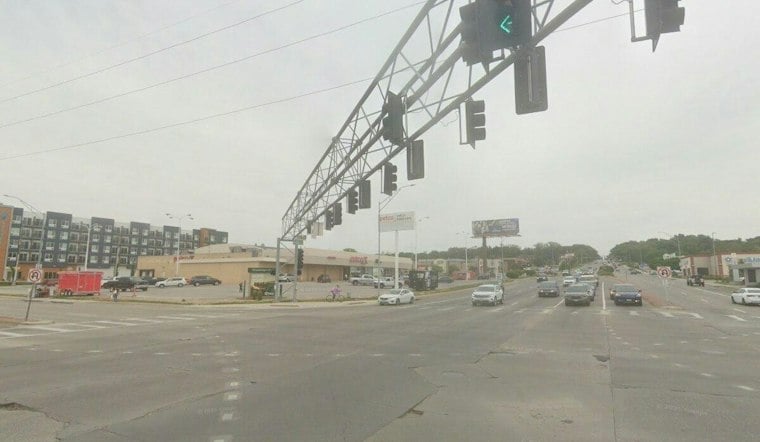
The Omaha City Council voted unanimously Tuesday to pay $89,000 to a man who says a police flash-bang device struck him in the head and exploded during a protest over George Floyd's murder more than five years ago. Tosun Mahmud Fitil says the blast left him with hearing loss, a traumatic brain injury, and neurological problems including migraines and tinnitus that he expects to carry for the rest of his life.
According to KETV, Fitil attended a late-May 2020 protest at 72nd and Dodge streets in Omaha, carrying a sign that condemned both George Floyd's death and the 2017 death of Zachary Bear Heels in Omaha police custody. Fitil told the station he went to the demonstration to protest police violence and instead experienced what he described as immediate, unprovoked police violence against him. He said he expects his injuries to serve as lifelong reminders of that night.
Court documents cited by KETV indicate Officer Justyn Riley deployed the flash-bang that struck Fitil. Riley has stated he aimed the device at the ground and that it took a strange bounce before hitting Fitil. Omaha police department policy prohibits throwing a flash-bang at a person's head unless deadly force is warranted, per the same report.
City Officials Deny Wrongdoing in Council Resolution
The resolution the council passed states that the city, Police Chief Todd Schmaderer, and Riley all deny the allegations, and it notes that continued litigation always carries additional risk. Omaha City Attorney Matt Kuhse declined to comment on the settlement, the station's report notes.
For Fitil, the money appears to matter less than the chance to move forward. He said the settlement could bring closure and let him return to his advocacy work and to remembering Zachary Bear Heels, according to the KETV account.
Part of a Nationwide Reckoning Over 2020 Protest Injuries
Omaha's payout adds to a sprawling national tally of settlements tied to police conduct during the 2020 racial justice protests. At least 19 U.S. cities had agreed to pay more than $80 million combined to injured protesters, with that total expected to keep climbing, according to The Guardian. A Howard University School of Law professor quoted in that report called it a wave of police-brutality settlements unlike anything seen before in American history.
Flash-bang injuries in particular have proven costly elsewhere. Portland agreed to pay Meghan Opbroek $375,000 after she alleged a police-fired flash-bang sent shrapnel into her body during a 2020 protest, a settlement the Portland City Council also approved unanimously, as reported by OPB. That city had already paid $125,000 to a man who suffered a traumatic brain injury after a flashbang hit him in the head back in August 2018, and Portland has paid more than $4.5 million over five years total to settle claims linked to its police force, most stemming from the 2020 demonstrations.
Other cities have settled for far larger sums spread across many claimants. Philadelphia paid $9.25 million to hundreds of protesters injured in 2020, according to The Guardian, while Charlotte paid $1.725 million to settle claims from 67 protesters who said officers trapped and gassed them uptown, with each receiving just under $26,000, per the Charlotte Observer. That outlet reported individual payouts in New York and Philadelphia settlements ranging between $21,000 and $27,000 per protester.
Reports on New York's citywide settlement diverge: The Guardian put the total at more than $6 million paid to 320 protesters, while the Charlotte Observer reported $6.5 million paid to about 300 protesters. Boston, meanwhile, agreed this year to pay $850,000 to settle a federal civil rights lawsuit brought by four protesters, a deal that the Boston Globe reported brought an end to nearly five years of litigation stemming from a demonstration on Boston Common.




