

























































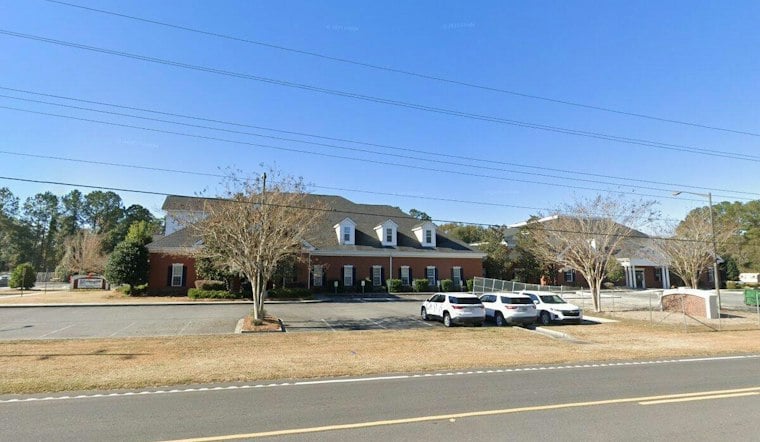
OpenAI is proposing a new name for its data centers as voters nationwide head to the polls on data-center-related ballot measures: compute campuses. An OpenAI spokesperson described the proposed term over the weekend as the Effingham County, Georgia, commissioners prepare to vote Tuesday on the company's proposed $20 billion Project Camellia complex near Savannah.
According to Business Insider, an OpenAI spokesperson said compute campuses “better describes the scale and role of the infrastructure we're building for AI,” adding that the facilities represent “long-term investments in computing, energy infrastructure and skilled work.” OpenAI's proposal to use the term, as Bisnow reports, is part of a broader public relations push to improve data centers' image as opposition shifts from town halls to ballot boxes. OpenAI is one of the main drivers of the nationwide data center boom, according to Bisnow, and plans to spend around $750 billion on computing infrastructure through 2030, with the company reportedly preparing to go public as soon as early 2027.
Georgia Site Faces Site-Plan Vote and Wetlands Fight
Project Camellia, OpenAI's planned complex in Effingham County, is slated to become Georgia's largest electricity user, requiring 3,200 megawatts of power — roughly equal to the output of three of the nuclear reactors at Plant Vogtle, per the Atlanta Journal-Constitution. OpenAI secured power for the Savannah-area project in July 2026, according to Bisnow. Reports on the project's physical footprint diverge: the Effingham Herald describes an updated plan covering about 1,347 acres with six data-center buildings, while The State describes a site of about 1,400 acres with four buildings.
The site-plan vote comes amid a parallel federal review. OpenAI has applied for a permit to fill about 72 acres of wetlands at the site, according to Savannah Now, though the company says its submitted plan preserves 70% of the wetlands within the project boundary and has committed more than $20 million to mitigation, per the Effingham Herald. Separately, OpenAI has pledged to cut electricity demand at the campus by up to a gigawatt when the grid needs relief, according to Axios.
Polling Shows Deep Voter Resistance
A Quinnipiac University poll released Sept. 29 found 73% of voters would oppose building an AI data center in their community. The same poll found opposition at 85% among Democrats, 55% among Republicans and 76% among independents.
“Voters overwhelmingly are saying 'not in my back yard,'” Tim Malloy said in the Quinnipiac report, describing data centers as a target of the NIMBY rallying cry.
Backlash Has Already Cost Billions
Per Bisnow, the data center backlash has already cost developers and hyperscalers billions of dollars, with grassroots activists spurring many of the opposition efforts. About 45 U.S. data-center projects worth $68 billion were blocked or delayed by local pushback between April and June 2026, according to Bloomberg. Data-center development continues nationwide.
Candidates across the country have positioned themselves as opponents of the data center industry, and experts told Bisnow that local election results will likely matter more to developers than the fight for control of Congress. More than 40 data-center-related measures were set to go before voters in Tuesday's midterm elections, Bisnow reports, with proposed projects worth at least $100 billion at risk amid the election measures. Those measures include outright bans, zoning changes and stricter community-involvement requirements in planning, per Bisnow.
Nationwide Ballot Fights Beyond Georgia
Data-center-related measures were on local ballots Tuesday. In Coweta County, Georgia, residents submitted more than 14,000 signatures seeking to overturn approval of a $17 billion data-center campus and ban future facilities, according to Insurance Journal. Voters in Clarksville, Arkansas, were deciding whether to approve $55 billion in bond ordinances for a ServerFarm data center, the same report states, while a proposed $3 billion project in Harwood, North Dakota, prompted a transparency-focused charter amendment.
In Yukon, Oklahoma, residents were weighing a proposed $1 billion Beltline Energy data center alongside a mayoral recall effort, per Insurance Journal. Whether OpenAI's proposed terminology changes the political math in Effingham County and beyond may become clearer once Tuesday's votes are counted.





