

























































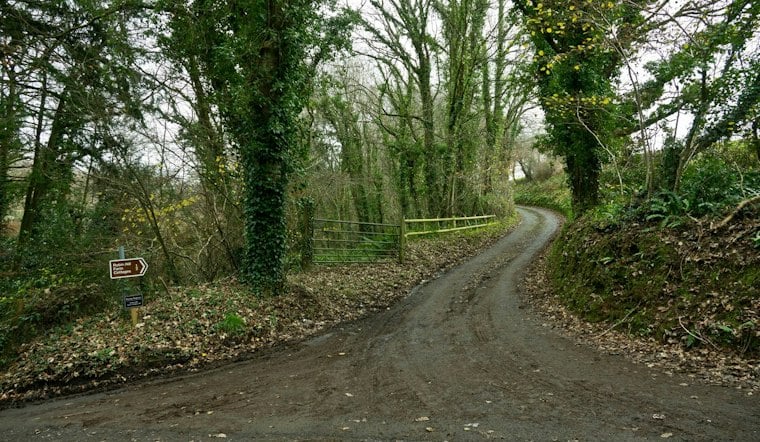
A 1,089-acre family farm in Orangeburg County, tied to the same family since the 1840s, will never be turned into subdivisions or parking lots. The McCoy Farm is now permanently protected from development through a conservation easement, closing the book on years of uncertainty for land that has stayed in the McCoy family for roughly five generations.
The easement, announced by the Lowcountry Land Trust, locks in permanent protection for the property, according to Who's On The Move. As the Post and Courier reports, Christe McCoy-Lawrence said her family has farmed in Orangeburg County since around 1800, with her great-great-grandfather beginning work on this particular parcel in the 1840s. The sources differ slightly on how close the property sits to the Interstate 95 and I-26 interchange — one account puts it at six miles away, another at less than six miles — but both agree the farm sits squarely in a stretch of the county now facing mounting development pressure.
McCoy-Lawrence told the Post and Courier she began considering a conservation easement more than a decade ago, determined that the land would not end up paved over. She and her family did not want to see the farm converted into subdivisions and parking lots, and she said the easement honors her father, who worked for years to keep the property intact. Farming on the land stopped after her grandfather died, and her father instead pursued a career in academics, according to the same report.
From Cotton Fields to Timberland
Over the generations, the farm has carried pigs, mules, cattle and cows, and its fields once grew cotton and tobacco, per the Post and Courier's reporting. Today timber is the farm's primary product, a shift reflected in the property's mixed pine and hardwood sections and its ongoing timber cultivation, as Yahoo News also notes in its account of the family's history. A creek on the property, identified by the Lowcountry Land Trust as Home Branch, cuts through the land and flows directly into Four Hole Swamp, home to Audubon's Francis Beidler Forest.
The property's history runs deeper than farming alone. The first school built in the Holly Hill area once stood on the McCoy property, offering young men college-preparatory classes that included Greek and Latin, according to the Post and Courier. That original building did not survive the Civil War, but a one-room schoolhouse built afterward still stands near the main house today. In 2019, a significant portion of McCoy Farm was added to the National Register of Historic Places, a designation reported by Who's On The Move.
A County Under Pressure From Growth
Kate Parks Schaefer said protecting working landscapes like the McCoy property is essential to meeting South Carolina's land protection goals, according to the Post and Courier's reporting. Schaefer described Orangeburg County as still largely rural, but she and the Lowcountry Land Trust say Summerville may see gradual infill spreading toward Orangeburg in the years ahead. The Land Trust is reportedly reaching out to other area landowners who might consider similar easements as development pressure keeps building along the I-26 corridor, where farms and other open land have already been converted to commercial, industrial or residential use.
That pressure fits a pattern documented statewide. American Farmland Trust found that South Carolina lost more than 280,000 acres of farmland to conversion between 2001 and 2016, giving the state the eighth-highest farmland-conversion threat score in the nation. The organization has also projected that by 2040, as many as 436,682 acres of South Carolina farmland could be paved over, fragmented or otherwise compromised — though it estimates the state could save roughly 333,000 of those acres by favoring more compact growth over continued sprawl, a scenario detailed in a separate American Farmland Trust report.
The McCoy easement was made possible in part by a grant from the South Carolina Conservation Bank and a private foundation, per Who's On The Move. For McCoy-Lawrence, the outcome represents something rarer than a real estate transaction. She told the Post and Courier she believes making a lasting difference for land like this is a rare opportunity — one her family will not get to make twice.





