

























































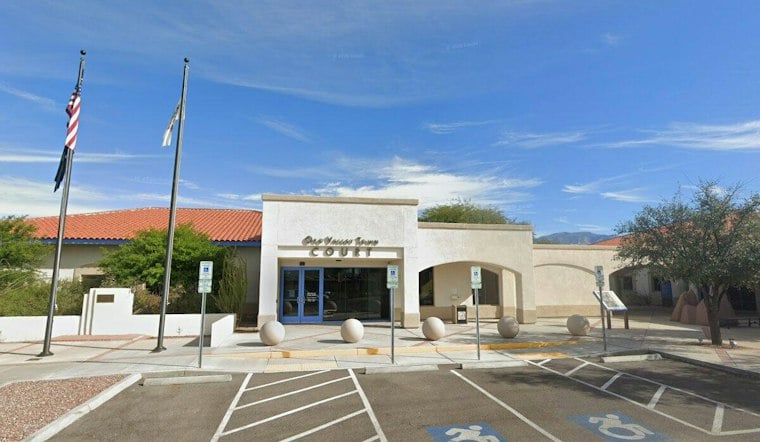
Leah Christopher wanted to see what Oro Valley's automatic license plate readers had collected about her own cars. Instead, she says the town turned her down, and now she's suing to force the issue in front of a judge. Christopher works in Oro Valley, a town north of Tucson, and filed her lawsuit against the town back in May.
Christopher sued after Oro Valley officials denied her public records request for data gathered by the town's license plate reader system on five vehicles registered in her name, according to KJZZ. She says the denial comes down to the town's own internal rules rather than any statewide mandate. “Their own written police policies say they can't send me the information,” Christopher said.
Automatic license plate readers, often mounted on poles or patrol cars, continually scan passing vehicles and log details about where they travel over time. Christopher argues that scale of tracking goes too far. “I think it's a complete overreach to have so much information on someone's daily habits, where they're going, who they're associating with,” she said.
A Fight Over Whose Rules Apply
Christopher insists the roadblock isn't coming from state law at all. “It's clear it's not an Arizona requirement. It's their own police requirement,” she said. She also points out that she isn't asking for anything unusual, noting that other jurisdictions have handed over the same kind of records without a fight.
Oro Valley, for its part, wants the lawsuit thrown out entirely, while Christopher is asking a judge to simply order the records released. A town spokesperson did not immediately reply to a request for comment on the case. Under Arizona law, a person denied access to public records they sought to examine or copy can appeal that denial through a special action in superior court, according to Arizona Revised Statutes § 39-121.02.
A Statewide Debate Over Camera Data
Christopher's case lands amid a broader fight in Arizona over who gets to see what these cameras capture. A proposed law, Senate Bill 1111 from Sen. Kevin Payne, would make captured plate data off-limits to public review or records requests altogether, leaving it viewable only by law enforcement or through a subpoena, according to Arizona Mirror. That bill has the backing of the Arizona Association of Chiefs of Police and the Arizona Police Association, the outlet reports. Similar legislation in at least 10 other states failed to gain traction the previous year, per the same outlet.
The volume of searches running through these systems has drawn scrutiny elsewhere in the state. Records covering December 2024 through mid-May 2025 showed the Scottsdale Police Department alone ran 12,527 searches of Flock's database, about 22% of all Arizona-agency searches captured in those records, Arizona Mirror reported. Arizona's Department of Public Safety logged 16,481 searches in the same stretch, meaning the two agencies together accounted for half of all Arizona searches of Flock's system.
A separate network audit obtained by Arizona's Family and reported by KOLD found more than 50,000 searches conducted during a one-month stretch from mid-July through mid-August, with DPS again leading at more than 8,500 searches, and Mesa and Scottsdale police each topping 5,000. Those 30-day audits, covering the Tolleson and Avondale police departments specifically, logged details down to the officer's name, the time of each search, the reason given, and any case number attached, the station reported. KOLD noted there had been no public accusations or confirmed instances of misuse of the Flock system by either department.
Some Departments Already Pulling Back
Concerns over privacy and past misuse findings elsewhere in Arizona have already pushed some cities to walk away from the technology. Several Valley police departments have ended their contracts with Flock entirely, citing those concerns, per the same KOLD report. Flagstaff and Sedona have likewise canceled their camera contracts, according to the earlier Arizona Mirror report on Scottsdale's search volume.
Retention practices vary widely from state to state, too. Arizona Mirror cited New Hampshire as an example where ALPR data is kept for just three minutes and deleted automatically unless a plate is flagged for an alert. Arizona Attorney General Kris Mayes has announced she will conduct a review of Flock cameras and similar surveillance and license-plate-reader systems statewide, according to a statement from the Arizona Attorney General's Office.
For now, Christopher's case against Oro Valley remains pending, with the town pushing for dismissal and Christopher pushing for a judge to order her records released. Whether her own written policies ultimately force Oro Valley's hand is a question still sitting in front of the court.





