

























































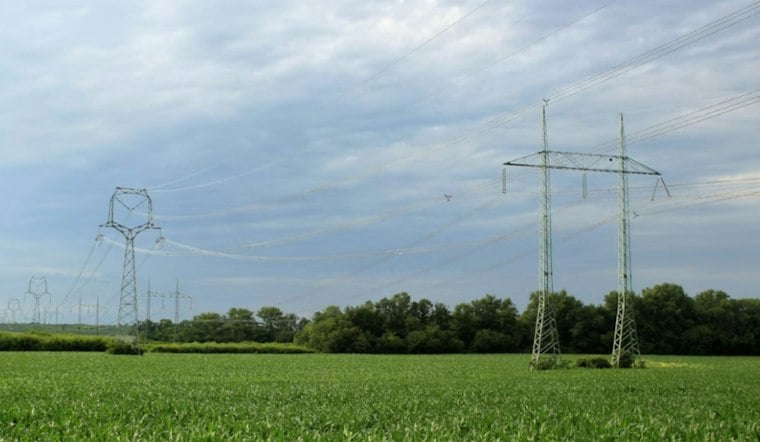
Blendon Township’s planning commission is likely to vote Nov. 18 on Key Capture Energy’s proposal for a 100-megawatt battery storage plant on 14 acres of rural Ottawa County land beside an electrical substation off 88th Avenue near Polk Street. The proposal has drawn concern from nearby residents about fire, noise and the effects of locating the facility near prime farmland, while supporters point to its potential role in grid reliability.
Before the anticipated vote, the Blendon Township Planning Commission has spent roughly a year discussing conditions for the proposal. Members have met monthly to consider fencing, decommissioning, fire access, tree and vegetative buffers, noise and other issues, according to MLive. The conditions may shape the commission’s decision.
Residents cited in the MLive report raised concerns about potential fires, noise and environmental effects, and objected to placing the project near prime farmland. Bev Horinga, one of the residents quoted in the report, said she does not see why the project should be placed around their farmland, said it would not benefit them and said she hopes it is rejected.
Money on the Table to Address Teardown Costs
Decommissioning costs are one issue addressed in the proposed conditions. Key Capture agreed to increase its fund for removing the batteries and restoring the land to $4.6 million from about $1 million, according to MLive. The company’s staff say the technology is safe; the reporting reviewed for this story does not independently verify that assurance.
What the McMicken incident shows
The available account does not establish the full findings of an official investigation or how the McMicken facility’s design compares with the proposed Blendon project. Utility Dive reported that APS and LG Chem agreed that, in an April 2019 explosion at APS’s McMicken battery storage facility in Surprise, Arizona, accumulated flammable gases ignited when firefighters opened a container door, injuring four firefighters. McMicken was a separate facility, and that incident alone does not establish what would happen at the proposed Blendon plant.
A township report describes the system as using lithium-type batteries to store electricity drawn from the grid during off-peak periods and return it when demand peaks, with the aim of helping stabilize Michigan’s electric grid.
A Narrow Window Even if Planners Say No
If the planning commission rejects the proposal, Key Capture can seek approval through the Michigan Public Service Commission under Public Act 233, MLive reports. That process could take time.
Blendon Township's fight is part of a much larger wave moving through Michigan. More than 60 battery projects were sitting in the state's development pipeline as of May, though a University of Michigan clean-energy land-use specialist cautioned that not all of them were likely to get built, according to Michigan Public. At that time, the state had just one utility-scale battery project actually operating: the 100-megawatt Tibbits Energy Storage installation in Coldwater Township, where the township supervisor described the setup as roughly 80 rectangular enclosures, arranged in groups of two, with each group equipped with alarm and suppression systems.
The specialist said common concerns for local officials weighing battery projects include setbacks, sound buffering, fire safety protocols and decommissioning plans. In Oshtemo Township, residents similarly organized against a battery project proposed next to a 29-acre farm, raising worries about fires, possible explosions, wildlife fencing and noise, Michigan Public reported.
Utility-scale battery storage capacity in the United States grew at an annual average rate of 70% over the prior three years, according to the U.S. Energy Information Administration. The Blendon Township commission is expected to consider the local proposal at its Nov. 18 meeting.




