

























































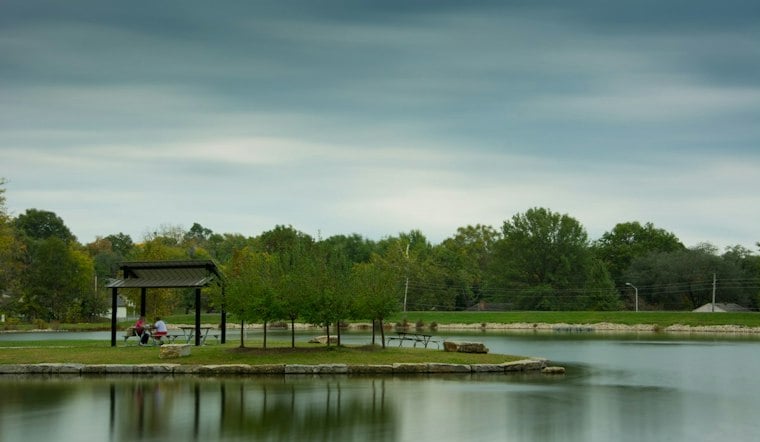
Overland Park voters will decide next spring whether to approve a dedicated sales tax for parks and recreation, after the city council voted Monday to send the question to a mail-in ballot election on March 2, 2027. The proposed one-fourth-cent tax could generate up to $176 million over the next decade if approved, money city officials say would go toward new trails, upgraded pools, renovated playgrounds and other park projects across the city.
The council approved holding the special election on a 9-3 vote, according to the Johnson County Post, with council members Andrew Payne, Chris Newlin and Josh Beck casting the dissenting votes. If voters approve the measure, the tax would take effect October 1, 2027, and run for 10 years, ending September 30, 2037.
As reported by KCTV, the push for a dedicated funding source traces back to Playbook OP, the city's long-range parks and recreation plan that the Overland Park City Council approved earlier this year. That plan recommended establishing a dedicated parks and recreation sales tax rather than relying on general city funds for park improvements.
Four Categories of Spending
City officials have outlined four project categories for the tax revenue, per KCTV's reporting. The parks category includes upgrading playgrounds, sports courts, sidewalks and restrooms, along with specific projects at Linwood Park, Osage Park, Brookridge Park and the Switzer Park skate park.
A trails category would fund converting high-traffic trails to concrete to cut maintenance costs and improve the experience for walkers and cyclists, as well as adding wayfinding signage and building new trails. A regional pools category would modernize the Tomahawk Ridge Aquatic Center and Young's Pool, with the stated goal of extending the lifespan of the city's aging aquatics facilities.
The fourth category, greenspaces, covers managing invasive species, planting native prairie and medians, tending trees on public land, and acquiring land for future parks, according to KCTV. Under the proposed ballot language, tax revenue could be used alone or combined with other city funds for parks and recreation infrastructure, defined to include existing and new city parks, pools, greenways, trails, recreation facilities and related amenities.
What Still Needs Final Approval
The city council still needed to approve the specific ballot language defining how the proceeds could be used, the Johnson County Post reported at the time of its coverage. Earlier reporting from Yahoo News noted that before settling on the quarter-cent figure, officials had weighed a range of options for the 10-year tax, including one-eighth, one-fourth or three-eighths of a cent.
Timeline details reported by CitizenPortal.ai indicate the council was expected to take final action on either November 2 or November 16, with November 16 marked as the last possible date to keep the March mail-in election on track. Under that timeline, ballot materials could be mailed to voters beginning February 10, 2027, ahead of the March 2 election day.
A Regional Pattern for Parks Funding
Overland Park isn't alone in turning to a dedicated sales tax for parks. Across the state line, Kansas City, Kansas, voters were recently asked to weigh in on a 3/8-cent citywide sales tax that would split proceeds roughly evenly between park capital improvements and infrastructure projects, according to The Beacon. That measure, if approved, would begin April 1, 2027, and run for 10 years.
The Unified Government estimated the Kansas City, Kansas, tax would generate $16 million annually — split evenly between parks and public works — for a total of $160 million by 2036, the outlet reported. While the structure differs from Overland Park's proposal, which reserves its funds for parks, trails and recreation only, the two measures reflect a broader trend of Johnson County-area cities asking voters to approve dedicated sales taxes to tackle long deferred park and infrastructure needs rather than competing for space in general fund budgets.




