

























































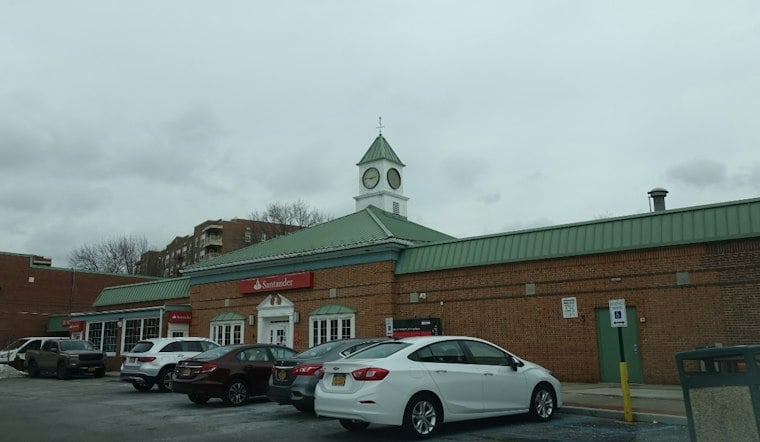
Jessica Metcalf thought she was talking to her own bank's fraud department when a caller walked her through what looked like a $9,600 provisional credit landing in her Santander account. Instead, police say, the money had been quietly pulled from accounts she shares with her fiancé, her mother, and a savings account set aside for her children. By the time she realized what happened, she had already handed nearly $10,000 in cash to a stranger in a Webster parking lot.
Metcalf, a Santander customer from Oxford, Massachusetts, is now fighting to recover the money, according to Boston 25 News. The outlet reports that scammers used spoofing technology to impersonate Santander bank fraud staff, convincing Metcalf that a teller in Webster was trying to wire money out of her account. To stop it, the caller claimed, she needed to read back a one-time security code — a step that instead let the scammers move money around behind the scenes.
How the Scheme Unfolded
According to the station's report, scammers transferred money into Metcalf's main account from three linked accounts, creating the appearance that the bank had added an extra $9,600. A police report shows that money actually came from accounts shared with her fiancé and her mother, along with a savings account for her children. Believing the funds were a legitimate credit, Metcalf withdrew $9,600 and, on the caller's instructions, handed it to an agent waiting in a parking lot.
Metcalf, who formerly worked for Santander, argues the bank should reimburse the money that was transferred out of those linked accounts without her authorization. But because she was the one who withdrew the cash, Santander denied her refund request, the same report notes. A Santander employee reportedly told Metcalf that the transfer requests had originated from an IP address in another state, and in a letter shared with the outlet, the bank said Metcalf completed the transaction and that the claim was accurately denied.
Police Have Video and a Partial Plate
Webster police are investigating the fraud, and investigators have obtained video evidence from the parking lot of the bank branch where the handoff happened. Metcalf told police the person who took the money drove away in a blue Chevy Traverse, and she was able to provide a partial license plate number. The officer assigned to her case is also a task force officer attached to the FBI's Worcester Field Office, per the same report.
Webster Police Chief Michael Shaw said his department regularly receives reports of similar scams, and he advised anyone who suspects they're being targeted to hang up and call the institution directly using a verified number. Scammers, the report notes, often prey on fear and create urgency specifically to pressure victims into making quick decisions before they can stop and check the story.
What Santander and Legal Experts Say
A Santander spokesperson said the bank could not provide information about Metcalf's case, citing customer privacy, but said it is working with law enforcement. The company added that protecting customers from fraud is a priority and said it will never ask customers for passwords or remote access to their accounts.
Carla Sanchez-Adams, an attorney at the National Consumer Law Center, told the outlet that banks generally are not required to reimburse customers for transactions they knowingly authorized. Still, a banking regulations expert cited in the report suggested federal law may offer Metcalf some protection precisely because scammers allegedly moved funds among linked accounts rather than her simply authorizing a withdrawal outright. The Electronic Funds Transfer Act may provide consumer protections in certain circumstances, and consumers who successfully sue under it may recover attorneys' fees. Metcalf is reportedly considering legal action; she is fighting to recover nearly $10,000 lost in the scheme.
Federal data underscore how common this kind of fraud has become. The Federal Trade Commission reported that imposters scammed victims out of nearly $3.5 billion in 2025, with more than $1 billion of that tied to bank-related imposter scams. The Federal Trade Commission says reported losses have climbed sharply since 2020, though the agency's own release describes the increase as nearly three times prior levels while NBC Connecticut cited the same agency's figures as a 300% jump.
A Similar Scheme Hit Connecticut
Metcalf's case echoes one NBC Connecticut documented involving a 45-year-old Windsor, Connecticut woman who said she lost more than $7,000 after a caller posing as a 360 Federal Credit Union fraud representative convinced her to transfer her savings through Apple Cash. The woman said her caller ID displayed the credit union's actual name, which is what made the call seem credible. A scam expert quoted in that report said callers can manipulate caller ID to make a call appear to come from whatever number they choose, hiding where it's really coming from.
360 Federal Credit Union said it found no evidence the transaction resulted from a cybersecurity incident and said its systems remained secure. The Better Business Bureau advises consumers who suspect a scam to stay calm, verify contacts independently, avoid sharing passcodes or granting remote access, seek advice before acting, and hang up on anyone pressuring them to move money quickly.




