

























































Palm Coast's planning board voted 6-1 to recommend approval of what would be the city's first-ever asphalt plant, a facility proposed for the western end of Hargrove Grade by American Civil Construction Inc. The vote sends the project to the City Council, which must now decide whether to approve it by at least a 4-1 majority before any plant can break ground. Palm Coast has existed for 27 years without one.
The proposal, reported by FlaglerLive, calls for the plant to be built near the center of a parcel at 77 Hargrove Grade, where American Civil Construction already runs offices, an equipment shop, material recycling operations and truck storage. The property was purchased in 2023, according to flaglerlive.com. The site sits at the southwest end of the Hargrove Industrial Park, next to a Florida East Coast Railway spur the company plans to use to import materials for on-site asphalt manufacturing.
Attorney Michael Chiumento, who represents American Civil Construction, told the board the city will be working through its first asphalt plant proposal in 25 years. The company already owns two heavy-industrial-zoned parcels east of Sunbelt Chemical, and Palm Coast has no other heavy-industrial zone where such a use could go, a point planning staffer Michael Hanson raised in arguing the railroad access, zoning and industrial future land use make the site probably the city's best option for the proposed use.
Conflicting Numbers on Truck Traffic
How much traffic the plant would generate depends on which estimate you read. FlaglerLive's article summary put the figure at 280 truck trips a day and 10 employees, not counting truck drivers, while a separate traffic-study estimate cited by the outlet put it at 300 vehicle trips per day. The company's own traffic analysis, meanwhile, described 10 additional employees, 40 dump trucks throughout the day and 100 dump trucks during off-peak hours, according to flaglerlive.com — with dump truck drivers counted as employees in that analysis. The plant would not be allowed to dispatch more than 15 trucks in any single hour, and the heaviest truck traffic would come between 9 p.m. and 6 a.m.
Robert Ackley, who previously worked as a division manager with P&S Paving of Daytona Beach, said production and truck dispatch would vary by week and time of day. He expects roughly 100,000 tons of production in the plant's first 12 months of operation, with the facility capable of producing up to 300 tons per hour. At 20 tons per dump truck, that pace could translate to about 5,000 dump-truck trips a year, or 25 to 30 trips per day over a 240-working-day year.
Jobs, Payroll and a Company Already on Site
American Civil Construction is described as a heavy-industrial excavation company with 80 employees and a payroll of roughly $5 million to $6 million. The proposed plant would add 45 workers at an average salary of $80,000, which Chiumento said would raise the company's payroll to about $10 million. Supporter James Albano told the board the project is a good fit, calling the investment and employment opportunities a win. Isabella Fratto echoed that view, saying the proposal is a great use of the space and that the city should focus on industry.
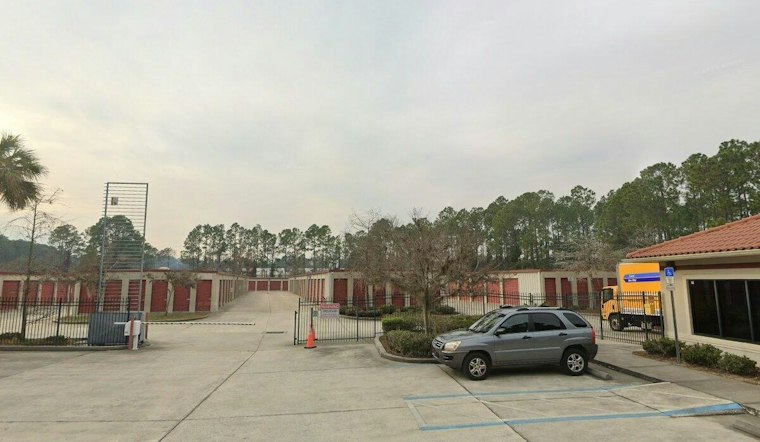
Not everyone agreed. Sandra Shank told the board that businesses in the area have concerns about this use on this parcel, and a manager at the nearby Top Shelf storage facility opposed the plant outright. Business owners raised concerns about smell and noise, while project engineer Marlon Owens offered a different take, saying asphalt's smell reflects what America was built on. The nearest home sits about 2,000 feet from the proposed plant site.
Tree Clearing and a Murky Approval Path
Senior city planner Michael Hanson told the board the property owner cleared trees without a permit before submitting the application — 30 trees, according to the record — and American Civil Construction would have to comply with tree density calculations if the proposal is approved. The approval path itself drew scrutiny: Palm Coast's land development code prohibits asphalt plants outright, yet the city is processing the application through its special-exception process even though the application is not technically for a special exception. Neither the applicant's lawyer nor city planning staff could explain how the application advances without a special exception or what the precise applicable criteria are, per flaglerlive.com. Acting community development director Phon Nguyen said the board's authority covered land-use permission and nothing else. The code does allow approval by a supermajority vote, and the city may condition any subsequent site plan on restrictions and state environmental permits; federal environmental regulations for asphalt plants rely largely on self-inspections for compliance. Any site plan that follows would have to go before two boards.
Board member Mark Stancel initially abstained, saying he felt conflicted, before ultimately voting against the recommendation — the lone dissenting vote in the 6-1 tally. Board members, under the rules governing their conduct, may not abstain when they have no conflict of interest. An alternate board member recommended the council give upfront consideration to road maintenance and the company's responsibility for it.
A Pattern of Rejected Industrial Proposals
Palm Coast's Hargrove corridor has become something of a battleground for heavy-industrial proposals. The City Council rejected SRM Concrete's request to rezone 37 acres on Hargrove Lane in August 2025. On March 17, 2026, the council voted 4-1 to reject Hard Rock Materials' rezoning request for a 10-acre Hargrove Grade property intended for a concrete mixing plant, after the planning board recommended approval in a 5-2 vote the month before, according to FlaglerLive.
Bunnell, meanwhile, has already cleared the way for an asphalt plant near the core of that city, approving construction near downtown. The nearest existing asphalt plants to Palm Coast are in Duval and Volusia counties, which is part of why the proposal has drawn attention as a potential first for a city that has rejected similar industrial uses before.
A Council With New Faces and a Changing Landscape
The Palm Coast City Council that will ultimately decide the asphalt plant's fate now has three new members, and the vote comes against the backdrop of the collapse of Raydient Development last summer, a project that would have added millions of square feet of industrial zoning to the city. The city has also discussed its Land Development Code.
The council's decision will also unfold amid Amendment 3, which is set to raise the homestead exemption on residential properties to $250,000 by 2027 and is projected to reduce Palm Coast's general fund revenue by more than $20 million. The amendment limits local governments' room to reject non-residential developments while trying to maximize property tax revenue, adding another layer of pressure as the council weighs a project that would be the first of its kind in Palm Coast's history.




