

























































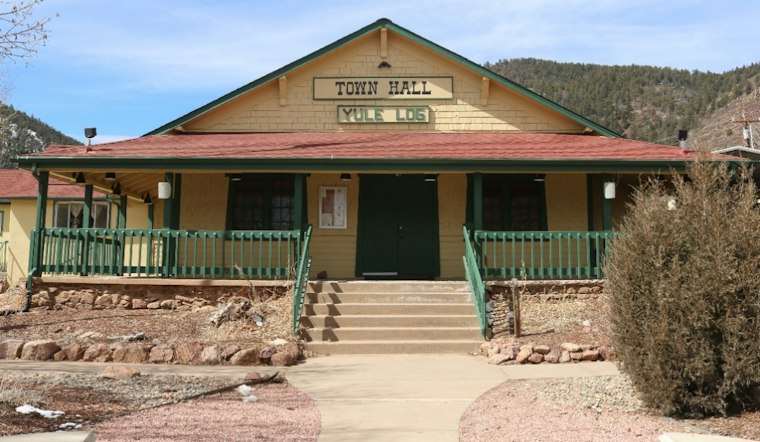
The Colorado Court of Appeals has ruled that towns and cities cannot be sued under the state's False Claims Act, delivering a win for the small El Paso County town of Palmer Lake in a lawsuit that accused it of seeking at least $1.3 million in federal and state funding and misusing the money. The unanimous decision, issued October 29, found that municipalities simply don't count as a person under the 2022 law, closing the door on a case that had accused town officials of knowingly submitting false claims to obtain public money and then diverting it for improper purposes.
The case, Moseley v. Town of Palmer Lake, began when residents Roger Moseley and Martha Brodzik sued the town, alleging it made false claims to secure at least $1.3 million in federal and state funding for specific projects and then misappropriated that money, according to reporting credited to Michael Karlik of Colorado Politics. The lawsuit, filed in El Paso County, was heard first at the district court level before reaching the Court of Appeals. The Colorado False Claims Act itself imposes civil penalties on a person who knowingly makes a false claim to the government, but the statute defines person as an individual, corporation, partnership, association, or other nongovernmental legal entity — language that became the crux of the fight.
How the District Court First Ruled Against the Town
Before the case reached the appellate panel, Palmer Lake moved to dismiss the lawsuit, arguing it wasn't a person subject to liability under the Act. District Court Judge Gregory R. Werner agreed in 2025, ruling that the statutory definition of person explicitly excludes governmental entities. Werner reasoned that the legislature could have explicitly included political subdivisions such as municipalities in the definition of person but chose not to, according to the same reporting.
Moseley and Brodzik appealed, arguing that Colorado law generally treats corporations — including municipal corporations — as persons, and that the False Claims Act should be read to cover such entities. Their attorney, Andrew E. Swan, told the appellate panel in September that the district court's order would let municipalities make false claims to Colorado without consequences under the Act, though he acknowledged existing statutes could still permit prosecutions through other legal avenues. Judge Terry Fox pressed on that point during arguments, asking whether prosecutors could proceed against a municipality under other laws regardless of how the False Claims Act was interpreted.
Appeals Panel Sides With the Town, 3-0
The three-judge panel — Sueanna P. Johnson, Terry Fox, and David H. Yun — ruled 3-0 that a municipality is not a person subject to suit under the Colorado False Claims Act. Judge Johnson, who authored the opinion, interpreted the statutory phrase other nongovernmental legal entity as limited strictly to nongovernmental entities, a reading Colorado Lawyer described as the first time an appellate court had addressed the question. The judgment dismissing the complaint against Palmer Lake was affirmed.
Johnson wrote that the General Assembly intended municipalities to be considered governmental entities under the Act, and said lawmakers intended municipalities to assist in recovering misappropriated funds rather than be targeted as defendants themselves. At the same time, Johnson acknowledged that municipalities could commit fraud involving state or federal funds, but said the 2022 law did not appear to address that particular scenario. The Act does provide that recoveries from false claims may be returned to political subdivisions based on the amounts attributable to them — underscoring the law's framing of municipalities as potential beneficiaries rather than potential wrongdoers.
Underlying Allegations Remain Unresolved
The underlying dispute traces back to a lawsuit Moseley and Brodzik filed in El Paso County District Court on May 22, 2025. According to The Gazette, the 18-page suit alleged accounting and appropriation errors in Palmer Lake's 2022 budget that carried onward to at least 2024. Palmer Lake Mayor Glant Havenar rejected the allegations at the time, telling the paper, “It's absolutely frivolous.”
The appellate ruling does not resolve whether those underlying budget allegations have merit — it simply closes off the False Claims Act as a legal avenue for pursuing them against the town itself. Then-Attorney General Phil Weiser had testified that pandemic-related federal funding carried a heightened risk of fraud when the Act was being considered; the law was passed in 2022, even as its reach toward municipalities now appears limited by this decision.





