

























































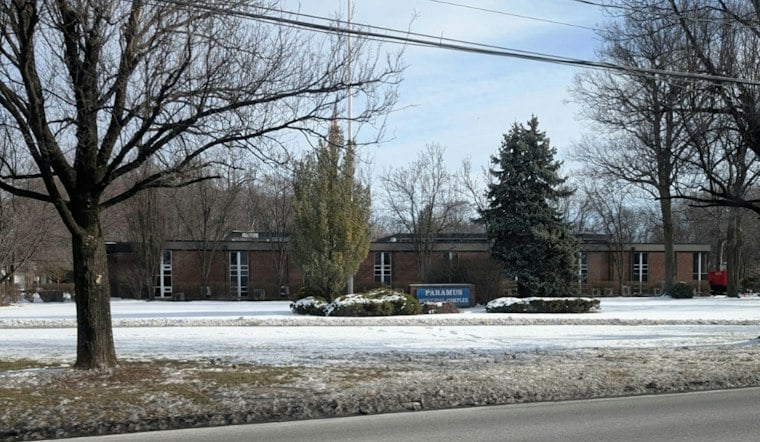
Paramus Mayor Christopher DiPiazza is set to review a proposed ordinance Tuesday that would ban data centers from every zone in the borough, as local officials weigh concerns over electricity use, water consumption and strain on the power grid against the growing footprint of the artificial intelligence industry. The Paramus Environmental Commission will present its draft at the mayor's next meeting, scheduled for 6 p.m. Tuesday in council chambers at 1 W Jockish Square.
The commission first discussed a proposal to ban construction of data centers in the borough back in July, according to TAPinto. On July 15, the commission voted 5-0 to support a draft ordinance that would formally define “data center” in Paramus's zoning code and add the term to the borough's list of nonpermitted uses in every zone, as reported by citizenportal.ai.
The draft, created in June, defines a data center as a facility primarily used to store, manage and process digital or electronic data while housing computer and network systems. Per the same draft, the definition also sweeps in servers, network equipment and appliances, telecommunications and data storage systems, infrastructure-monitoring systems, internet-related equipment and services, data communications connections, environmental controls and fire protection systems.
Power Thresholds Still in Flux
Exactly where the ordinance would draw the line on size remains unsettled in the available record. TAPinto's account of the draft describes Paramus considering a use a data center once it reaches a power density of 2 to 4 megawatts or more per acre, while the citizenportal.ai report on the July 15 meeting states that commissioners lowered the threshold to 1 to 4 megawatts per acre and added language addressing electromagnetic fields. It is not clear from either account which figure reflects the ordinance's current, operative language.
The draft ordinance itself lays out a long list of concerns driving the push: electricity consumption, noise, air quality, water use, community character and long-term planning. It also leans on Paramus's master plan, which the draft says emphasizes protecting environmental resources along with the borough's historic and cultural heritage, according to the same TAPinto report.
Large-scale data centers, the draft argues, consume extreme volumes of water through liquid cooling and the energy generation needed to run them, with ripple effects on homes and businesses in Paramus and neighboring communities. The draft also cites preliminary studies suggesting some data centers can require as much as 300 megawatts of electricity, an amount it likens to the output of a small modular nuclear reactor.
Rising Bills Loom Over the Debate
The draft ordinance asserts that New Jersey consumers have already experienced energy-cost increases exceeding 20% over the prior year and warns that additional increases could follow in the coming months. That framing lands amid a broader statewide reckoning over electricity costs tied to data-center growth. A Rutgers-led analysis found New Jersey residential electricity bills jumped 17 to 20 percent on June 1, 2025, after PJM's capacity price for the 2025-2026 delivery year climbed to $269.92 per megawatt-day, with the grid operator's independent market monitor estimating that data-center electricity demand drove 63 percent of that price increase, according to policylab.rutgers.edu. The same analysis notes PJM expects 70 gigawatts of new large-load demand by 2038, even as 15 gigawatts of older power plants have retired since 2022.
That Rutgers-led study also complicates any simple story linking a single nearby data center to higher bills. It found that having a data center nearby raised a typical monthly bill by only about $2.09, an effect researchers said disappeared completely once they controlled for other factors.
Separately, a New Jersey Policy Perspective report covered by NJ.com found that average annual New Jersey household energy bills rose by about $260 last year, and linked the growth of AI data centers to a roughly 20% jump in state electric bills the previous summer. That report noted a large AI data center can use as much electricity as 100,000 homes and projected data centers could account for nearly 10% of all electricity used in New Jersey by the end of the decade.
Other Towns Moving on Data Centers Too
Paramus would not be the first New Jersey town to push back. NJ.com's report also detailed how Monroe Township officials introduced an ordinance to remove data centers as a permitted use at a 159-acre redevelopment site, with council members describing it as a first step toward potentially banning data centers from the town entirely.
The debate is not confined to New Jersey. In Ohio, Piqua voters approved a charter amendment restricting data-center construction by a 66.7% to 33.3% margin in results reported Tuesday by the Dayton Daily News. That measure bars construction of covered data centers with an aggregate monthly demand or peak electrical load greater than 25 megawatts, though the outlet noted the results remained unofficial pending certification by the Miami County Board of Elections, due by Nov. 24.
For now, what happens to Paramus's proposal after Tuesday's presentation to DiPiazza remains to be seen. No vote, amendment or further scheduling for the borough's draft ordinance has been reported beyond the mayor's review.





