

























































Four top administrators at Paso Robles Joint Unified School District racked up as much as $70,000 in clearly questionable credit card purchases over three years, from See's Candy runs to winery events, according to a new examination of district spending records. The findings land just as the district asks voters to approve a $205 million bond for classroom renovations, infrastructure repairs and new facilities on Tuesday's ballot.
The review, conducted by CalCoastNews, examined the credit card purchases of four administrators from July 2023 through June 2026: Superintendent Jennifer Loftus, Chief Business Officer and Assistant Superintendent Brad Pawlowski, Assistant Superintendent of Education Services Erin Haley, and Assistant Superintendent of Human Resources Shauna Ames. The outlet reports that the records were shared with other agencies, leading to a San Luis Obispo County Board of Education investigation into the alleged abuses. Community members had reportedly voiced concerns about district administrators' credit card spending for more than two years before the records surfaced.
What the District's Own Rules Say
The district's CalCard policies explicitly bar purchases for personal use, including gifts, gift cards, flowers and T-shirts, per the same report. They also require that any food or drink charges at staff or student meetings come with a sign-in sheet of attendees and a copy of the meeting agenda. Technology and subscription purchases are supposed to go through a purchase order rather than a district credit card, according to the outlet's review of district policy documents.
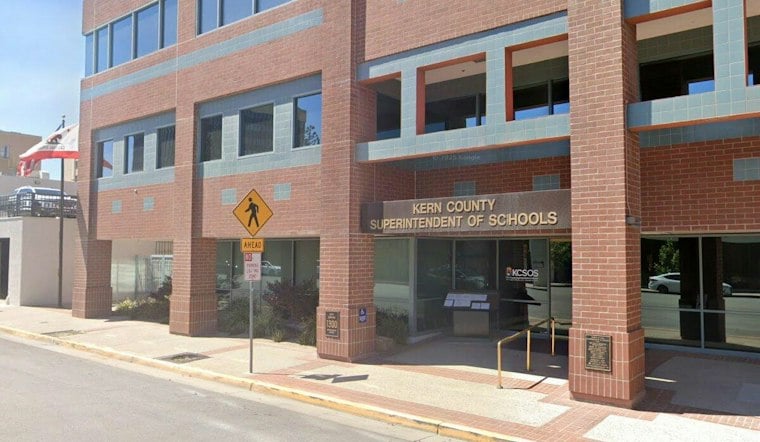
Pawlowski's spending drew particular attention. His charges included a $90 purchase at See's Candy and 23 separate purchases in Bakersfield for meals and drinks, nine of them at Hon Ramon and two at the Padre Hotel, the report states. Pawlowski also holds a consulting job with the Fiscal Crisis and Management Assistance Team, a state-funded agency with an address at 1300 17th Street in Bakersfield — roughly two blocks from Hon Ramon and about three blocks from the Padre Hotel, according to the article. Since 2023, Pawlowski has earned approximately $90,000 from consulting on multiple projects in addition to the $316,000 in annual salary and benefits he draws from the district.
Haley's Tech Charges, Ames's Winery Tabs
Haley charged $39,585 for technology and subscriptions despite the district's policy requiring those purchases to run through a purchase order rather than a credit card, the outlet reported. Her charges also included more than $10,000 for dining, food and catering, $2,986 at California Coast Beer Company, and $7,718 to a promotional-products vendor.
Ames charged $36,932, primarily for winery events, awards, entertainment and meals, according to the same report. That included $7,773 for events at San Antonio Winery, $7,600 for food and catering, $5,151 for gifts and awards, and $680 at Park Cinemas. Loftus's charges totaled $23,451, with only a couple thousand dollars of that described as questionable dining and entertainment spending.
A Bond Vote Arrives Amid Turnaround Claims
The scrutiny arrives at an awkward moment for a district that has spent recent years touting fiscal improvement. Paso Robles Daily News reported last month that Moody's Ratings upgraded the district's overall credit rating to Aa3 and its general obligation bond ratings to Aa2, crediting financial controls, conservative budgeting and fiscal discipline implemented since 2018. The district's available operating fund balance reportedly grew from less than 5% of annual operating revenue in fiscal year 2018 to 37% in fiscal year 2025. Moody's did project general-fund operating deficits in fiscal years 2027 and 2028 but said those did not reflect a structural imbalance in district finances.
Measure G-26 needs support from at least 55 percent of voters to pass, according to New Times San Luis Obispo. Proponents argue the bond funds are crucial to improving the district and that children are its greatest asset, while opponents point to mismanagement, broken promises tied to the previous bond, and declining enrollment. That earlier bond is projected to cost residents approximately $378 million including interest. Enrollment has fallen by about 530 students since the 2016-17 school year, a drop that The Tribune reported has cost the district nearly $6.4 million in state revenue.
How Oversight Typically Works
State fiscal rules offer a window into how such allegations would normally be handled. Under FCMAT's 2026 Fiscal Procedural Manual, the county superintendent of schools reviews audit exceptions involving internal controls and determines whether a local education agency has corrected them or has an acceptable plan to do so. Annual audit reports must be filed electronically no later than December 15 with the county superintendent, the California Department of Education and the state controller, according to the manual.
A comparable case shows what a deeper state audit can uncover. FCMAT's 2017 extraordinary audit of Blue Oak Charter School in Butte County found exceptions in every expenditure transaction reviewed, with 170 of 212 disbursements lacking a purchase request or other documented authorization. Investigators described a severe lack of control over credit card use and flagged more than $3,990 in unsubstantiated Costco charges among other questionable purchases. FCMAT noted in that report that while its findings showed sufficient evidence fraud or misappropriation may have occurred, the existence of fraud is ultimately determined by courts and juries.
Paso Robles has faced financial oversight questions before. A San Luis Obispo County Grand Jury report addressed in February 2021 criticized the district's previous board for alleged financial mismanagement between 2015 and 2018, outlining failures in leadership and financial oversight, according to KCBX. That grand jury found the previous board had agreed to pay more than $200,000 in severance to former Superintendent Chris Williams despite no obligation to do so.




