

























































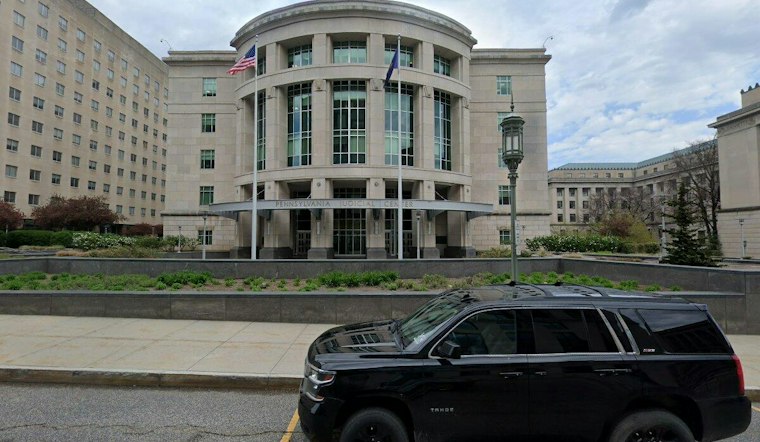
Raymond Rowe’s latest bid for DNA testing in the 1992 killing of Christy Mirack stopped at a one-sentence order. In July, the Pennsylvania Supreme Court refused to hear his appeal.
LancasterOnline reported the refusal Thursday. Rowe, a 58-year-old entertainer known as DJ Freez, pleaded guilty in January 2019 to raping and murdering Mirack, a 25-year-old schoolteacher, in her East Lampeter Township townhouse in December 1992.
What he wanted tested
Rowe sought testing of several crime-scene items, including Mirack’s sweater, which was used to strangle her, and a wooden cutting board used to beat her. He maintained that the real killer’s DNA would be on those items and that his would not.
That request had already been turned down closer to home. Lancaster County Judge Dennis E. Reinaker refused testing in April 2022. The Pennsylvania Superior Court upheld that decision and, this past January, refused the bid again. The July order left that result in place. The high court did not explain its refusal in the order LancasterOnline described.
A guilty plea, then another account
The plea was part of a deal that took the death penalty off the table. Reinaker sentenced Rowe to life in prison, plus 60 to 120 years for the sex crimes and burglary.
Less than a year later, Rowe appealed. He claimed his trial attorneys had essentially forced him to plead guilty. Those attorneys rejected that claim. They said he confessed at their first meeting and said he wanted to plead guilty. They also said they did not test the sweater and cutting board because they feared testing might find Rowe’s DNA.
In August 2021, Rowe testified that he and Mirack had a secret relationship and consensual sex on the morning she was killed. He said she was alive when he left the townhouse, suggesting someone else killed her.
How the case reached him
Rowe was never a suspect in Mirack’s killing until 2018. Genetic genealogy led county detectives to him after his half-sister uploaded her DNA to a public genealogy database.
The Lancaster County District Attorney’s Office has described a body-fluid sample from the murder scene that produced a full short-tandem-repeat profile. That profile matched DNA taken from chewing gum and a water bottle Rowe used while working as a DJ at an event in May 2018, and later confirmation samples taken after his arrest. The gum and bottle were obtained without his knowledge. Results from the additional items he later asked the courts to test are not part of the record reported here.
A remand, then the same answer
The testing fight did get one more look under a newer reading of the law. In an order dated Aug. 1, 2025, the Pennsylvania Supreme Court granted Rowe’s petition for allowance of appeal, vacated the Superior Court’s order and sent the case back. The direction was specific: apply the current and correct version of 42 Pa.C.S. § 9543.1, the post-conviction DNA-testing statute.
The remand followed Commonwealth v. Hardy. WITF reported that Willie James Hardy has always maintained his innocence in the death of Deborah Will. Rowe’s case is different in one documented respect: he had already pleaded guilty, and his lawyers said that plea followed a confession.
After the lower courts applied the current statute and again refused testing, the Supreme Court declined in July to take the appeal. Rowe is serving the sentence at State Correctional Institution Waymart in Wayne County, about 115 miles northeast of Lancaster.




