

























































PG&E says it has completed 396 total miles of undergrounded power lines in Butte County through the end of 2025, part of a years-long push to harden the region's grid against wildfire after the devastation of the Camp Fire. The utility has also finished 106 miles of overhead system upgrades in the county over that same stretch, and it says more work is coming in the next two years.
What PG&E Has Finished, and What's Still Ahead
According to PG&E, the company plans to complete another 59 miles of undergrounding along with 18 miles of system upgrades in Butte County during 2026 and 2027. The utility notes that undergrounding and system-upgrade projects typically take 12 to 24 months from start to finish, meaning some of the work already underway won't wrap for another year or more. A separate PG&E map of the county lists roughly 23 miles as complete or forecast for 2026 and about 36 miles forecast for 2027, though the utility cautions that forecast mileage is approximate and subject to change.
A report from Action News Now put Butte County's undergrounding total at 427 miles, a figure that reflects a different reporting period than PG&E's own 396-mile tally through the end of 2025. The gap underscores how fast-moving this work is on the ground, with new segments finishing on a rolling basis.
Paradise Nearly Finished, But Not Entirely
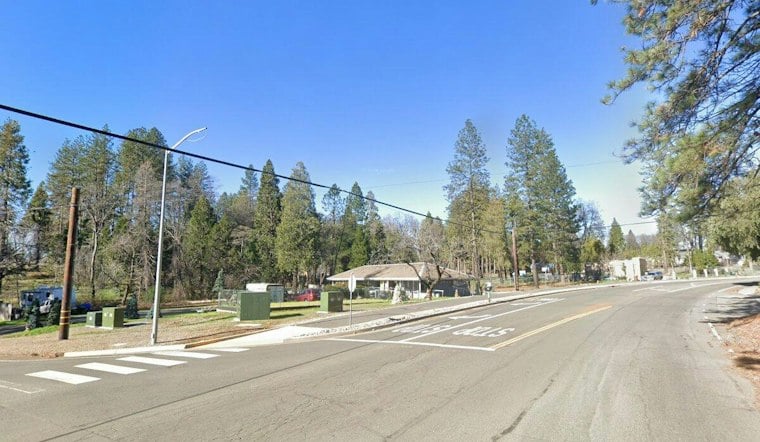
Nowhere has the undergrounding push been more visible than in Paradise, the town leveled by the 2018 Camp Fire. PG&E has told KRCR that it has already undergrounded more than 95% of the town. Crews recently began another stretch of work on Pentz Road between Bille Road and Arrowhead Drive, with construction expected to continue through July 2027 and both daytime and periodic nighttime work planned.
Even so, the station's report notes that the job will never be total. High-voltage transmission lines supplying Paradise's substation will remain above ground regardless of how much of the local distribution network gets buried. PG&E has acknowledged that undergrounding distribution lines is expected to reduce wildfire risk, but the utility also says it will not eliminate every potential reason for power shutoffs.
The Case PG&E Makes for Burying the Grid
PG&E argues the investment pays off in two ways: fewer ignitions and fewer outages. The company says undergrounding permanently reduces wildfire risk on affected lines by 98%, and that those same lines experience 90% fewer outages once buried, according to the utility's own materials on its wildfire safety program.
Butte County isn't an isolated case. PG&E has also been laying underground lines nine miles at a time in the Butte Valley area along Durham Pentz and Messilla Valley Roads, a project the utility's earlier reporting to Action News Now said was expected to cut wildfire risk by 99% compared with overhead lines — a figure that doesn't exactly match the 98% reduction PG&E cites for its broader undergrounding plan elsewhere, though the evidence doesn't clarify whether the two percentages are measuring the same thing.
A Years-Long Build Driven by Fire History
The scale of the work reflects Butte County's place at the center of some of California's worst wildfire history, and PG&E has framed the undergrounding program as a long-term reliability investment rather than a one-time fix. With dozens of miles still forecast for 2026 and 2027, and projects routinely stretching 12 to 24 months before completion, residents along affected corridors should expect construction activity, including occasional nighttime work, to remain part of the landscape for at least another year.





