

























































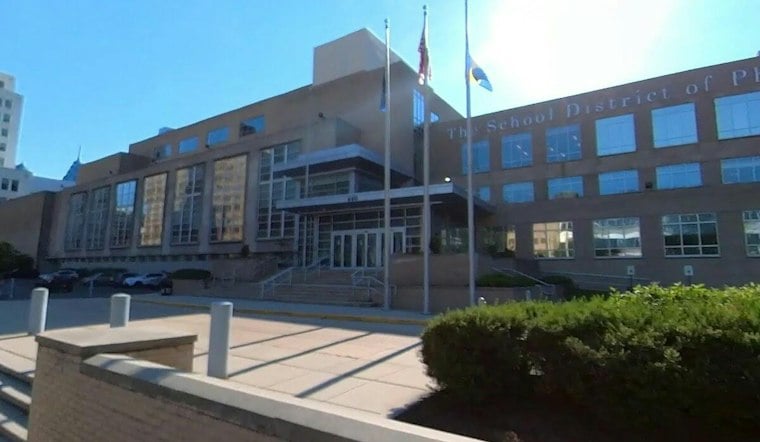
Philadelphia City Council President Kenyatta Johnson has introduced legislation that would stretch the city's existing 7% tax on outdoor advertising to cover nearly every kind of ad aimed at Philadelphians, including newspaper, television and online spots. The move is aimed squarely at plugging a hole in the School District's budget, and Johnson wants it done before the year is out.
Under the proposal, the tax would apply to all forms of advertising intended to be seen, read or heard in Philadelphia, not just the billboards currently covered, according to the Philadelphia Inquirer. Johnson's office estimates the expanded tax could generate at least $95 million a year, with roughly $50 million of that flowing directly to the School District annually.
The District's March 2026 budget update said approximately 340 school-based positions would be reassigned, with impacted employees moving into other vacant positions. Johnson also said the measure was crafted by his staff working alongside the Parker administration, and that it's meant to modernize what he described as an outdated city tax system.
A Deadline Built Into the Calendar
Johnson is pushing to get the bill passed by the end of 2026, but the clock is tight. The legislation would need to clear committee in early December to stay on that track, and as of the Inquirer's report, no hearing had even been scheduled yet. Only two Council sessions remain on the calendar before the year ends, leaving little room for delay.
There's also a political backdrop to the urgency. All 17 City Council seats will be on the ballot next year, meaning this term's lawmakers have a narrowing window to deliver on a funding fix before facing voters.
Months of Scrambling for School Cash
This isn't the first revenue idea Philadelphia has floated this year to shore up school funding. In June, City Council rejected Mayor Cherelle L. Parker's proposed $1-per-ride tax on services like Uber and Lyft, which was intended to generate nearly $50 million annually for the district. After that rejection, Parker and Johnson gave themselves a year to find a new, recurring revenue stream for public schools.
In June, Council and the Parker administration approved a $50 million one-time infusion to the district. Officials also pledged $216 million over four years to stave off job cuts.
Whichever numbers prove accurate, officials have said that money would come out of Philadelphia's own coffers unless lawmakers find another dedicated funding stream — which is exactly the gap Johnson's advertising tax is designed to fill.
Why the District Says It Needs the Money
The stakes for the School District are not abstract. The district has said it faces a $300 million structural deficit tied to historic underfunding and the loss of federal COVID-era funds, according to the School District of Philadelphia. To chip away at that gap, the district said it planned to cut $225 million in operating costs during the 2026–27 school year as part of a broader push to eliminate the deficit by 2029–30, while trying to avoid teacher layoffs and spare budget or staffing cuts at the 18 schools recommended for closure.
Representatives for the Mayor's Office and the School District did not immediately respond to a request for comment on Johnson's new proposal, per the Inquirer's reporting.
A Model Philadelphia Could Be Watching
Philadelphia wouldn't be the first place to try taxing digital advertising for public coffers. Maryland became the first state in the country to enact a digital ad tax in February 2021, according to Brookings, applying progressive rates from 2.5% up to 10% depending on a company's global revenue. Brookings reported the tax brought in roughly $93 million in 2022 and $82.5 million in 2023, with proceeds earmarked for an education fund — numbers in the same ballpark as what Johnson's office is projecting for Philadelphia.
That Maryland law also carved out exemptions for certain digital advertising services owned and operated by broadcast or news media entities, according to an analysis from Proskauer Tax Talks. Whether Philadelphia's proposal would include similar carve-outs, or how its final statutory language might differ, has not been detailed in reporting so far.
For now, the fate of Johnson's plan rests on a compressed legislative calendar and a City Council still searching for the kind of steady, predictable school funding that eluded it after June's rideshare-tax defeat. Whether the advertising tax clears committee in time, and whether it ultimately delivers the dollars Johnson's office is projecting, remains to be seen.





