

























































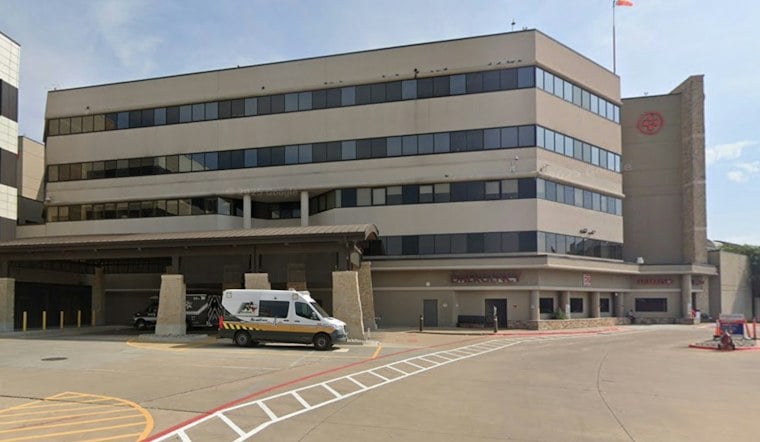
Medical City Plano has rolled out an AI-powered portable MRI system that lets physicians capture brain images right at a patient's bedside, sparing some of the sickest patients the risk and difficulty of being transported to a traditional imaging suite. The hospital says it is the first facility in Dallas-Fort Worth and across the entire HCA Healthcare system to adopt the technology.
Traditional MRI scans typically require moving patients to a specialized imaging department, a process that can be risky or simply impossible for someone in critical condition. According to Local Profile, the new system is built around an ultra-low magnetic field, which allows compatible patient support and monitoring equipment to remain in place during the scan, subject to safety requirements. Brain imaging of this kind gives physicians information that helps guide diagnosis and treatment decisions for serious neurological conditions.
Medical City Plano CEO Ben Coogan framed the technology as a way to reach patients who simply cannot be moved. “When patients are too sick to leave their hospital room, we can now bring the MRI directly to them,” Coogan said, per the same outlet's report. The hospital also notes that, when MRI safety precautions are followed, family members can remain near patients during the scans, and medical teams can perform follow-up brain scans at the bedside when medically appropriate, cutting down on repeated trips to a traditional imaging suite, according to Medical City Healthcare.
An Added Option, Not a Full Replacement
Hospital officials are careful to frame bedside imaging as an additional diagnostic option for qualifying patients who may be difficult to transport, not a replacement for every conventional MRI examination. The system is positioned as a supplement for specific cases rather than a wholesale shift away from standard imaging suites.
That caveat lines up with what researchers have found when studying ultra-low-field portable MRI more broadly. A systematic review covering 11 analyses published between 2020 and 2024, involving 694 patients and 715 examinations plus 40 healthy controls, found the technology detected ischemic stroke in 45 of 50 patients, a 90% rate, as reported by Radiology Business. For intracranial hemorrhage, sensitivity in an initial blinded evaluation was 80%, rising to 92% in a later cohort that used deep-learning image reconstruction and clinical context, though sensitivity for hemorrhage located in the lower part of the brain was lower, at 75%, the outlet reported.
The same review found that around 28% of portable MRI exams were nondiagnostic, largely due to patient motion, underscoring that the bedside approach has real limitations even as it expands access for patients who otherwise could not be imaged at all. The review's authors described ultra-low-field portable MRI as a feasible bedside neuroimaging adjunct with a low but nonzero adverse-event rate, per Radiology Business. None of this research establishes how Medical City Plano's own system has performed with its patients.
Echoes of Similar Rollouts Nationwide
Medical City Plano is not alone in touting this kind of technology. Ascension Sacred Heart in Pensacola introduced what it called the first portable brain MRI machine of its kind in Northwest Florida, with a neurologist there telling WKRG that the scanner's portability means it can go straight into the ICU for patients who cannot travel to an MRI room.
Ohio State Wexner Medical Center has deployed two FDA-approved Hyperfine Swoop portable MRI devices for bedside brain imaging, saying it became one of the first hospitals in the nation, and the only one in Ohio, able to evaluate a stroke patient's brain at their bedside, according to Ohio State Wexner Medical Center. That program says its device delivers brain tissue images within 15 minutes.
Separate research on portable MRI use during ECMO treatment, published by the American Heart Association, offers another window into the technology's potential. In a prospective multicenter study, researchers scanned 50 of 53 eligible patients between August 2022 and November 2023; three were excluded because their heads did not fit the scanner's head coil. Among patients who received both portable MRI and CT within 24 hours of each other, the portable scanner identified all eight ischemic events compared with four detected by CT, according to the American Heart Association's journal, though it detected only one of two hemorrhages in that same group.
Back in Plano, the new MRI system arrives as Medical City Plano pushes ahead with a $108 million expansion project expected to be complete in 2027, a sign the hospital is investing broadly in its capacity even as it adds specialized bedside tools for its most fragile patients.





