

























































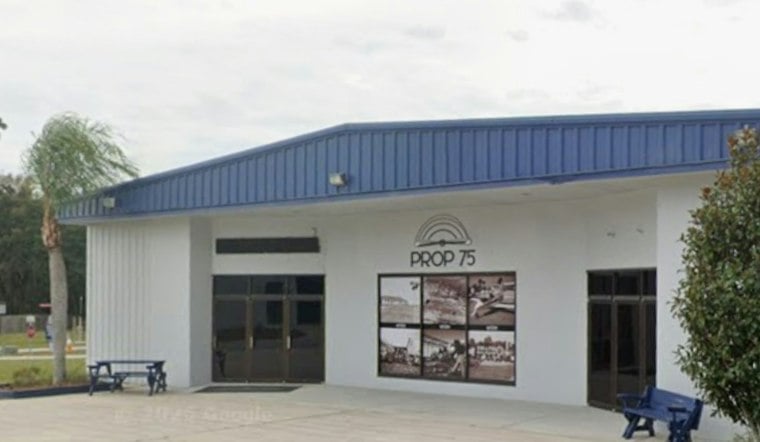
Polk State College brought together students, educators and the directors of three Polk County airports on November 17 for the college's first-ever aerospace symposium, a gathering at PROP 75 in Lakeland built around one question: what does the future of aviation in this region actually look like, and who gets to build it? The answer, according to the airport leaders on hand, involves nine-figure construction costs, a shift to digital air traffic control, and a lot of advice for students about showing up and shaking hands.
The event, titled “The Sky Is Not the Limit,” was reported by staff writer Kortnie Thomson for the Winter Haven Sun, with the subtitle “Polk State Aerospace Symposium Explores Aviation's Future.” Polk State College President Anastasios “Stasi” Kamoutsas opened the symposium and told students that aviation relationships matter and that Polk County itself offers local opportunities worth pursuing, according to the Winter Haven Sun's account. He also emphasized connecting classroom education with real-world experience, a theme that ran through much of the day. H.D. “Jake” Polumbo moderated the symposium discussion, which the newspaper reported explored emerging technology, airport expansion, workforce development and aviation career opportunities.
Three Airport Directors, Three Different Growth Stories
Adam Lunn, director of Lakeland Linder International Airport, laid out some of the biggest numbers of the day. He estimated that a new passenger terminal at the airport would cost approximately $120 million, while a proposed parallel runway would run between $200 million and $250 million, per the Winter Haven Sun's reporting. Lunn's airport has seen growth in passenger service, cargo operations and general aviation, the outlet reported, and that growth is driving demand for significant infrastructure investment. Lakeland Linder's annual regional economic impact is currently estimated at $1.5 billion, and an updated study is expected to show that figure increasing, according to the symposium coverage.
Some of that growth is already visible beyond the symposium room. Amazon Air's Southeast Air Hub at Lakeland Linder recently helped elevate the airport to Florida's No. 3 position for air cargo operations, according to the Central Florida Development Council. That backdrop helps explain why Lunn's infrastructure wish list carries such a heavy price tag.
Troy Heidel, director of Winter Haven Regional Airport, brought a different kind of update. He told the symposium that physical signs of a tower are finally appearing after many years, the Winter Haven Sun reported, as his airport works toward a plan to transition to digital tower operations. Winter Haven Regional plans to begin operating from a mobile control tower by Sun 'n Fun 2027, according to the outlet's reporting. Heidel is himself a graduate of Polk State's aerospace program, and he told students that his military experience combined with his college education prepared him to become an airport director.
Bartow's Digital Tower Points the Way Forward
Jayme Jamison, program coordinator at Bartow Executive Airport, represented the facility furthest along on the digital-tower front. Bartow Executive is pioneering digital air traffic control technology, using cameras and high-resolution monitors to provide real-time aircraft views instead of a traditional staffed tower, the Winter Haven Sun reported. That same digital tower technology is being developed to support remote air traffic control operations at Winter Haven Regional Airport, tying Heidel's and Jamison's airports together on the same technological path.
The hardware is backed by a training pipeline already up and running nearby. Traviss Technical College offers an air traffic control program with simulators installed at Bartow Executive Airport, and the program certifies students as controllers in just 10 months, according to the Central Florida Development Council. Jamison, for her part, emphasized to students the importance of understanding local government, public policy and airport decision-making processes — the less glamorous but necessary skills behind any tower upgrade or runway project.
Advice From the Panel: Mentors, Internships and Showing Up
Beyond the dollar figures and technology roadmaps, much of the symposium centered on how students actually break into the field. Lunn encouraged students to seek out mentors, internships and job-shadowing opportunities, and advised them to surround themselves with supportive people as they build their careers. Panelists collectively stressed that communication, teamwork and adaptability matter just as much as technical knowledge, the Winter Haven Sun reported — a reminder that cockpit skills and control-tower certifications are only part of the job.
Polk State College is working to back up that advice with actual infrastructure of its own, including student internships, workforce training and hands-on learning opportunities. The college is also partnering with the SunTrax Advanced Air Mobility initiative in Auburndale, according to the symposium coverage, linking its aerospace program to the broader push around autonomous systems and advanced mobility testing underway in the county. The Central Florida Development Council notes that SunTrax's expansion and Florida's Advanced Air Mobility program support testing, research and development tied to emerging aviation technologies and autonomous systems — work that could eventually feed directly into the kind of careers the symposium was pitching to students.
A Pipeline Already Producing Results
Polk State's aerospace program has existed since 2013, and it already has at least one direct pathway into the airlines. The college's Republic Airways RJet Cadet Program, open to students who hold an instrument rating, has grown from two members to nine and now has a second student ambassador, according to Polk State College. Benefits of the program include conditional job offers from Republic Airways, giving aerospace students a concrete landing spot after graduation.
The symposium fits into a county-wide aviation ecosystem that includes three regional airports, access to five international airports within 75 miles, and proximity to two Florida spaceports, per the Central Florida Development Council. That infrastructure was on full display earlier this year when SUN 'n FUN marked its 52nd year hosting its fly-in event, drawing more than 200,000 aviation enthusiasts. For the students who sat through panels on digital towers and nine-figure runway budgets, the symposium offered something SUN 'n FUN's crowds don't: a direct line to the people deciding what Polk County's airports look like next.





