

























































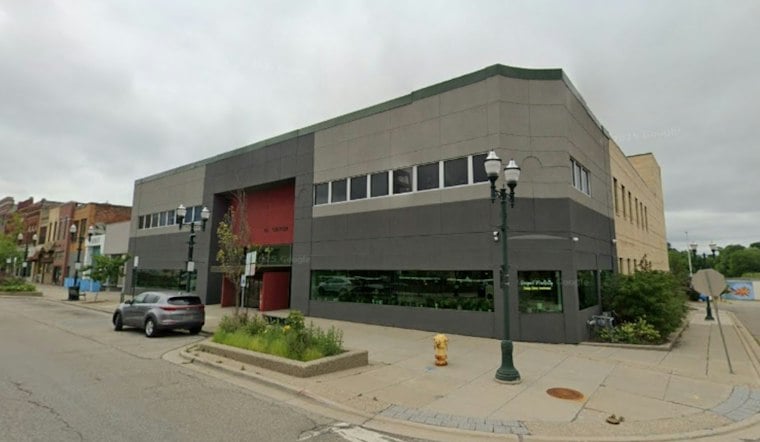
At a gathering in Pontiac last month, Sonia Acosta pointed out six people in the room who had just become United States citizens. They were, she said, eager to vote for the first time — and their enthusiasm captures why organizers across Michigan believe Latino turnout could end up deciding one of the closest U.S. Senate races in the country.
Acosta is the founder, president and chief executive officer of Centro Multicultural La Familia, a Pontiac-based nonprofit that serves residents of Oakland, Macomb, Genesee and Wayne counties, according to MLive. The organization offers translation services in Spanish, Portuguese and English, along with mental health support, small-business development help, citizenship assistance, health literacy programs and vaccination clinics. It also conducts nonpartisan voter registration and election-protection work, part of a broader mission that predates this election cycle by years.
Acosta told the outlet that voting can make a difference, especially now, and that Latino votes may help determine the winner of the 2026 Senate race. That race pits Democrat Abdul El-Sayed against Republican Mike Rogers in a contest widely seen as one of the tightest in the country. Michigan's previous Senate race was decided by fewer than 20,000 votes, a margin small enough that organizers argue a motivated bloc of new voters could tip the outcome.
A Statewide Push to Reach 100,000 Voters
In October, Centro Multicultural La Familia joined the Hispanic Federation and the American Federation of Teachers to canvass Latino voters as part of a statewide effort aimed at contacting 100,000 people. The group also deploys volunteers at select polling locations on Election Day to help registered voters successfully cast their ballots, the same report noted.
Michigan has roughly 250,000 registered Latino voters, and the state has already seen signs of rising engagement. An estimated 177,000 Latino voters cast ballots in a recent Michigan election — a figure the outlet says exceeded the margin in the state's 2024 Senate race by more than nine times. The same reporting found that Latino turnout in Michigan's August 2026 primary rose by more than 10 percent compared with the 2022 midterm primary, though separate post-primary research from MI Poder, cited by Michigan Advance, put that increase at 13% to 18% over 2022 — a reminder that estimates of the surge still vary depending on the source.
Building Trust Beyond Election Day
Roberto Valdez Jr., the Hispanic Federation's Midwest regional director, said civic engagement depends on trust built through consistent contact that extends well beyond Election Day. He said meaningful Latino voter engagement requires sustained listening and attention to community concerns, and he praised Centro Multicultural La Familia's 34-year record of building that trust through direct services. Valdez added that trusted local partners are well positioned to provide Latino voters with beneficial nonpartisan information.
Andrea Olmos, the organization's community center coordinator, said people should not be excluded from voting simply because they lack information or face language barriers — a concern that shapes much of the group's door-to-door and polling-place work. American Federation of Teachers president Randi Weingarten, whose union joined the October canvassing effort, said Latinos can make a difference in upcoming elections.
A Growing Piece of a National Strategy
The Hispanic Federation's year-round initiative, La Voz de Mi Gente, aims to reach two million Latino voters nationwide and works with more than 100 partner organizations across the Midwest. Michigan's Hispanic and Latino population grew by more than 60% between 2010 and 2020, according to Michigan Advance, a shift that helps explain why both parties are investing heavily in outreach to the community this cycle.
Fourteen Latino candidates in Michigan amassed more than 144,000 votes in the August 4 primary, with eight advancing to the general election, the same outlet reported. MI Poder's own census-data and turnout-model estimates found Latino voters favored El-Sayed over Haley Stevens by 61% to 38% in districts where the group operates, though MI Poder has said it has not yet endorsed a candidate in the Senate race and that its process remains underway. More than 2.5 million Michigan voters turned out for the August primary overall, the state's highest midterm-primary turnout since 2022, up from about 2.1 million in 2022.
Republicans Court the Same Voters
Republicans are not ceding the ground. Libre, a center-right group, has allocated seven figures toward campaigning for Rogers and said it has contacted more than 125,000 Michigan voters through phone-banking and door-knocking since January, according to The New Yorker. Rogers lost his 2024 race by fewer than 20,000 votes, the same report noted, underscoring why both parties see Latino turnout as potentially decisive this time around.
National exit polling from Edison Research found Trump won 58% of Michigan's Latino vote compared with 39% for Kamala Harris in 2024, part of a broader national trend that saw Trump backed by 46% of Latino voters nationwide — the largest share for a Republican presidential candidate in modern times, according to Axios. That history adds weight to the current race, which also features Democratic U.S. Representative Haley Stevens's endorsement of Rogers on November 1, along with ongoing debate over Trump's tariffs and an unresolved trade deal between the United States and Canada.
Spending has reflected the stakes: a New York Times tally of FEC filings found about $36 million in spending by Trump-aligned super PACs on Michigan's Senate race. West of Detroit, MI Poder has been running its own parallel effort, reaching voters through door-knocking, phone calls, text messages and local media, according to Fox 17, with organizers there stressing that their advocacy work continues after elections and throughout the year, not just in the final weeks before voters head to the polls.




