

























































The first $20 million of a settlement-funded electrification program is now available to help eligible Porter Ranch-area households replace gas appliances with electric equipment. Single-family homeowners in the affected area are eligible; income-qualified residents can receive up to $31,800 toward the cost of new electric equipment.
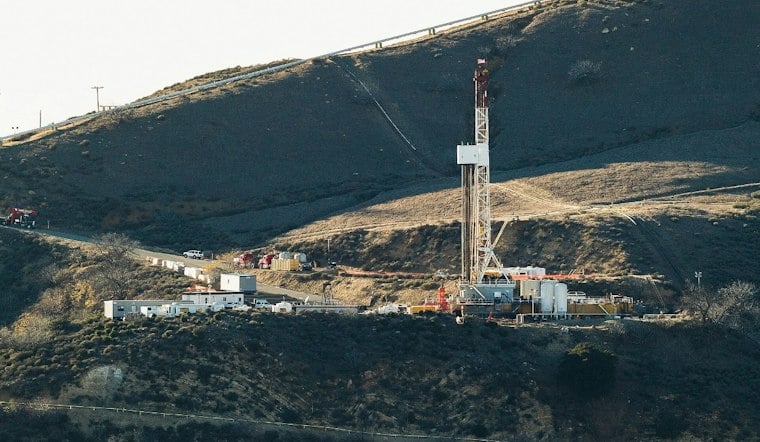
The money comes from the 2015 Aliso Canyon blowout, a 2015 Los Angeles-area gas well failure described by the UCLA Aliso Canyon Disaster Health Research Study as the largest uncontrolled release from a single underground gas storage facility in US history. The well, owned by Southern California Gas Company, sits near the Porter Ranch community in the San Fernando Valley, and the disaster forced thousands of families from their homes, shut down businesses and sent schoolchildren to other schools, according to the same UCLA study. The leak released nearly 100,000 tons of methane and other substances into the atmosphere over more than 100 days, as reported by WRAL/Associated Press, though the National Oceanic and Atmospheric Administration has separately put the figure at over 100,000 tons of methane alone.
A Decade of Symptoms, and a Settlement to Show for It
Carol Kamei, who lived near the Aliso Canyon natural gas facility for 46 years, was among the plaintiffs who sued SoCalGas over the leak, according to the Associated Press. Kamei recalled smelling gas and getting nosebleeds during the ordeal, and said she and her sister moved to Hollywood for three months to get away from it. She later participated in a UCLA health study that found diminished lung capacity, the AP reported.
Kamei hopes to use the incentives to replace her oven with an electric one, the AP reported. The settlement that made this funding possible dates to 2021, when thousands of families reached an agreement worth up to $1.8 billion with SoCalGas and its parent company, Sempra Energy. SoCalGas separately said it expected the agreements to resolve substantially all material civil litigation tied to the leak and that it would record an approximately $1.1 billion after-tax charge, with settlement costs not borne by ratepayers, according to Southern California Gas Company. That first settlement required roughly 97% participation among about 36,000 individual plaintiffs and court approval of how the money would be allocated, the utility said.
How the Money Is Being Divided
Roughly 35,000 plaintiffs were ultimately compensated for personal injury and property damage to their homes, the article notes. SoCalGas also spent more than $1 billion on the blowout itself, with most of that going toward temporarily relocating 8,000 families. The new $40 million electrification program is separate from those direct settlement payments, and a California Public Utilities Commission fact sheet describes a proposed decision to allocate $40 million from the Aliso Canyon Recovery Account, as required by state law AB 157, to augment the TECH Initiative and fund measures meant to enable building electrification in the affected communities.
Income-qualified residents can receive up to $31,800 toward electric installation costs. Multi-property owners will get access to funding later. Program officials say replacing aging gas appliances with efficient electric ones can help create healthier homes, lower energy costs, deliver cooling and create local jobs.
How the funding works—and what oversight establishes
The California Public Utilities Commission says the additional $40 million will benefit Southern California Gas Company customers, with priority for communities near Aliso Canyon. A June 2025 commission decision implements AB 157. The program information described here identifies eligible homeowners and funding limits, but does not specify application steps or reporting measures. For the facility’s current oversight, a 2024 CPUC assessment-methods filing says Aliso Canyon’s storage limit is set at the maximum safety limit established by CalGEM, the state agency responsible for protecting public health, safety and the environment in its oversight of the oil and gas industries. A 2025 CPUC Energy Division assessment says the commission increased the facility’s maximum inventory from 41.16 billion cubic feet to 68.6 billion cubic feet in August 2023; that is an authorized ceiling, not a measure of the gas currently stored.
The Health Case Against Gas Stoves
The push toward electrification is also grounded in research on indoor air quality. Gas stoves, used by an estimated 47 million Americans, release pollutants including nitrogen dioxide linked to asthma and benzene associated with cancer risk, per the AP report. A Stanford study found that gas and propane stoves increase exposure to nitrogen dioxide, a pollutant linked to childhood asthma, with typical use raising annual exposure by an estimated 4 parts per billion, according to Stanford Report.
That same research estimated that pollutants from gas and propane stoves may be responsible for as many as 200,000 current childhood asthma cases, and found that people living in homes smaller than 800 square feet are exposed to twice as much nitrogen dioxide over a year compared with the national average. Electric stoves, by contrast, emit no nitrogen dioxide or benzene, the Stanford researchers found. Electric appliances also address pollution from cooking that contributes to climate change, according to the AP account.
Swapping a Gas Range Without Rewiring a Home
The Associated Press reported that Copper sells electric induction stoves and ovens designed to plug into a regular outlet, avoiding the rewiring often required when switching from gas. The company became involved after energy solutions providers flagged the difficulty households can face when changing cooking appliances, according to the AP.
The program’s first $20 million tranche gives eligible households a financial route to replace gas appliances. The funding is part of a broader $40 million electrification effort, separate from direct settlement payments, as detailed in the original Richmond Register report by Associated Press writer Dorany Pineda.





