

























































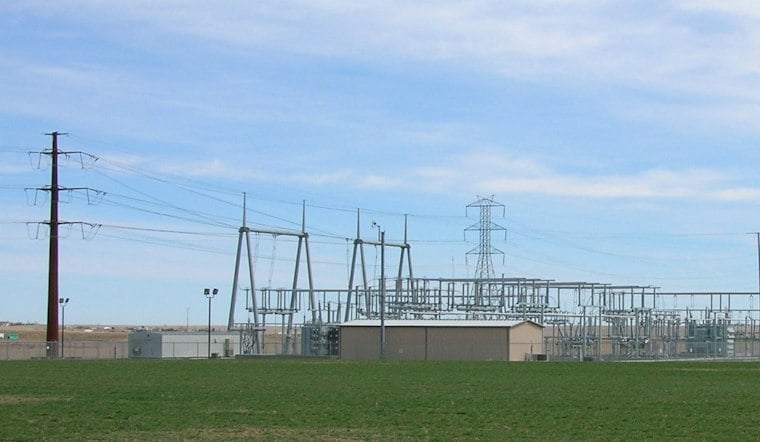
Poudre Valley Rural Electric Association is investing more than $9.1 million in electric infrastructure improvements across Northern Colorado, with federal and state grants covering $5.8 million of the total. The utility outlined four initiatives meant to improve reliability, reduce wildfire risk, and help rural communities keep essential services running during emergencies. The announcement came as a top federal energy official toured Fort Collins to see some of that work up close.
According to North Forty News, the four PVREA projects include 2.2 miles of underground electric distribution line planned for Boulder County, roughly 10 miles of modernized distribution infrastructure in rural Weld County, new advanced analytics and forecasting technology for regional grid planning, and a community-resilience microgrid tied to Livermore. The outlet reported the microgrid as a planned project intended to support critical electricity needs during extended outages. Poudre Valley REA, however, describes the Livermore project differently on its own site, stating that it has already installed the Livermore Microgrid as a local energy system designed to keep essential community facilities powered during major outages.
Whichever stage the project is actually in, the specifics of what it's built to do are detailed by Poudre Valley REA. The co-op says the system combines a 160 kW/62 kWh battery storage unit, a 36 kW solar array, and a 150 kW propane generator, three resources meant to work together to keep critical services running. Together, the co-op says, those resources aim to provide approximately 40 hours of resilience during a power outage.
What the Microgrid Is Meant to Protect
Facilities connected to the Livermore Microgrid include Livermore Elementary School, the Livermore Fire Protection District, a Colorado Department of Transportation facility, and the Livermore Community Well, per the co-op's account. The system can disconnect, or “island,” from the larger electric grid during an outage and keep running those connected sites on local power alone. PVREA frames the project as its second microgrid, following an earlier installation at Red Feather Lakes.
North Forty News reported that PVREA president and CEO Jeff Wadsworth said the projects will provide sustainable benefits to communities for generations. Wadsworth also said federal and state funding helps modernize the system while keeping member costs down and maintaining what he described as Colorado's lowest electric rates.
A Federal Visit to Fort Collins
The grid announcement coincided with a visit by Katie Jereza, assistant secretary for the U.S. Department of Energy's Office of Electricity, who traveled to Fort Collins on Wednesday to meet with utility leaders, first responders, business representatives, and state energy officials, North Forty News reported. While there, Jereza observed a live utility copper replacement demonstration and spoke with PVREA line crews about infrastructure safety and reliability.
Jereza said utilities can identify risks and weaknesses before failures occur and target solutions accordingly, according to the outlet's report. She also said lessons learned in Colorado could help establish a standard for protecting the broader U.S. electric grid, along with the families and businesses that depend on it. The visit wrapped up with a discussion among business leaders, first responders, elected officials, and energy partners focused on affordability, emergency preparedness, and rural infrastructure needs.
Will Toor, executive director of the Colorado Energy Office, said grid hardening, grid monitoring, and microgrids are essential tools for minimizing outages and keeping emergency facilities open, per the same North Forty News account. Northern Colorado's history of destructive wildfires has sharpened attention on that kind of preparedness, and underground power lines, improved monitoring systems, and localized energy resources can help reduce certain risks and limit service disruptions when the broader grid goes down.
Why Rural Grids Face Different Pressures
Rural areas face distinct repair and restoration challenges tied to longer distribution lines, difficult terrain, and severe weather, the North Forty News report noted. That leaves cooperatives like PVREA balancing the need to upgrade aging infrastructure and prepare for environmental changes against the goal of keeping electricity affordable for members. Grant funding, the outlet reported, could help ease some of those modernization costs while improving emergency readiness.
PVREA's spending is a fraction of what's happening elsewhere in the state. Xcel Energy has said it is investing $17.6 billion in Colorado through 2030 to address aging infrastructure, rising electricity demand, and climate risks, according to The Colorado Sun. That same reporting found outages in Xcel's Colorado service territory running above historic averages in 2026, with the average outage lasting 89 minutes during the first six months of the year, compared with a 95-minute annual average recorded from 2015 through 2023. Separately, the Department of Energy plans to award the Colorado Energy Office and Xcel Energy $250 million to strengthen the state's electricity grid and potentially lower power costs, Colorado Public Radio reported.
Other rural cooperatives around Colorado are pursuing similar hardening work. Holy Cross Energy in Glenwood Springs is replacing overhead power lines in Garfield County with underground infrastructure, with 13 miles of new underground line expected to be energized in 2029, according to America's Electric Cooperatives. In Holyoke, Highline Electric Association is installing 28 reclosers to detect faults and manage power flows based on wildfire risk, part of a wider WARN consortium of 35 electric cooperatives across 17 Western and Midwest states that will provide more than $140 million in wildfire-mitigation funding.




