

























































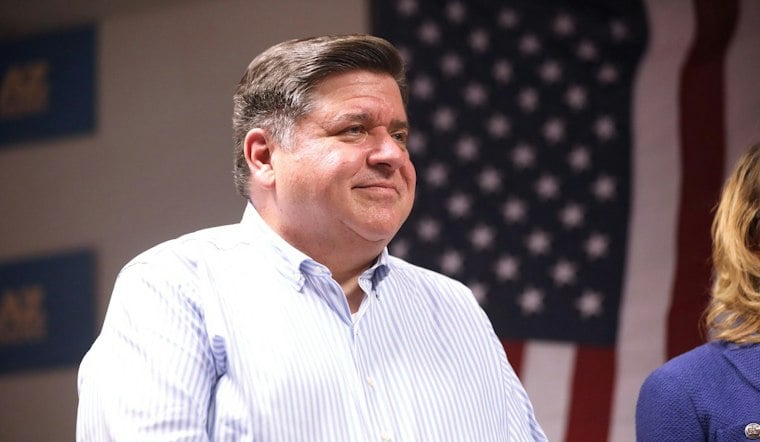
Illinois will not take part in the Trump administration's new federal school voucher program, Gov. JB Pritzker announced Tuesday, arguing the state needs to keep its focus — and its tax dollars — on public education rather than private-school scholarships.
Pritzker's office confirmed in a statement that “Illinois will not opt in to the Trump Administration's Federal Scholarship Tax Credit (FSTC) school voucher program,” according to a release from Governor JB Pritzker's Office. The decision comes as the federal credit is set to launch Jan. 1, 2027, letting individual taxpayers redirect up to $1,700 of their federal tax liability to scholarship-granting organizations that fund private school, homeschooling or other educational expenses, per the Bipartisan Policy Center.
As CBS News reports, the voucher push traces back to an executive order President Donald Trump signed in 2025 prioritizing federal funding for school-choice programs, with the administration formally rolling out the 2027 scholarship plan in October 2026. Pritzker said public schools need investment, not diversion, arguing taxpayer funding should not be redirected toward private education — and should especially not subsidize donations to private schools that could discriminate based on religion, sexual orientation or other characteristics, per the same report.
Why the Governor Says the Math Doesn't Add Up
The Governor's Office said opting in would leave the state with no guaranteed resources for its public-school students, though the figures involved diverge depending on the source: the Governor's Office cited 1.8 million Illinois students attending public schools, while CBS News reported a figure of 1.6 million. Either way, the office argued the program offers no certainty in exchange for the risk, according to the statement from the Governor's Office.
Beyond enrollment, the office estimated the credit could divert somewhere between $2.7 billion and $6.1 billion in federal revenue annually, money it says would otherwise help fund public schooling. The office also noted the program's eligibility extends to households earning up to three times the area median income, undercutting the idea that its primary beneficiaries would be under-resourced families, per the statement from the Governor's Office. State budget documents cited by CBS News show Illinois allocated roughly $10.8 billion for education in fiscal year 2027, with the federal government providing about 9.2% of the state's education funding, according to the Illinois State Board of Education, as reported by CBS News.
No Say Once a State Signs On
Pritzker's office also raised concerns about oversight, saying federal program regulations prohibit states from setting strict guidelines or standards for the scholarship-granting organizations that would distribute the money. Once a state opts in, it loses discretionary power over how those organizations operate, according to the Governor's Office statement.
Pritzker tied the decision to a broader critique of the administration's education record, saying Trump has worked to dismantle the U.S. Department of Education, threatened to withhold public education funds and uprooted protections for vulnerable students, per CBS News. He argued the federal government is working against student success even as Trump touts the voucher initiative as a win, the station reported. Pritzker said he's pushing Democrats — who CBS News reports are expected to sweep into historic congressional majorities in January 2027 — to restore the Department of Education to full capacity, resume federal special-education oversight and take further action, following the budget Republicans and Trump passed in 2025 known as the One Big Beautiful Bill.
Teachers' Union Cheers, Chicago Stays Quiet
The Illinois Education Association, described by CBS News as the state's largest union representing K-12 teachers and educators outside Chicago, praised Pritzker's move. “Public money belongs in public schools, end of story,” IEA President Karl Goeke said, according to MyStateline. The union said more than 60% of Illinois public schools remain underfunded and warned that the administration's voucher plans would drain money from schools, per the same report. Supporters of the federal credit counter that the scholarships would expand educational opportunities for families and students, MyStateline notes. The Chicago Teachers Union had not released a statement on Pritzker's decision as of CBS News' report.
Illinois Has Tried This Before
Illinois isn't new to this debate. The state ran its own tax-credit scholarship program, known as Invest in Kids, from the 2018-19 through 2023-24 school years, according to FutureEd. Critics of Tuesday's decision include the Illinois Policy Institute, which estimated the federal credit could have unlocked more than $2 billion for Illinois students' targeted needs had the state opted in.
Illinois now joins a small group of holdouts. As of October 2026, 31 states had already opted into the Federal Scholarship Tax Credit, per the Bipartisan Policy Center, even though the program's rules had not yet been finalized by the U.S. Department of the Treasury and the IRS, according to K-12 Dive. Minnesota, Oregon and Virginia have also declined to participate in the program's first year, per WUSF, which reported that Florida, by contrast, is moving forward with Step Up For Students and the AAA Scholarship Foundation administering its version of the program. Washington state, California, Michigan and Pennsylvania have likewise stayed out, according to Scripps News, which also reported that the Congressional Joint Committee on Taxation estimates the program will reduce federal revenue by $25.9 billion over 10 years. More than 30 educator union leaders had urged Democratic governors to reject participation nationwide, warning the program could divert public resources to private institutions with fewer accountability and civil-rights protections, Scripps News reported.





