

























































Javier Montañez couldn't read aloud as a kid. He was homeless by the time he started high school, sometimes sleeping under a tree, in unlocked cars, or at a nearby Providence park, and he didn't learn to read until his junior year. Now, after five years leading Rhode Island's largest school district, the man once called “stupid” and “dumb” by people who didn't know he had undiagnosed dyslexia is stepping down as superintendent of Providence Public Schools.
Montañez announced he was leaving the post after leading the district for five years, though according to The 74, the district had not set his official resignation date at the time of that report. It's a strikingly personal ending for a superintendent whose own childhood struggles with literacy became the emotional backbone of his tenure. As Montañez put it in an earlier interview, he was “unable to read until his junior year — a kid who fell through the cracks with undiagnosed dyslexia,” the outlet reported.
A Childhood Spent Surviving, Not Reading
Montañez has described a childhood shaped by survival rather than schoolwork. He developed what he described as an invisible filter that convinced him he would never read aloud again, and he has said plainly that he never got the foundation he needed as a student, noting, “I don't think I ever really got the foundation that I needed.”
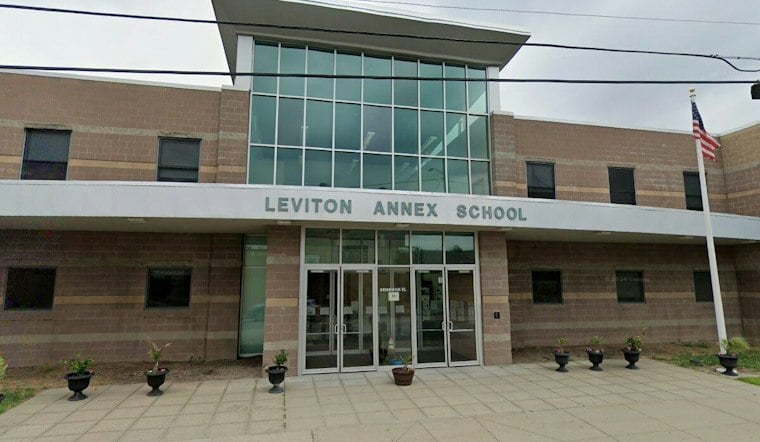
Despite all that, Montañez later earned a GED, a master's degree and a doctorate. He became a teacher in Providence, eventually spending, by The 74's account, more than 30 years as an educator in the district — first as a second and third grade bilingual teacher and later moving up through school leadership. A separate account from the Richmond Times-Dispatch puts that tenure at more than 20 years in the Providence public school system; the two reports differ on the exact span. Montañez also led Leviton Dual Language School for 10 years as its principal before rising further, serving over the years as a bilingual teacher, vice principal, principal, interim superintendent, and eventually permanent superintendent. The 74 reports he became superintendent in 2021, while the Richmond Times-Dispatch describes him as promoted from principal to superintendent in 2021.
A District Once Declared 'In Crisis'
Montañez took the district's helm not long after Rhode Island's education department seized control of Providence Public Schools in 2019, following a report that found the district's schools were in crisis. That report cited struggling leadership, a broken school culture, and what was described as an exceptionally low level of academic instruction, including weak curriculum quality and poor alignment, according to The 74.
Providence is the largest school district in Rhode Island, educating more than 19,400 students. More than a third of them are English language learners, The 74 reports. More than 80% of students qualify for free or reduced-price lunch.
Building a Literacy Turnaround From Scratch
The district's five-year turnaround plan overhauled literacy instruction districtwide. The approach included an Instructional Coherence Model.
Montañez has said high-quality curriculum is needed for students at every achievement level, and that the district must identify struggling students and connect them with the wraparound services they need. He's also pointed to consistent leadership as critical to keeping the district's efforts coherent.
Mixed Results, But Real Movement
The results five years in are genuinely mixed. According to The 74, 12 of Providence's 19 elementary schools now have literacy rates higher than expected based on their poverty levels — including two schools whose third-grade literacy rates beat poverty-based projections, though the reported proficiency figures for those two schools vary sharply across sources, ranging from roughly 41% to 45% in one account to figures as high as 81% to 85% or as low as 51% to 58% in others. The district says third-grade proficiency rates have climbed year over year since 2022, with third graders nearly back to pre-pandemic reading levels and 84% at grade level as of the 2024-25 school year.
Districtwide, however, state testing tells a flatter story. Providence students' English language arts proficiency on the RICAS exam held at 17% in 2026, unchanged from 2019, according to The Boston Globe. Math proficiency did rise, climbing from 12% in 2019 to 17% this year, the newspaper reported. The number of students attending one-star schools fell sharply, from roughly 10,000 before the state intervened to 4,500 now, per the same Globe report.
Graduation Gains and a Shrinking Absenteeism Problem
Other metrics moved more clearly in the district's favor. Providence's four-year graduation rate rose from 73.6% in 2019 to 79.4% in 2024, though it slipped back to 77% for the class of 2025, The 74 reported. Chronic absenteeism has also dropped substantially from its pandemic-era peak of 57.1% in the 2021-22 school year — though sources differ on just how far it has fallen since. The 74 reported the rate fell to 25.3% in the 2025-2026 school year, while Rhode Island Current reported it stood at 29.3% in 2024-25.
Pre-K capacity has also expanded significantly under the district's turnaround effort, growing from 352 available seats in 2019 to 940 seats in the 2025-2026 school year, Rhode Island Current reported. The district has rolled out supports for families too, including a family university offering strategies for parents to support student learning, along with translation services and help navigating food, transportation and other transitions. Providence returned to local control about a year and a half earlier than expected, by the article's account, and Rhode Island Gov. Dan McKee has praised Montañez as a local leader who understands what the district's schools need.
What comes next for Providence Public Schools, and who will eventually succeed Montañez, remains unclear. Montañez's path from a homeless teenager who struggled to read to head of the state's largest school district is a striking personal journey.





