

























































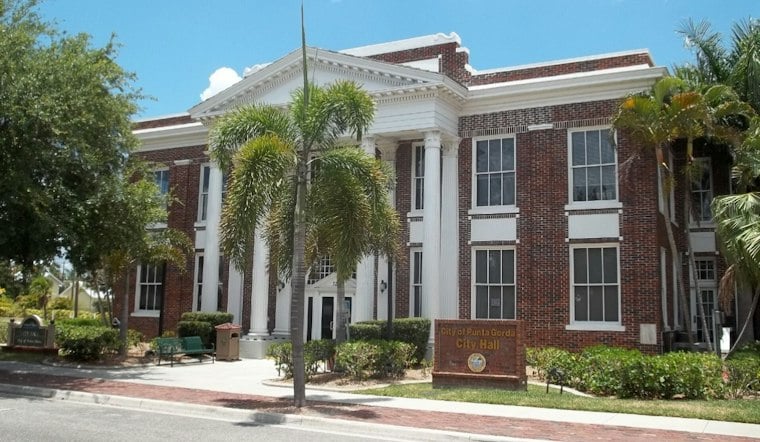
Punta Gorda City Council voted unanimously on Oct. 28 to approve a $95.9 million plan to expand the city's water treatment system, a response to storm surge from the 2024 hurricanes that pushed saltwater into one of the city's main drinking-water sources. The project will add two reverse-osmosis treatment units, boosting capacity by 4 million gallons a day, plus new wells drawing groundwater from the Upper Floridan Aquifer, according to seed facts in the dossier.
The vulnerability traces back to Hurricanes Helene and Milton, which struck in 2024 and sent storm surge over Hendrickson Dam and into the Shell Creek Reservoir, one of Punta Gorda's drinking water sources, per seed facts. The reservoir's treatment plant can clean and filter water but cannot remove salt, so when surge pushed saltwater into the reservoir, the city had to lean more heavily on its reverse-osmosis plant to keep taps running, according to WINK News. Punta Gorda Utilities Director Tom Spencer told WINK News in a written response that the storms created a serious operational challenge, though he said residents continued to have safe water at the tap throughout. Spencer added that the Shell Creek Reservoir remains as vulnerable to storm surge today as it was during the 2024 hurricanes, per the same report.
As reported by Gulfshore Business, increased chloride concentrations in the Shell Creek Reservoir created treatment challenges and reduced the reliability of the city's water supply following the storms. Punta Gorda applied for funding in 2025 through the Florida Department of Environmental Protection's Supplemental Appropriation for Hurricanes Helene and Milton and Hawai'i Wildfires program and qualified for assistance tied to its Shell Creek Water Treatment Plant, the outlet reported.
Why Demand Already Outpaced the City's Water Supply
Even before the storms hit, Punta Gorda's water system was straining under growth. Water demand in the city rose 26% between 2020 and 2023, even as withdrawals from Shell Creek actually declined 12% over the same period, Spencer said, according to seed facts. Peak daily demand hit 9.52 million gallons in 2023, the Gulfshore Business report notes, and that same outlet reported the city's 2035 demand projection of 8.53 million gallons per day was already exceeded back in 2021, with current estimates suggesting demand could reach 12 million gallons per day by 2050.
To bridge the gap in 2023, Punta Gorda supplemented its supply with water from the Peace River Manasota Regional Water Supply Authority, returning that borrowed water once the rainy season restored its own supply, per seed facts. More recently, council asked staff to pursue both a short-term purchase of stored water from the Peace River Regional Water Supply Authority under an existing contract and a longer-term modification to the city's water-use permit, according to CitizenPortal.ai.
City Weighed Cheaper Options, Picked Reverse Osmosis
Council didn't settle on the reverse-osmosis expansion without comparing alternatives. Gulfshore Business reported that purchasing up to 3.3 million gallons per day from the Peace River Manasota Regional Water Supply Authority was estimated to cost $144.2 million, while a combined option mixing water purchases with a reverse-osmosis expansion adding 4 million gallons per day was pegged at $118.8 million. City officials said the chosen reverse-osmosis expansion carries the lowest life-cycle cost over 25 years among the options presented, the outlet's report states.
It's not the first time Shell Creek's treatment plant has been expanded this way. The facility was originally built in 1964, is rated at 10 million gallons per day, and already received an earlier 4-million-gallon-per-day reverse-osmosis addition funded partly through state revolving funds and grants, according to the Water Collaborative Delivery Association.
How the City Plans to Pay for It
Council presented the total estimated project cost of $95.9 million on Oct. 28, with construction itself estimated at approximately $56 million, per seed facts. Spencer said the city has secured $35.1 million in state hurricane recovery funding toward construction, of which roughly $17.6 million will be forgiven, with the remainder provided as a zero-interest loan. The city plans to put revenue from a recently approved one-cent sales tax toward the rest of the construction costs, and Spencer said any outstanding balance will be covered with utility revenues or reserves.
Ratepayers are already feeling the cost. Punta Gorda adopted a water rate adjustment in 2025 to help fund the expansion and other infrastructure work, Spencer said, and Gulfshore Business reported that water and sewer bills are set to rise 12% annually from 2026 through 2029, with a typical customer's bill increasing by about $11.20 a month in 2026. Rate increases are projected to taper to 3% annually beginning in 2030, according to the same report. Other planned infrastructure improvements include additional work at the Shell Creek facility and water meter replacements, per seed facts.
Residents Split Between Relief and Sticker Shock
Local reaction has been mixed. Kevin Gee said future hurricanes are inevitable and argued the investment will benefit future generations, according to seed facts. Geri Gee said communities can become frustrated when population growth outpaces infrastructure. Bob Toth, who has lived in Punta Gorda for seven years, said infrastructure investment is necessary but that city leaders should carefully evaluate its costs.
The expansion timeline includes design, permitting, drilling and testing new wells, equipment manufacturing and construction, with completion expected by the end of 2030, per seed facts. Until then, the city says it will continue relying on its existing reverse-osmosis system, conservation measures and its connection to the regional water authority to keep up with demand.





