

























































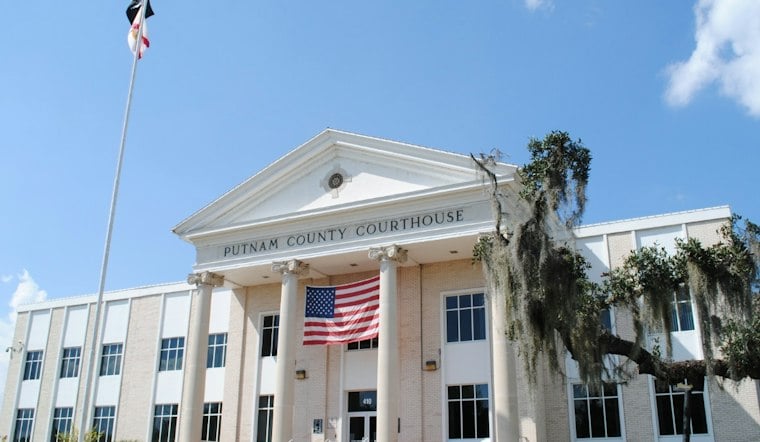
Putnam County commissioners are weighing whether to form a committee to help examine county finances and recommend budget cuts now that Florida voters have approved a constitutional amendment that will shrink local property tax collections starting in 2027. The proposal emerged as county leaders began grappling with what the measure will mean for services like police, public works and sanitation that rely heavily on property tax revenue.
What Amendment 3 Actually Changes
Florida voters approved Amendment 3 on November 3, with the measure winning about 62 percent of the statewide vote, two points above the 60 percent threshold required for passage, according to WUSF. The amendment raises the homestead exemption for city, county and special district property taxes to $150,000 beginning in 2027 and to $250,000 beginning in 2028, though school property taxes are not affected, per Florida TaxWatch. The same organization notes that the amendment includes no new dedicated state funding to replace the local property tax revenue it will erase.
As Palatka Daily News reports, the Putnam County Board of Commissioners considered forming a committee to examine county finances and recommend cuts after the amendment’s passage. Commissioner Larry Harvey said the county must now decide how to adapt and what to cut, and he proposed forming a committee to examine county finances and recommend reductions. Harvey also suggested county leaders travel to the state capitol to meet with legislators and advocate for the county’s needs, the newspaper’s report notes.
Commissioners Split On How To Approach Cuts
Not every commissioner agreed on the committee idea right away. Leota Wilkinson said commissioners and constitutional officers should first review their own budgets and decide where to reduce spending before forming any committee, though she ultimately supported a committee tasked with suggesting cuts, the report states. Wilkinson also said citizens would share their expectations for how the county handles the reductions, and that the county would get through them.
Commissioner Walton Pellicer II struck a more confident tone, saying he believes Putnam County can handle the effects of Amendment 3 through its resilience and that he is confident rural counties like Putnam will continue providing services. Citing unnamed sources, Pellicer said counties like Putnam may be looked after to some degree because they are considered fiscally constrained, and he said he would hold accountable the people who told him such counties would receive support. The county’s local governments rely on property taxes to fund police, public works, sanitation and other services, and the newspaper also notes Putnam County has a separate local fire municipal service taxing unit that funds the county fire department.
Statewide Estimates Vary On The Dollar Impact
No county-specific dollar estimate for Putnam County’s expected losses has been reported, but statewide projections illustrate the scale of what local governments across Florida are bracing for. Florida TaxWatch says state economists predict Amendment 3 will reduce local property tax revenue by nearly $12 billion on a recurring basis, a figure that aligns with Florida’s Revenue Estimating Conference, which the Florida Policy Institute says also put the recurring annual cost at $12 billion. The Florida Legislature’s research arm, however, estimated the measure would reduce annual property-tax revenue by $11.8 billion, according to The Conversation. Florida TaxWatch warns that significant reductions in property tax collections could force local governments to change budgets, service levels, taxes, fees or alternative revenue sources.
Other Florida Counties Are Already Cutting
Elsewhere in the state, local governments have begun acting on those warnings. St. Lucie County Communications Director Erick Gill estimated the county could lose about $63 million in revenue in the first year and roughly $112 million by 2028, per WUSF’s reporting. Martin County Commissioner Blake Capps put that county’s 2027 budget gap at about $42 million, or roughly 12 percent, growing to about $75 million, or about 20 percent, by 2028, the same outlet reported. Clay County has projected a loss of $40 million, or 15 percent, of county revenue in the first year and $70 million, or 30 percent, by 2028, according to Clay Today.
Sheriff’s offices are feeling the squeeze too. Volusia County Sheriff Mike Chitwood said there is nothing in his budget that is off the table as his agency weighs cuts, and he warned that Amendment 3 could bring about major changes to how emergency responders operate statewide, according to WESH. Flagler County Sheriff Rick Staly has already canceled a planned purchase of patrol vehicles, and his office has instituted a hiring freeze and halted additional software purchases unless they are grant-funded, per ClickOrlando. Estimates of the agency’s expected losses differ: WESH reported Staly expects to lose $14 million in 2027 alone, while ClickOrlando reported the sheriff’s office projects losing $15.5 million in its next budget cycle.





