

























































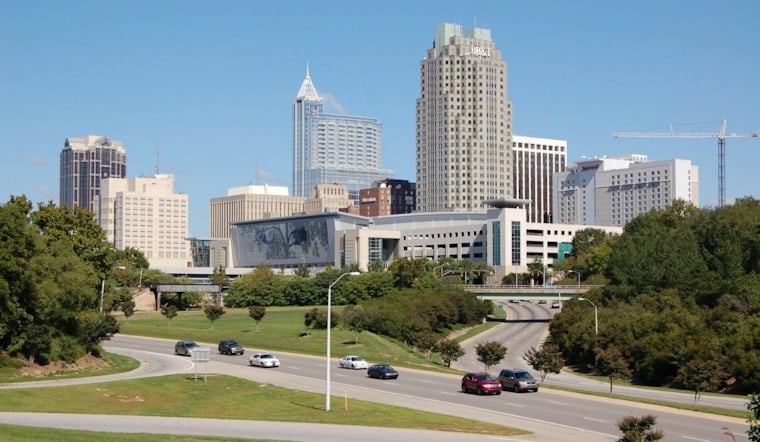
Raleigh spent years telling most of the city that a house meant one family on one lot. After a run of zoning and building-rule changes that began in 2021, a new Pew Charitable Trusts look at those reforms says the city has gotten more of the housing that used to fall between a detached house and a big apartment block, and that local rent growth has cooled relative to the country.
The report landed Monday, as covered by WUNC. It is an association study with a local punch line, not a controlled experiment. Pew research manager Seva Rodnyansky, who leads the housing policy initiative, told WUNC that Raleigh took on several rules that made building harder and more expensive, and opened the door to a wider mix of homes.
What the Code Actually Changed
Before 2021, about two-thirds of Raleigh was zoned only for single-family homes, the News & Observer has reported. That summer, City Council adopted code changes meant to diversify the size and shape of homes that could be built. The 2021 and 2022 changes also let missing-middle housing go up without a rezoning.
The legal text is less slogan than schedule. The Missing Middle 2.0 ordinance, TC-20-21, records an adoption date of May 10, 2022, and an effective date of August 8, 2022. It defines frequent transit as service with 15 minutes or less between vehicles during peak periods. Under the Frequent Transit Development Option, specified residential districts can include detached houses, attached houses, townhouses and apartments.
There is a price tag attached to some of that extra density. On certain Frequent Transit Development Option sites, at least 20 percent of the residential units above 12 must be affordable to households earning no more than 60 percent of area median income, and that restriction has to last at least 30 years. Density, in other words, was not handed out as a blank check.
The reform package also reached duplexes, triplexes, quadplexes, tiny homes and accessory dwelling units, allowed more apartments near transit stops, and in 2021 removed certain density limits in non-single-family districts, WUNC reported. Building rules were rewritten so townhouses and apartment buildings could go in more places, and with more units. Bert Fox, executive director of WakeUp Wake County and a former Raleigh planning staffer, told WUNC the old menu was mostly a large building or a single-family house, often inside an HOA subdivision.
A Pipeline Is Not a Porch Light
The production numbers are real, and they are also still mostly a pipeline. By February, more than 4,700 missing-middle homes in Raleigh were built or planned, with about 40 percent of them in southeast Raleigh, the News & Observer reported. A September 2024 opinion piece in the News & Observer had put 2,300 homes in the development pipeline since the reforms. Different dates, different counts: the later figure is larger, and it still mixes finished homes with ones that exist mainly on paper.
Southeast Raleigh's District C makes the gap concrete. A February 2026 accounting cited by the News & Observer found 567 completed missing-middle units there, against 955 approved and 335 under review, for 1,857 built, approved or in review. The interesting number is the finished one. Approval is not a lease.
Rents Moved. The Credit Is Messier.
A city housing and neighborhood director told the News & Observer the city was seeing rents fall, and that "this is directly because of this missing middle change and the more housing types that are allowed." That is a strong causal sentence from someone inside City Hall. The rent evidence in front of the public is a stack of different measures, not one before-and-after receipt.
From 2017 to 2022, Raleigh rents rose 38 percent while national rents rose 29 percent, Business North Carolina reported from Pew's analysis. From 2021 to 2025, Pew found Raleigh rents up 5 percent, against 10 percent nationally and 9 percent in North Carolina. WUNC, drawing on the newer Pew report, said local rents rose at half the national rate and that inflation-adjusted Raleigh rents fell 15 percent from 2022 to 2025, with older apartments taking the steepest inflation-adjusted drop. Those are not the same statistic wearing three hats.
Metro medians tell yet another version. Axios reported that median rents in the Raleigh metro fell 2.2 percent between February 2025 and February 2026, to an average of $1,361, down from a peak of $1,566 in August 2022. Axios also noted the Triangle had been one of the hottest apartment-construction markets over the previous five years, and that Raleigh permits for new apartments have since fallen below their peaks. A cooler rent number can arrive with a construction boom and still leave the next permit cycle thinner.
Pew's affordability translation is the number a renter can actually use. In 2022, a typical Raleigh apartment was affordable to someone earning 79 percent of area median income; Pew later put that threshold at 65 percent, Business North Carolina reported. Lower is the point. It is not the same thing as saying a college student, or anyone else on a thin paycheck, can now clear a deposit.
The Parking Space Was a Rent Line
Raleigh abolished citywide parking minimums in 2022. Pew's analysis, as reported by Business North Carolina, said dropping those minimums can by itself cut building cost by tens of thousands of dollars. A sample of five apartment projects before the repeal averaged about 2.3 spaces per unit; five projects after averaged about 1.2. WUNC reported that the old minimums pushed those construction costs onto residents, and that ending them gave developers more room to build housing at lower cost. Fewer required stalls do not automatically become cheaper leases. They do stop the city from mandating a garage line item on every unit.
Nationally, Pew has described a U.S. shortage of 4 million to 7 million homes, metro rents up 49 percent from October 2017 to October 2024, and rent increases in the lowest-income quarter of ZIP codes running 10 percentage points ahead of the highest-income quarter from 2017 to 2024. A 10 percent increase in a metro's housing supply from 2017 to 2023 was associated with rents growing 5 percent less through 2024, after other factors were controlled. Eleven large metros that grew supply by at least 10 percent in that window collectively saw large-apartment rents decline from 2023 to 2024. The pattern Pew describes is supply first, older and cheaper units benefiting most. Raleigh's director stated a tighter cause than that research actually proves.
Fox told WUNC she wants her college-student daughter to be able to afford a place in Raleigh, and that the city should leave room for tiny homes, affordable apartments and townhouses, not just the old binary. The 30-year, 60-percent-of-income set-aside on certain transit-area projects is the part of that wish already written into the ordinance. Whether the other 4,700-odd homes, planned and built, finish as places a local paycheck can hold is the part still under construction.





