

























































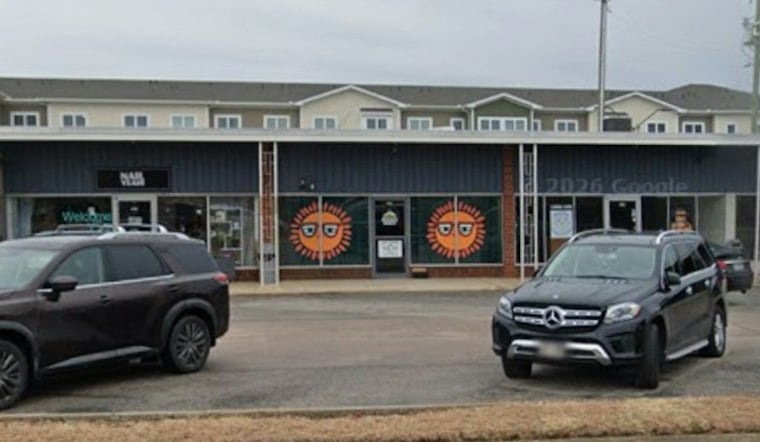
A children's bookstore that started out of the trunk of a 2011 Chevy Cruze is now operating out of a storefront at 430 Hill St. in Southeast Raleigh, across the street from St. Augustine's University, after closing in April 2024 following threats against its founder and her family. Liberation Station, described as North Carolina's first and only Black-owned children's bookstore, reopened to the public in its new location late last year, picking back up a mission that began when founder Victoria Scott-Miller went looking for books that looked like her sons and came up nearly empty-handed.
Scott-Miller has said the idea took shape in 2019, after she visited major bookstore chains with her sons, Langston and Emerson, searching for children's titles with characters who reflected them. According to Essence, she described the hunt bluntly: “we could only find five books that reflected us. Five. After four hours.” That frustration became Liberation Station, which first sold books as pop-ups out of her car trunk before setting up in old churches, empty warehouses and art spaces around the Triangle.
From a Car Trunk to a Storefront
The bookstore's first permanent storefront landed on Fayetteville Street in downtown Raleigh, though accounts differ on exactly when it became permanent. WUNC reports Liberation Station first opened in 2019 in downtown Raleigh on Fayetteville Street, while Essence has reported that the shop “planted ourselves permanently on Fayetteville Street in downtown Raleigh” in June 2023. Either way, the storefront's opening drew a big crowd, and for a while, it seemed like the project Scott-Miller had been building since searching those shelves with her sons had found its footing.
That didn't last. Scott-Miller and her family faced racist threats, online harassment and threatening phone calls in 2023, and she ultimately closed the Fayetteville Street storefront in April 2024. As WRAL reported, she decided to close the store after receiving several threats, less than a year after its grand opening. She has said she did not want her family or community put in harm's way, and in the aftermath she chose rest over immediately rebuilding, including carpooling with her children, Friday pizza nights, and time to plan her next move.
A GoFundMe and a $71,000 Comeback
By July 2025, Scott-Miller had launched a GoFundMe campaign to bring Liberation Station back, contributing $50 of her own money to get it started. The response was immediate: the campaign raised about $15,000 within 24 hours, Scott-Miller has said, and ultimately pulled in more than $70,000 total. Comedian and actress Tabitha Brown emerged as the campaign's largest donor, giving $10,000, according to Essence's reporting on the effort.
The bookstore reopened at the new Hill Street address in December, and GoFundMe presented Scott-Miller with a $71,000 check from community donations during the reopening, per Spectrum News. The outlet reported that Scott-Miller chose to reopen on Dec. 29, the fourth day of Kwanzaa, which she said represents cooperative economics — a detail that threads through the broader story of how the community funded the comeback.
Rooted in a Historic Black Business Corridor
The new location sits on what Scott-Miller calls a “historic Black strip” just across from St. Augustine's University, per WRAL's account of the reopening. The block that now houses Liberation Station also includes a juice bar, a nail salon and a barbershop, all Black-owned businesses, and Scott-Miller has said she sees Black-owned businesses like hers as reclaiming space and contributing to the city's revitalization. The site itself was formerly part of Seawell plantation land, according to the seed reporting from ABC11.
Inside, nearly every book faces outward on the shelves, and the selection is deliberate: every title is written by a Black author and first read by Scott-Miller and her family before it goes up for sale, WUNC reported. The shelves include work from North Carolina authors Tameka Fryer Brown and Derrick Barnes, alongside titles written by Scott-Miller herself. Scott-Miller, who grew up in Memphis, has said she wants visitors to see faces like their own immediately when they walk in, and that the bookstore should feel like a family gathering and feast.
More Than a Bookshop
Liberation Station also functions as a resource hub for the neighborhood. WUNC reported that the store houses a food, diaper and pad, or sanitary napkins, pantry — essentials pantry work that runs alongside the bookselling. The store also holds community events every Saturday and offers programming that includes Braille instruction with Lego kits and cursive writing classes, according to the seed reporting.
Those gatherings have produced some striking moments. At one heirloom portrait party hosted by the store, a boy brought in a leather belt bearing his initials that had belonged to his great-great-grandfather from Mississippi, a detail that captures the kind of intergenerational storytelling Scott-Miller says she's trying to cultivate. North Carolina has seen a modest wave of Black-owned bookstores in recent years — WUNC has reported that at least three have opened in the state since 2021, including Liberation Station — even as writer Troy Johnson has documented a broader national decline in Black-owned independent bookstores.
Scott-Miller, whose sons are now 15 and 10, has said she hopes Liberation Station eventually becomes the kind of neighborhood bookstore kids simply take for granted, rather than something remarkable. She's said she hopes her sons someday carry the store forward themselves, and that she hopes her work ultimately leaves a legacy — one built, for now, on a Hill Street storefront that almost didn't reopen at all.





