

























































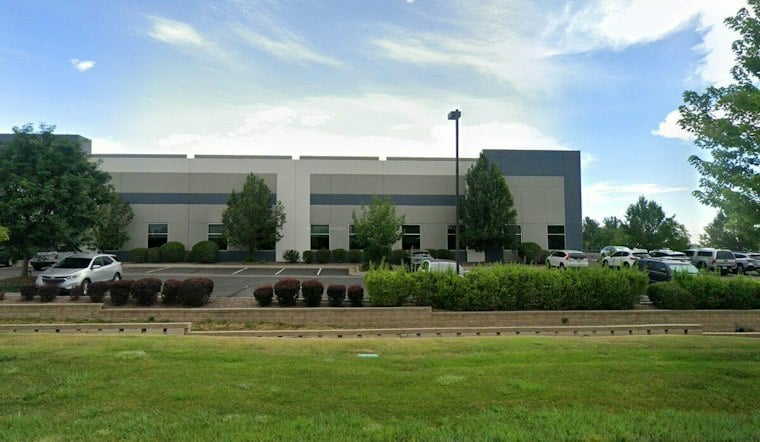
A Colorado company that recovers rare-earth metals from industrial waste is packing up its Broomfield headquarters and relocating to Louisville, where it has signed a 10-year lease on a 32,000-square-foot building that will serve as its new headquarters, laboratory, and pilot processing facility. Tusaar Corp. expects the move to at least triple its laboratory footprint and add a wave of new jobs as it works toward milestones tied to federal grants.
According to BizWest, Tusaar has selected a facility in Louisville's Colorado Technology Center at 1797 Boxelder St. to replace its current operation at 11625 Reed Court in Broomfield. The new space will give Tusaar roughly three times the laboratory space of its existing 6,000-square-foot Broomfield site, which currently runs a pilot demonstration plant separating magnetic rare earths from spent magnet waste. The company has grown quickly this year, increasing its headcount from six employees to 15 in 2026, and it now anticipates adding at least 15 more jobs tied to the Louisville expansion.
Why Tusaar Needs the Extra Room
Founded in 2009 by Gautam Khanna, Tusaar is a 17-year-old rare-earth recovery and separation company that recovers rare earths and other critical materials from domestic industrial waste, then returns the recovered material to customers according to their specifications. The company's own site describes a process that recovers rare earth elements from mine waste while sequestering radioactive contaminants and producing other valuable byproducts, according to Tusaar's about page. The larger Louisville space is meant to support development of separation processes tailored to additional customer feedstocks and material requirements, and the move is also expected to let Tusaar add product lines for other critical minerals that lack a robust domestic supply.
The expanded operations are intended to help the company meet milestones set by its federal Small Business Innovation Research grants and partner projects, the outlet's report notes. Tusaar has projected that its recovery process could fulfill up to 75% of some partners' specific rare-earth needs, framing the approach as a way to capture critical minerals that manufacturers already own but that are otherwise trapped in unusable waste. The company anticipates expanding beyond the Colorado Technology Center into a larger commercial plant by 2028, though that remains a stated expectation rather than a completed step.
A Supply Chain Under Pressure
Rare earths are a group of 17 elemental metals with unique properties found in nearly all advanced technologies, and they are considered critical to the operation of the defense and energy industries. The International Energy Agency estimates that Chinese industry controls 60% of rare-earth mining and 91% of rare-earth refining worldwide, a concentration that has pushed governments and manufacturers to look for alternative domestic sources. The Center for Strategic and International Studies reports that export controls placed in 2025 decreased U.S. rare-earth imports from China by 75%, and by 95% for heavy rare earths such as yttrium, per the same BizWest account.
That squeeze has fueled interest in recycling as a supplemental source of critical minerals. A separate, unrelated project is taking shape nearly a thousand miles away in Missouri, where US Strategic Metals and Ionic Rare Earths are planning to develop rare-earth permanent-magnet recycling capacity at USSM's fully permitted 1,750-acre processing site near Fredericktown, according to Interesting Engineering. That proposal includes $100 million in initial funding, with USSM contributing $95 million toward construction and the remaining $5 million in equity split evenly between the partners, and it calls for an initial 50-50 joint venture to recycle neodymium-iron-boron and samarium-cobalt magnets and magnet scrap.
Interesting Engineering reports that Ionic Rare Earths already operates a demonstration plant in Belfast that processes 30 tonnes of waste magnets and swarf annually, and the company says that facility has produced more than 10 tonnes of separated magnet rare-earth oxides since June 2023. The companies behind the Missouri project intend to reach definitive agreements by the end of 2026, though the joint venture remains conditional on those agreements being finalized. Back in Louisville, Tusaar's lease gives the company a decade-long foothold to pursue its own piece of that same domestic supply chain push, even as the timeline for its move-in and the scale of its eventual commercial plant remain unresolved.





