

























































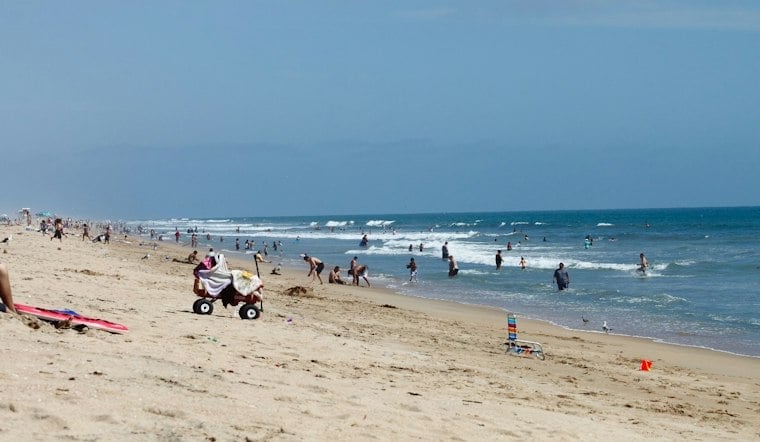
A venomous yellow-bellied sea snake washed ashore at Bolsa Chica State Beach on Sunday, and researchers say it marks only the eighth such sighting ever recorded in Southern California. The find comes as the Natural History Museum of Los Angeles County asks beachgoers up and down the coast to keep an eye out for both stranded sea snakes and rare sea turtle nests through the end of the year.
According to NBC Los Angeles, the snake was spotted at Bolsa Chica on Nov. 22, and museum officials describe it as the eighth yellow-bellied sea snake ever recorded in the region. That count differs from an earlier tally: in a Sept. 16 press release, the museum stated that only six of these sea snakes had ever been collected statewide, and that five of those six washed up during an El Niño year. Both figures come from the same institution but were issued months apart, and neither source reconciles the discrepancy.
Yellow-bellied sea snakes and olive ridley sea turtle nests are both rare along the Southern California coast, and their appearance this year is tied to unusually warm El Niño waters, per the museum. Natural History Museum curator of herpetology Greg Pauly has pointed to a broader pattern behind the sightings. Tropical and subtropical species have been gradually expanding toward the poles as ocean temperatures rise, he told the Beverly Press.
A Turtle Nest Pushes California's Northern Limit
Separately, Pauly and colleagues from the U.S. Fish and Wildlife Service identified an olive ridley sea turtle nest on a Santa Barbara County beach that the museum calls the northernmost and earliest recorded nesting site yet documented in California, the station reports. The nest may have been laid before olive ridley nesting events already documented in Orange County in mid-September, according to the museum's account relayed by NBC Los Angeles.
Examination of the salvaged eggs and embryos found that some were likely within days of hatching. Museum officials said the discovery suggests olive ridley eggs may be able to incubate successfully in California under certain environmental conditions — a notable finding given how far north the nest was located.
Why El Niño Keeps Bringing Strange Visitors
The pattern isn't new. The Natural History Museum's own account traces the first sea snake ever documented in California to a Thanksgiving morning stranding during the 1972-73 El Niño, with three more turning up during the very strong 2015-16 El Niño and two additional ones since. UCLA Newsroom separately documented a yellow-bellied sea snake found by an Oxnard surfer as the first confirmed occurrence of the species in California waters since 1972, with two more later found on Southern California beaches, according to UCLA Newsroom.
More recent strandings have kept the species in local headlines. The Los Angeles Times reported a yellow-bellied sea snake recently washed ashore in Orange County, and California Diver Magazine reported that Surfrider Foundation volunteers found one during a beach cleanup at Bolsa Chica State Beach, though it was already dead and unclear whether it had been alive when it washed up.
What Scientists Want Beachgoers Watching For
The museum said changing currents during El Niño can shift open-water species far beyond their usual ranges, and that yellow-bellied sea snakes are most likely to appear on Southern California beaches from October through January. El Niño-associated warmer ocean waters can draw the snakes into currents that later turn too cold for them during winter, per the museum. Scientists believe olive ridley sea turtles may be following warmer waters as some tropical nesting beaches become too warm.
The museum's Fangsgiving and Hissmas sea snake and sea turtle search encourages beach walkers to look along the high-tide line for eggshell fragments, exposed eggs, or stranded sea snakes. Pauly said the best time to look is at least an hour and a half after high tide. Additional expected windows for sea snake activity are Dec. 4-11 and Dec. 20-27, with high tides through Sunday carrying an increased chance of bringing sea snakes ashore or exposing previously unknown turtle nests, according to the museum.
Safety Guidance for Anyone Who Spots One
Yellow-bellied sea snakes are venomous and should not be handled by anyone who encounters one. The museum has advised beachgoers to photograph the animals from a distance and notify lifeguards rather than approach them. Onshore winds and storm surges can bring the snakes ashore, so officials are also urging people to avoid high tides, watch for sneaker waves, and follow any coastal-flooding closures.
Anyone who finds a nesting sea turtle, or possible eggs exposed by beach erosion, is urged to notify local lifeguards first. If no lifeguard is available, reports can be made to the NOAA California Sea Turtle Stranding Line at 562-506-4315 or through the West Coast Sea Turtle Sightings Submission Form, which accepts sea turtle sighting reports from the public.





