

























































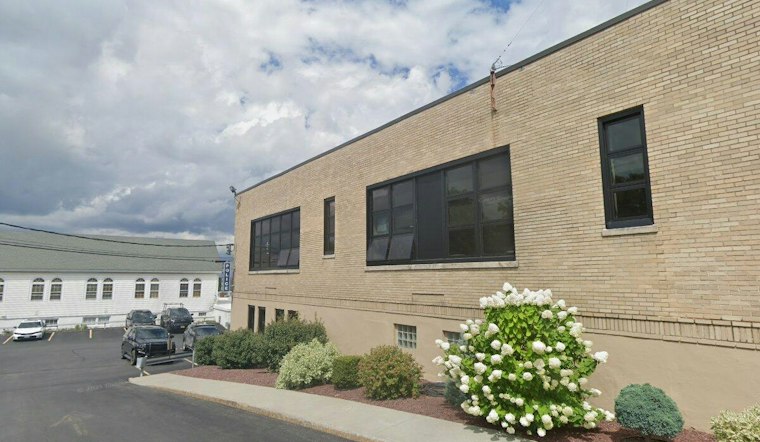
Rensselaer County households could see their sewer bills climb by roughly a third over the next three years under a rate schedule that lawmakers are set to take up Tuesday evening. The proposal would push the rate from $4.20 to $4.96 per 1,000 gallons in 2027, then to $5.26 in 2028 and $5.58 in 2029.
The Rensselaer County Legislature is scheduled to meet at 6 p.m. Tuesday at the County Government Offices in East Greenbush, according to WNYT.com, where the proposed three-year schedule is expected to come up for consideration. The jump from $4.20 to $4.96 per 1,000 gallons in 2027 alone represents about an 18% increase, per the station's reporting, with the later years bringing the cumulative total to roughly 33% by 2029.
The Sewer District says the added revenue is needed to offset rising expenditures and cover district costs, including debt service, the station reports. That rationale echoes language used in a prior rate adjustment: a 2024 county report had described a planned 2025 increase for public metered properties from $3.82 to $4.20 per 1,000 gallons, characterizing it as a 10% hike, according to a Rensselaer County Legislature minority district report.
Why the Increase, Officials Say
That same 2024 report noted the Sewer Board's reasoning at the time: rates had not been raised since 2017, and the board found it necessary to raise them in order to balance the sewer budget. The legislature had held a public hearing on the anticipated 2025 increase at its September 10, 2024 regular meeting, the report shows.
County Executive Steve McLaughlin has said sewer district funds are legally separate from the county's General Fund and cannot be used to support the county budget, per the same WNYT account. The county executive's proposed 2027 budget lists sewer-rent revenue at $11 million, matching the amount budgeted for 2026, the report notes. The county page similarly states that sewer rates are determined by the Sewer District Board of Commissioners, according to Rensselaer County, NY.
Questions From a Local Advocacy Group
Not everyone is satisfied with that explanation. Troy Indivisible has questioned why the rate increase is necessary and how the additional revenue would be used, the station's report notes. Jim Mounteer, the group's events chair, said members want county officials to detail the expenses driving the increase, including equipment purchases, repairs and other projects.
The dispute has grown heated at points: McLaughlin called Troy Indivisible's claims misinformation and demanded a retraction of the group's social media post, per the same account. The underlying question of exactly what costs are pushing the rate higher remains at the center of the disagreement heading into Tuesday's meeting.
A Larger Pattern in the Region
Rensselaer County's sewer rates are not the first in the area to climb sharply. A decade ago, East Greenbush proposed increases across each of its four sewer districts to address the town's sewer debt, according to a 2016 report from the Times Union. Those proposed annual minimum-rate increases ranged from 35% in the Third Avenue and Couse districts to 69% in the General District, with the town citing $15.6 million in sewer bonds and another $6.55 million in sewer debt stemming from a 2009 agreement with the Rensselaer County Sewer District.
Separately, state guidance has long required sewer rent collections to be handled in a specific way. An opinion from the Office of the New York State Comptroller states that sewer rents must be credited to a special fund known as the sewer rent fund, though the available excerpt does not detail further rules on how that fund may be spent.
For now, the proposed 2027-2029 schedule remains before the legislature, with Tuesday's meeting marking the next step in a process that has already drawn pointed questions from local residents about where the money is headed.





