

























































Since January 2025, Repair Cafe RVA has been asking Richmonders to bring in the broken thing they would rather not replace. Jenny Kobayashi Malone founded the volunteer project in 2024. The offer is blunt: free help, on the spot, for objects people already own.
It is not a shop with a lease. Richmond magazine describes a volunteer-run monthly event that pops up instead of operating from a fixed site. Kobayashi Malone told the Richmond Times-Dispatch the point is the object someone already cares about. "We want to help people repair their favorite broken thing," she said.
A Room on North Avenue
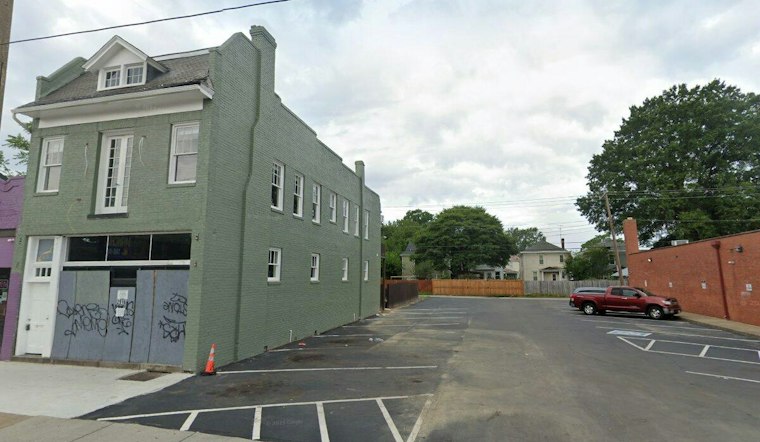
The Central Virginia Waste Management Authority announced the first session for January 19, 2025, from 3 to 6 p.m., at Rag and Bones Bicycle Cooperative, 2916 North Ave. in Brookland Park. Authority board materials later credited that opening event with keeping 270 pounds of material out of the landfill and with repairing more than half the items people carried in.
The café did not stay on North Avenue. Richmond magazine described an August gathering at the main branch of the Richmond Public Library, where around 50 volunteers worked on repairs. A Q&A published this week reported that the group held 10 mending events in its first year and has kept those sessions indoors.
Repair Cafe RVA is Richmond's chapter of a wider repair-café movement that treats fixing as a way to cut waste. Locally, the method is a borrowed room and a volunteer bench. Ten events in a first year sits close to the monthly rhythm the magazine described. The address changes. The job does not.
Half an Hour, or a Diagnosis
VPM reported that the café specializes in smaller repairs finished in 20 to 30 minutes. A bigger job gets a diagnostic rather than a promise it will leave working. The bench covers appliances, electronics, textiles, furniture, jewelry, toys and bikes. The same Q&A credited volunteers with sewing machines and with electrical tools, including a lawnmower and a chainsaw.
At a March 2025 pop-up at Robinson Theater, only three of 76 items were rejected, and the session diverted 259 pounds from the landfill. That is an acceptance figure, not proof that every accepted item went home fixed. The opening event's record was more specific on results: more than half of what people brought was repaired.
Visitors can watch and learn while a repair is underway. The project treats the bench as a lesson as well as a service, and it welcomes voluntary donations even though the repair itself is free. The half-hour window is how a pop-up gets through dozens of objects in an afternoon. It is also why a chainsaw and a piece of jewelry can land on the same list, and why a job that needs parts, time or a garage does not.
Two Afternoons, Then a Larger Claim
The pound counts describe different slices of the work. Board materials put the first gathering at 270 pounds kept out of the landfill. VPM put the Robinson Theater afternoon at 259 pounds. Neither figure is a total for everything the café has done since it started.
Richmond magazine, citing Kobayashi Malone, reported that the cafés had kept about 3,000 pounds of items from landfills since the January 2025 start. VPM set the work inside a circular-economy approach: reuse and recycle materials for as long as possible, produce less waste, and slow the draw on finite resources. A repaired sewing machine stays a sewing machine. It does not become scrap, and it does not have to be bought again. The 3,000-pound figure is her tally for that stretch, not a single afternoon's scale.
Plastic, Cars and Other Limits
Some objects arrive past help. Kobayashi Malone has described a CD player so full of plastic that it could not be repaired, her example of newer products that are difficult or impossible to fix. A volunteer can explain the problem. A screwdriver will not redesign the housing.
Cars are a different limit. Mechanics have offered to help repair them, Kobayashi Malone said in the Q&A published this week, but the logistics and the safety questions are complicated, and Repair Cafe RVA has not expanded into auto work. The sessions have stayed indoors. A lawnmower has already made the list. A car has not.
The Co-op That Lent the First Room
Rag & Bones is a volunteer-run bicycle cooperative in Northside, and it is where the first café set up. Visitors there use shared tools, get mechanic guidance and repair their own bikes. Stand time and tool use cost $5 for 30 minutes. The co-op says it cannot work on e-bikes.
Repair Cafe RVA already helps with bicycles. It plans to keep the repairs it does now and become more of a resource for bike work. That same Q&A described the bike focus as one way bicycle repair could shrink Richmond's carbon footprint from transportation.
The two projects shared 2916 North Ave. for an afternoon and still do not offer the same bargain. At Rag & Bones, you pay $5 and turn the wrench yourself, with a mechanic nearby. At the café, a volunteer takes the broken object, shows how the repair goes and does not charge. One is a tool bench with a half-hour rate. The other is a free repair on whatever small thing fits the afternoon, until the housing will not open or the job is a car.





