

























































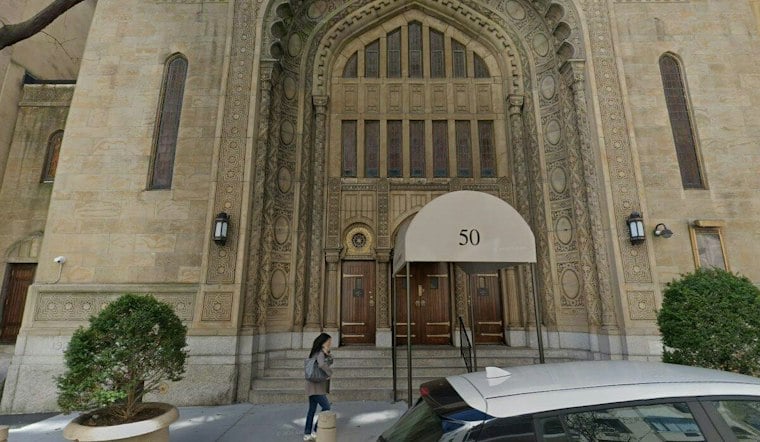
More than a dozen Holocaust survivors lit memorial candles on Manhattan's Upper West Side Sunday night as music rescued from the ashes of a burning German synagogue was performed in New York City for the first time ever. The occasion was the 88th anniversary of Kristallnacht, and the sold-out gathering drew more than 400 attendees and representatives from over 30 partner organizations.
The commemoration was organized by the Yad Vashem USA Foundation as part of its annual Spread the Light program, according to amNewYork. Tamar Major, the foundation's national director, said the night's turnout reflected why Yad Vashem remains, in her words, at the forefront of Holocaust remembrance and education around the world. The evening centered on survivors who took part directly in a memorial candle-lighting ceremony, grounding the program in living testimony rather than history alone.
A Songbook That Outlived the Flames
The musical centerpiece of the evening traced back to a handwritten choir songbook that survived the burning of Mannheim's Klaus Synagogue during the 1938 pogrom. Avraham-Dov (Arthur) Kohn, the synagogue's cantor, had written the sheet music for the orthodox congregation's male choir before the building was destroyed. Brothers Schlomo and Yosef Stein pulled the songbook from the ruins, and the volume was eventually returned to Kohn family relatives in 1988, according to the same report.
Nearly nine decades after it was rescued from the wreckage, selections from that songbook finally reached a New York audience. Cantor Azi Schwartz, senior cantor of Park Avenue Synagogue, performed several pieces drawn from the preserved pages, giving voice to music that had been silent since the night the synagogue fell.
Broadway Voices Join the Program
Broadway star Steven Skybell, accompanied on piano by Zalmen Mlotek, performed “The Sabbath Prayer” from Fiddler on the Roof in Yiddish, followed by “Unter Di Poylishe Grinninke Beymelekh,” a piece dedicated to the memory of the 1.5 million Jewish children murdered in the Holocaust. The pairing of survivor testimony with musical tribute underscored the evening's dual purpose: mourning the dead while insisting their culture endures.
The program also included a keynote conversation between author Dara Horn and Yad Vashem Chairman Dani Dayan, moderated by NBC 4 New York anchor Adam Kuperstein. Horn, a New York Times best-selling author, spoke about the resilience of Jewish communities throughout history, describing Judaism itself as a 3,000-year-old anti-tyrannical movement. Dayan told the audience that accuracy and truth matter, and he emphasized education's role in combating antisemitism, stressing the importance of teaching students about Jewish life before the Holocaust and the rebuilding that followed.
Lights Left Burning Beyond New York
The Upper West Side gathering unfolded against a broader backdrop of remembrance. Yad Vashem's Spread the Light initiative invited institutions to leave their lights on overnight on Nov. 9, 2026, in synagogues and other communal spaces to symbolize what the organization calls the triumph of the Jewish spirit, per Yad Vashem. The initiative describes itself as a grassroots project that expands each year, run on the local scale by communities across Israel and the Diaspora.
Accounts differ on exactly who leads that wider campaign. The Times of Israel reports the project is jointly led by the Religious Kibbutz Movement and Yad Vashem, with coordinator Dalia Yohanan noting that at least 1,000 institutions took part the previous year. A Yad Vashem blog post, by contrast, describes it as an international campaign run by the Religious Kibbutz Movement and the Claims Conference, while a Times of Israel blog traces its origins to 2008 and Rabbi Yechiel Wasserman of the World Zionist Organization, crediting Yohanan together with Yad Vashem as today's leaders. The Times of Israel's news report separately noted that more than 1,000 synagogues and Jewish institutions worldwide were expected to leave their lights burning overnight for the anniversary.
The remembrance reached beyond New York in other forms as well. According to the New York Daily News, survivor George Shefi, then 94, returned to Berlin on the 88th anniversary and shared his memories with police officers there, a reminder that the task of keeping Kristallnacht's history alive is unfolding in cities far beyond the Upper West Side.





