

























































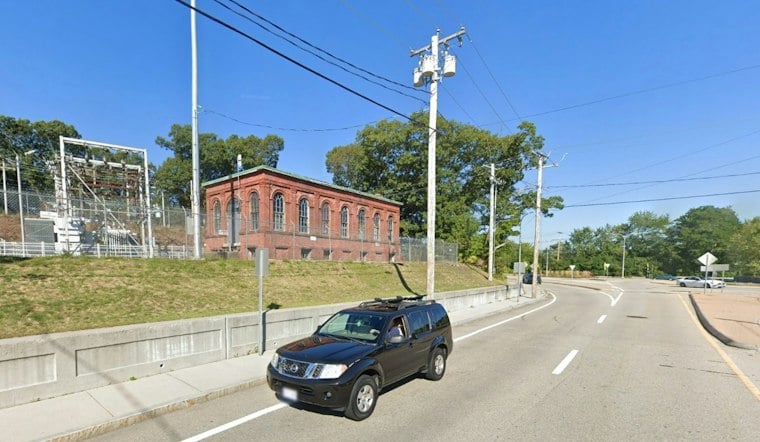
A brick control house that has stood on Post Road since 1930 could soon be torn down, as RI Energy looks to demolish the historic building that once anchored its Apponaug substation. The utility says the structure no longer houses any operational equipment, and the proposal is before Warwick's Historic District Commission.
RI Energy, also known as Narragansett Electric Company, appeared before the commission on Nov. 18 for a demolition pre-application, according to the Warwick Beacon.
The building in question is an early 20th-century brick structure that the Beacon describes as having Italian Renaissance Revival architecture.
The utility behind the proposal was established in Rhode Island in 1926 as United Electric Power Company, then renamed The Narragansett Electric Company in 1927. The state corporate record lists Rhode Island Energy as the company’s current fictitious name, filed in 2022. That places the Apponaug building’s 1930 construction in the company’s early years under the Narragansett name. The company’s Rhode Island corporate record traces those name changes.
The Building No Longer Houses Operational Equipment
RI Energy says the control house no longer houses operational equipment.
As for public access, the company noted the control house sits inside a security fence near active equipment, meaning it can't simply be opened up or repurposed for community use even if commissioners wanted to save it that way.
Notably, a vacant lot next door on Post Road has already picked up architectural cues from the control house at the commission's request, suggesting the board has previously pushed RI Energy toward design choices that nod to the area's historic character. It's a detail that hints at how seriously the commission takes the visual identity of the Apponaug district, even as it weighs the practical realities of aging utility infrastructure.
Three Criteria Will Decide the Building's Fate
Per the Beacon's report, the Historic District Commission considers demolition requests under three criteria spelled out in the city's historic-district ordinance, though the specifics of those criteria weren't detailed in the available account. The commission does evaluate the degree of loss demolition would cause the city, and it also looks at whether property owners can prevent demolition through renovation or sale as alternatives. Demolition requests are considered under those three criteria.
Warwick’s written demolition guidelines set a demanding standard: demolition is strongly discouraged, and applicants must make a good-faith effort to assess rehabilitation, sale, adaptive reuse and relocation. They must also submit architectural and financial information supporting the case that demolition is the only feasible option, along with plans for the site after removal. The guidelines provide for at least two monthly public meetings in the review process. The city’s design guidelines spell out those requirements.
The City of Warwick's own zoning guidance notes that a certificate from the Historic District Commission signals approval of plans for alteration, construction, repair, removal, or demolition within the district, underscoring that RI Energy's path forward runs squarely through that board.
Warwick is one of 18 Rhode Island communities with local historic-district zoning. Such commissions review proposed exterior changes in designated districts, and their decisions bind the local building official; an owner may appeal to the zoning board and then to state court. That structure makes the commission’s review a formal step in the permitting process, not simply an advisory discussion. The state preservation agency’s overview explains how local district review and appeals work.
For now, nothing is settled.




