

























































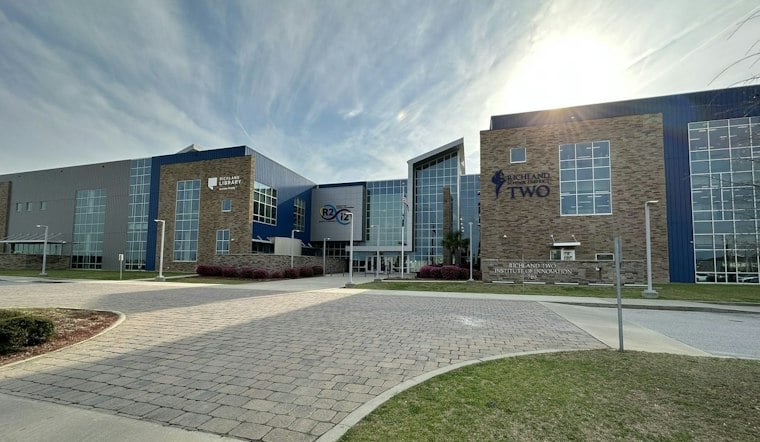
Ten candidates are competing for four districtwide seats on the Richland Two school board in Tuesday's election, with declining enrollment, classroom technology and board infighting dominating the race. The northeast Richland County district, which serves 20 elementary schools, seven middle schools and five high schools, is grappling with projected enrollment losses tied largely to a wave of new charter schools opening nearby.
Ten candidates, including two incumbents, are running for the four seats, according to the Post and Courier. Five candidates — Titania Frazier, James Mobley, Anthony Stovall, Robin Clark and Heather Norris-Jones — were unavailable for comment, the newspaper reported. The race centers on three interlocking issues: shrinking enrollment, disagreements over technology use and tension on the board itself.
Charter Growth Squeezes District Numbers
The enrollment pressure is not abstract. District administrators had projected enrollment would fall by around 1,500 students over the summer, mostly because of new charter schools, with leaders planning for 1,286 of those departures to come from Richland Two's existing student body, per the Post and Courier's education-lab reporting. Two new charter campuses alone could enroll more than 3,000 students combined, the outlet reported separately.
Yet the district's overall trajectory has not been one of simple decline. Richland 2 had more than 28,300 students and had grown by roughly 1,000 students over the preceding decade, according to enrollment data cited in reporting from The State in March. That growth has not stopped the district from planning cuts: Richland Two moved to eliminate 41 jobs, with reductions set to take effect July 1, the Post and Courier reported. The district's own stated strategic priorities include working to right-size district operations based on enrollment and growth and aligning staffing to enrollment and funding, according to Richland Two's board work and impact page.
Candidates Offer Competing Budget Fixes
Candidate Anthony “AJ” Bracy said the district should identify why students are leaving for charter schools and address parent and student needs directly.
Shannon Morgan proposed evidence-based budgets that prioritize student achievement and the needs of students, teachers and families, saying the district can build family confidence through academic results paired with responsible financial stewardship. Nathaniel “Lamont” Canfall Jr. proposed enrollment projections that account for charter openings, housing trends and student population changes, along with spending plans built for different enrollment levels and feedback gathered from families who leave the district.
Incumbent board chair Niki Porter, seeking reelection, proposed evaluating enrollment trends and programs, communicating with families and using resources intentionally. She noted that the board comprises seven individuals with different experiences and perspectives. Vice chair Joe Trapp, also seeking reelection, said last year's budget reflected the expected enrollment decline and was built to avoid major changes at the start of the school year.
AI in the Classroom Divides the Field
Technology use was one of the issues in the race.
Across the region, candidates in Lexington 1 and Lexington-Richland 5 have called for reevaluating one-to-one devices in early grades, according to The State's election overview. The overview also noted that Richland 2 candidates have mostly ruled out tax increases, while Porter said a tax adjustment could become an inevitable necessity.
Board Conflict Still Looms Over the Race
The contest unfolds against a recent history of board turmoil. In April, Richland Two's board voted to censure secretary Monica Elkins-Scott, with Trapp making the censure motion and alleging she had violated the board's conduct policy. The board then voted 6-1 to remove her from leadership positions following the censure, though she remained an elected member with full voting power, according to WIStv's report. Elkins-Scott had earlier cast the lone dissenting vote in a separate 6-1 decision in March approving recommended position eliminations, The State reported.
The district has pointed to academic gains and financial stewardship amid the turbulence. Richland Two's graduation rate rose to 89.3 percent in the 2025-26 school year, a 2.7 percent increase from the prior year that exceeded the South Carolina state average of 87.5 percent, according to a district press release cited by Richland Two. The district also reported that its schools received no unsatisfactory state report-card ratings for the second consecutive year. On the finance side, the district has faced budget pressures and position eliminations.
Voters across the Midlands will weigh in Tuesday, when five Lexington County districts and two Richland County districts are scheduled to elect school board members, per The State's election coverage. For Richland Two, the outcome will determine who steers the district through continued charter competition, technology policy debates and the lingering friction on its board.




