

























































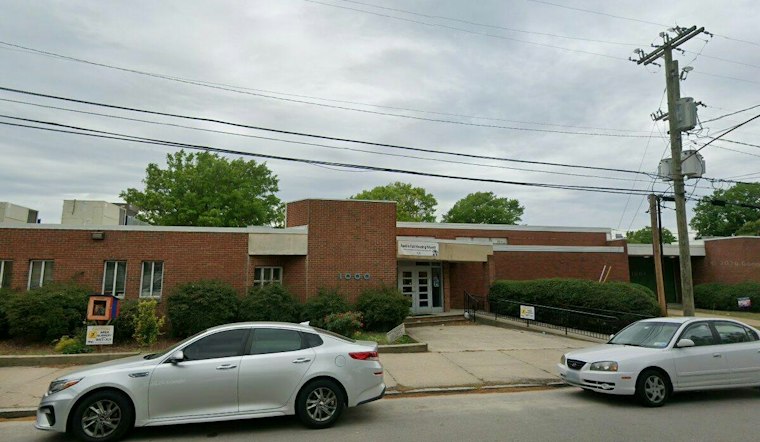
The Richmond Redevelopment and Housing Authority fired one employee and moved another to a different role after two workers were accused of soliciting sexual favors from residents in exchange for maintenance work. CEO Steven Nesmith said the allegations stemmed from 2025.
In an account WRIC published Tuesday, Nesmith said RRHA and its Board of Commissioners have a zero-tolerance policy. A third-party law firm, he said, found that one employee needed to be fired immediately. The other worker was removed from the workplace of the person who made the allegation, a move Nesmith called the right decision. He would not identify the new assignment.
What Nesmith Says The Authority Did
Nesmith said the human resources department "conducted a thorough investigation and interviews with all parties involved," then referred the matter to outside counsel. On that firm's reading of the facts and the law, one employee had to be fired at once. RRHA fired that employee.
He described the second case more narrowly. The facts, he said, did not warrant immediate termination. After the advice came in, the authority changed the employee's role and removed the person from where the person who made the allegation worked. Asked which sector received the worker, Nesmith said it would "be inappropriate to disclose that type of information."
He said the discipline was appropriate given the law and the risk of a lawsuit. One employee is gone. The other is still with RRHA, in an assignment the CEO declined to name.
Two Reasons For Not Firing The Second Employee
On the firing that did not happen, Nesmith was specific. "We were told, if we were to do that, we would be subject to an immediate lawsuit," he told WRIC.
An earlier WRIC report described outside counsel's position differently. Counsel opposed firing the second employee, that account said, because the facts regarding the allegations were "unclear." Those are not the same explanation. One is lawsuit exposure. The other is an unclear record. Nesmith's later remarks included both: the lawsuit warning, and the statement that the second set of facts did not warrant immediate termination.
Virginia's ordinary employment rule does not, by itself, require that pause. The Virginia Department of Labor and Industry describes the state as at-will. An employer may end a job at any time, for any reason or for no reason, and employees generally have no right to challenge a termination. The exceptions are limited, and they include a firing based on race or sex discrimination.
Local-government employers also face a direct statutory bar. Virginia Code § 15.2-1500.1 says a local department, office, board, commission, agency or instrumentality shall not discriminate in employment on listed bases, including sex, race, religion, national origin, pregnancy, disability, sexual orientation and gender identity. The statute sets that prohibition. It does not establish whether either RRHA employee had a viable claim.
A Council Request The Board Is Unlikely To Grant
A Richmond city councilmember asked the RRHA board to initiate a third-party investigation and to assure the public that the complaints had been sent to law enforcement, The Richmonder reported.
Board Chair Eddie Jackson said the authority consulted outside legal counsel and was advised that the agency had followed appropriate policies and procedures. That is an endorsement of the review already used, not a new one. WRIC reported that RRHA will likely not conduct the additional review the councilmember requested.
The two pieces of the request do different work. A fresh investigation would reopen the personnel decisions. An assurance about law enforcement would tell residents whether the complaints left the authority. Jackson's reported comments answer the process question. They are not the public assurance about police that the councilmember asked the board to give.
Similar Allegations, And The Local Sequence
The bargain alleged here, sexual favors in exchange for repairs, has been alleged in public housing before. In 2015, seven women filed a federal lawsuit alleging abuse at Gilmor Homes in Baltimore. CNN reported that maintenance workers were accused of demanding sexual favors for repairs, and that the suit named two maintenance workers, the Housing Authority of Baltimore City and its executive director.
A separate federal case does not involve a housing authority. The Justice Department sued Venkatachalam Mani, a landlord in State College, Pennsylvania, alleging he sexually harassed a female tenant and retaliated after she refused his advances. The defendant is a private landlord, not a public-housing employee.
The National Fair Housing Alliance, in its 2025 trends report, said 11 of 44 cases reported in 2024 involved sexual harassment in housing. That is a count of cases in the report, not a Richmond figure.
The local sequence is smaller. Allegations Nesmith placed in 2025, one firing, and one reassignment he will not locate. A board chair says counsel found the process appropriate. The additional review a councilmember wanted is the step RRHA is reported as unlikely to take.





