

























































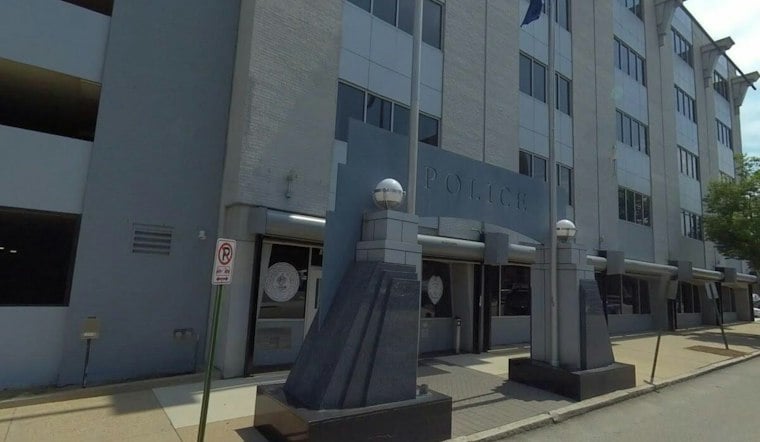
A Richmond judge has thrown out more than 150 grams of fentanyl and cocaine as evidence in a felony drug case, ruling that officers lacked sufficient probable cause to seize a vehicle associated with Robert Harris during a May 2025 encounter in Mosby Court, before obtaining a search warrant. Body-camera footage played in court captured a detective floating the idea of pursuing what he called a “bullsh**” warrant tied to a suspended license, a comment the judge later described as really disturbing.
According to WTVR, multiple Richmond officers were riding through Mosby Court on May 14, 2025, when they noticed Harris parked with two elderly men nearby. Detective Novak described the area as a high-crime neighborhood and open-air drug market, and he testified that a man appeared to make a hand gesture with Harris, though he acknowledged he could not actually see anything exchanged between them. When asked directly whether he saw a hand-to-hand transaction, Novak responded, “maybe, yeah.”
A $10 Bill and a Tow That Took 45 Minutes
Officers did not detain Harris, who walked away after they approached the car, the station reported. Prosecutor Melanie Wright later argued that officers recognized Harris from an earlier investigation that had not resulted in charges and that a $10 bill was inside the vehicle. Roughly 45 minutes after the stop, officers towed the vehicle to a lot rather than searching it on the street, a move Detective Novak said was intended to let them pursue a search warrant. The Richmond Police Department said the tow decision was made jointly with the Commonwealth's Attorney's Office to preserve potential evidence.
Once police obtained the warrant, a search turned up narcotics in a black bag in the back seat. The department said the amount recovered, more than 150 grams of fentanyl and cocaine, led to possession-with-intent-to-distribute charges against Harris. Harris has denied to CBS 6 that the narcotics belonged to him.
The Comment That Became Central to the Case
The body-camera video at the heart of the dispute shows Detective Cooper suggesting officers could fall back on a different justification if needed: “we can always take out a bullsh** driving on a suspended or whatever warrant.” Public defender Liddy Gallagher argued that officers had strategized about how to enter the car and that Cooper's remark implied seeking a warrant unsupported by what they had actually observed. Gallagher also cited moments on the recording where officers expressed uncertainty about the evidence.
Prosecutor Melanie Wright pushed back, telling the court that Cooper's words were not great but were not legally problematic, and that he was referring to a comparatively minor traffic offense. Wright argued officers relied on their training and experience and on the totality of the circumstances, which she said included the suspected hand-to-hand interaction, the $10 bill, Harris's connection to a prior investigation, and the character of the neighborhood. The Richmond Police Department told the station that Cooper's suggestion stemmed from Harris lacking a license while seated in the driver's seat, and that officers briefly considered a misdemeanor driving charge before deciding not to pursue that option.
Judge Finds Officers' Account 'Conclusory'
Judge Tracy Thorne-Begland sided with the defense, finding that police lacked sufficient probable cause to seize the vehicle in the first place and suppressing all evidence recovered from it. The judge called officers' descriptions of the men in the car “conclusory” and said of the body-camera footage simply that the recording speaks for itself. With the evidence suppressed, the case against Harris collapsed, and prosecutors nolle prossed the charges, a move that leaves open the possibility of bringing them again later.
The nolle prosequi ended the prosecution, but it does not by itself erase the arrest or court records. Under Virginia’s current expungement law, a person whose charge was nolle prossed may petition to have those records removed; for a felony, the court generally must find that their continued existence may cause manifest injustice. Virginia’s expungement statute sets out that process, which is separate from the judge’s decision to suppress evidence.
The legal question was not simply whether officers later found drugs, but whether the facts known when they took the car gave them probable cause to believe it contained evidence. Virginia’s search-warrant law requires a magistrate to find probable cause in the facts stated in the warrant affidavit. Virginia’s warrant statute and a Court of Appeals opinion addressing vehicle and firearm seizures provide legal context.
Harris told the station he believed the judge made the right call given the evidence, though he said the outcome was fair even as the process that led to his arrest and jail time was not. He said the case carried a heavy personal cost because he is a single father who was kept away from his children. His mother, Joyce Harris, said she was shocked by what came out in court.
Department Says Internal Review Is Underway
The Richmond Police Department said it respects the judge's ruling after considering the facts and arguments presented, and said an internal investigation into any potential violations in the case is underway. The department said it believes the officers were operating in good faith, while also acknowledging concern about allegations of officer misconduct or policy violations tied to the stop.
Richmond’s written body-camera policy provides a framework for the department’s review: it says division commanders are responsible for ensuring policy violations are investigated and that appropriate training, counseling or discipline is initiated. The policy also addresses reviews of recordings. The city identifies Internal Affairs as the division that handles internal complaint investigations; the department has not said publicly what its inquiry into this case has found.





