

























































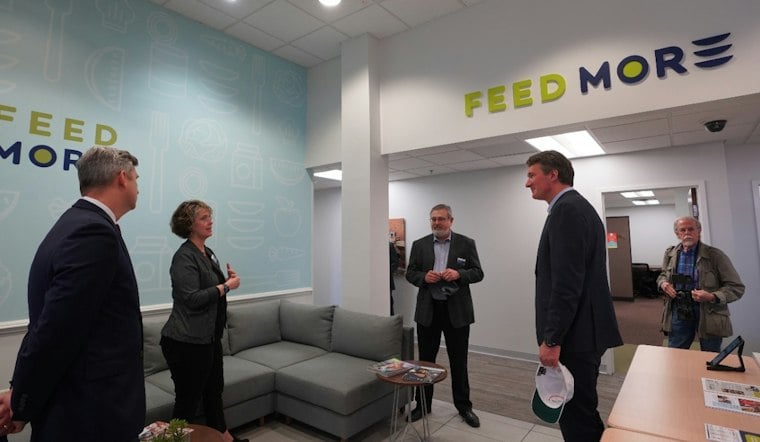
Feed More has cut its Central Virginia Meals on Wheels delivery schedule from five days a week down to just two, with recipients now getting two meals on Tuesday and three on Friday instead of a daily drop-off. The change rolled out in October after the organization said its delivery routes had been strained to capacity, forcing it to pause accepting new clients earlier this year.
The shift, reported by The Richmonder, means recipients still receive the same overall number of meals each week, just bundled into two visits instead of spread across five. Feed More piloted the two-day model in the Tri-Cities area in summer 2026 before expanding it in phases across its entire Central Virginia Meals on Wheels territory, which covers five cities and ten counties. The organization prepares its meals at a facility in Henrico County, where delivery drivers load their vehicles before fanning out across the Richmond region.
Lisa Webb, who oversees the program, said recipients previously got one meal a day and now receive two on Tuesday and three on Friday instead, according to the outlet's reporting. She also said clients have told her they no longer have to choose between buying food and paying for medical care, the report notes.
Volunteer Shortage Traces Back to the Pandemic
Feed More had roughly 1,000 Meals on Wheels delivery volunteers before making the switch, The Richmonder reported, and volunteer availability declined during the COVID-19 pandemic. Feed More has worked to rebuild volunteer availability. Some volunteers shifted over to Feed More's children's backpack and snack-package programs instead of sticking with meal deliveries, per the same account.
To patch gaps when volunteers aren't available, Feed More leans on DoorDash drivers as a backup. Those gig deliveries don't fully replace what a regular volunteer provides, since a DoorDash driver isn't positioned to check in on a recipient's overall well-being the way a Meals on Wheels volunteer would, the article notes. To fill that gap, Feed More also started a friendly-calling program offering wellness checks by phone on the days when meals aren't being delivered.
Brooke Rogers, who coordinates Feed More's volunteers, said longtime volunteers have mixed feelings about the new schedule, feeling sadness over less frequent visits with clients even as they understand why the change was necessary, per the same reporting.
Fewer Cancellations, Less Waste
There's been at least one clear upside: Feed More reported that last-minute recipient cancellations fell by 50% in the early stages of the two-day model, which in turn meant less food went to waste. Meals on Wheels is designed to supplement recipients' nutritional needs rather than serve as their sole food source, and Feed More also runs a food bank that stocks community pantries and soup kitchens, along with a food help line and partnerships with local health care facilities for patients dealing with illnesses tied to inadequate nutrition.
David Waidelich said Feed More needs food, funds and volunteers to keep up, and that growing senior food insecurity will require the organization to stay flexible and adaptable going forward, according to the report. Feed More is also facing increased demand as economic pressures, including tariffs, inflation, rising utility costs and policy changes affecting benefit programs, leave more people struggling financially. The article further points to artificial intelligence and automation making large food companies more efficient, which has had the side effect of reducing the amount of leftover food available for charitable donation.
Despite the scaled-back schedule, Feed More is still delivering a traditional Thanksgiving turkey dinner alongside its regular menu this month, reaching almost 700 recipients.
A Strain Showing Up Nationwide
Richmond's capacity crunch isn't an isolated case. In Wisconsin, more than half of counties report keeping waitlists, being unable to serve their entire county, having to prioritize who gets meals, or cutting back the number of meals delivered, according to wpr.org. Beloit Meals on Wheels there reported hot meal costs up 28% and cold meal costs up 52% this year, and the Wisconsin Aging Advocacy Network says the state's programs will need an additional $7.7 million annually just to keep pace with demand.
Oneida County, Wisconsin, ended Friday deliveries and cut back to four days a week even after receiving extra county tax funding, offering frozen meals to food-insecure participants to help bridge the gap, wpr.org reported. In Illinois, Meals on Wheels for Northern Illinois says more than 10 weekly delivery routes in Will County need volunteer drivers, even as the group delivers more than 900 meals a day and says demand keeps growing, according to shawlocal.com. That organization delivered more than 248,000 meals to Will County clients last year and says its deliveries double as wellness checks for isolated seniors.
The demand pressures extend well beyond any single region. Nationally, 7 million seniors were food insecure in 2022, and Feeding America research cited by spectrumlocalnews.com projects that figure could climb to 9 million by 2050. Roughly 56% of older adults statewide report difficulty accessing affordable, quality food, according to the New York State Office of Aging. In western New York, FeedMore WNY is now asking for more volunteers to keep up, noting that delivery routes there typically take about an hour to complete.





