

























































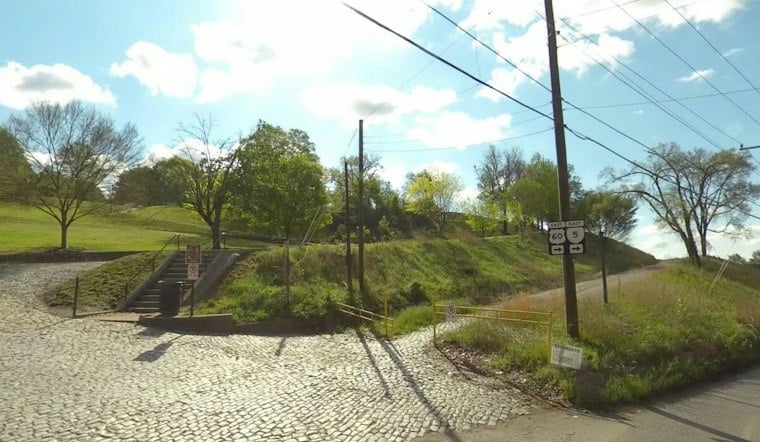
Richmond rolled out shovels and saplings at Libby Hill Park on Saturday, marking a ceremonial tree planting as the city works on its first-ever urban forest master plan. The event doubled as an Arbor Day celebration, drawing dozens of volunteers to one of the city's most scenic overlooks even as newly released numbers show Richmond's tree cover has been shrinking for more than a decade.
The planting was a partnership between the Chesapeake Bay Foundation, Richmond's Department of Public Works Urban Forestry Division and Richmond Parks and Recreation, according to WRIC ABC 8News. Ann Jurczyk of the Chesapeake Bay Foundation told the station, “We've got 66 volunteers,” describing the turnout for the day's planting effort. As WTVR reports, Richmond held the ceremonial planting as the city builds its first-ever urban forest master plan, a document intended to protect existing trees, expand coverage and guide future investment in the city's tree canopy.
A $6 Million Push Behind the Plan
The effort carries real money behind it: the Richmond tree plan is supported by a $6 million grant from the U.S. Department of Agriculture, per WTVR's report. The station notes that the city's Urban Forestry Division is leading the plan's development, with organizers describing a recently completed tree canopy assessment as the foundation for the larger strategy. That assessment, officials said, will help inform the city's tree management strategies for the city, so planting, preservation, maintenance, all that.
One organizer told WTVR the stakes extend well beyond the current planting season, framing the plan as a document that could shape how Richmond manages its urban forestry for the next, who knows, like 50 years maybe. The Southside ReLeaf blog, in its own account of the project, confirms that the plan's development is being led by the City of Richmond's Department of Public Works – Urban Forestry Division working alongside other city departments and an outside consulting team, according to Southside ReLeaf.
Canopy Loss Varies Sharply by Neighborhood
The timing lines up with sobering citywide figures. Richmond's tree canopy declined from 37.4% in 2014 to 36.4% in 2025, a net loss of 387 acres, according to Axios Richmond. That's despite the city still having an estimated 530,000 trees covering nearly 14,000 acres, the outlet reports.
The decline isn't spread evenly. Axios Richmond found that canopy coverage ranges from 56.4% in District 4 — South Richmond, including Forest Hill and Stratford Hills — down to just 12.4% in District 2, which covers Scott's Addition, the Fan and Jackson Ward. That gap matters beyond aesthetics: neighborhoods without tree canopy can be up to 15 degrees hotter than those with tree cover, according to Virginia Mercury.
Conflicting Timelines for the City's 60% Goal
Just how fast Richmond needs to close that gap depends on which source you check. Axios Richmond reports that the city's goal is 60% tree canopy coverage by 2037, with at least 30% coverage required in every neighborhood — a target echoed in a city Office of Sustainability presentation referencing the Richmond 300 plan. But Southside ReLeaf's account of the tree plan describes the city's goal as reaching 60% tree canopy by 2050, a notably later deadline than the figure cited by Axios. The discrepancy between the two published target years has not been resolved in available reporting.
Southside ReLeaf also notes that Richmond's canopy covered about 32% of the city in 2021, with a net loss of 199 acres of tree canopy between 2014 and 2021 — tracking the same downward trend later confirmed in the 2025 assessment. Statewide, the pressure on urban tree cover is drawing legislative attention: a Virginia bill awaiting the governor's action would give localities new authority to require tree planting as part of development plans and set long-term canopy targets based on zoning density, Virginia Mercury reports. That same report notes a Virginia Department of Forestry grant program that had supported projects planting more than 75,000 trees the previous year went unfunded in this year's budget.
How Richmond Is Gathering Public Input
Back in Richmond, organizers say community outreach is central to shaping the plan. WTVR reports that organizers have been visiting neighborhoods across the city to share results from the tree canopy assessment and collect feedback from residents. Residents can find a list of engagement events, learn more and leave feedback through the city's tree plan website, the station notes.
The ceremonial planting at Libby Hill also ties into Richmond's ongoing Tree City USA certification, which requires a public ceremony and proclamation — a requirement the city fulfilled this year through its Arbor Day event, per WTVR's reporting. For residents in the lower-canopy districts highlighted in the Axios Richmond data, the coming months of community meetings may be the clearest chance yet to weigh in before the city's first urban forest master plan takes its final shape.





