

























































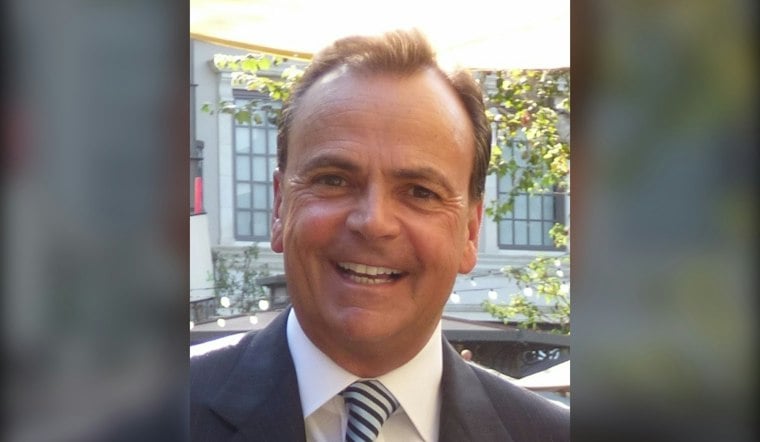
Rick Caruso, the billionaire developer behind The Grove and a former Los Angeles mayoral candidate, came close to packing up and leaving California this year over a proposed billionaire tax, but ultimately chose to stay in Los Angeles and pay it rather than live apart from his family. The decision, made as Proposition 40 gained momentum, involved lawyers, financial advisers and a serious look at relocating to Florida or Texas.
Weighing Miami, Palm Beach and Austin
According to the New York Post, Caruso began exploring relocation options earlier this year, considering Miami, Palm Beach and Coconut Grove in Florida as well as Austin, Texas. The developer, who owns The Grove and the Rosewood Miramar Beach resort, said the tax's potential financial impact warranted considering a move, and he enlisted lawyers and financial advisers to assess how leaving California could affect both his business and his family.
In the end, Caruso and his wife decided they would pay the tax rather than leave their family, telling the Post that he and his wife could not imagine living apart from their family. He warned that billionaire departures more broadly could pull businesses, teams, management, staff and philanthropy out of California, and said that philanthropy could simply move to the cities where departing billionaires relocate instead.
What Proposition 40 Actually Proposed
Proposition 40 would have imposed a one-time 5% tax on the net worth of billionaires who were California residents as of January 1, 2026, with collection beginning in 2027, according to the UC Berkeley Institute of Governmental Studies. Supporters said the measure would fund healthcare, education and food assistance in California with tens of billions of dollars. A California Budget and Policy Center estimate cited by LAist suggested a 5% tax on Caruso's cited $5.9 billion net worth could amount to roughly $295 million, though the outlet noted such examples were illustrative and not necessarily the exact amount that would be collected.
Opponents warned that departures of wealthy taxpayers could end up costing California more than the tax would generate. An October study by Benjamin Jaros and Joshua Rauh identified seven billionaires who had publicly relocated from the state, representing approximately $540 billion in wealth, or nearly 30% of the potential tax base, according to a National Bureau of Economic Research working paper. That same paper noted the list of departing billionaires included Google co-founders Larry Page and Sergey Brin as well as venture capitalist Peter Thiel, and said additional billionaires, including Jan Koum, Reed Hastings and Andy Fang, had been reported as considering relocation without confirming they had moved.
Economists Clash Over the Dollar Figures
Estimates of the tax's fiscal impact varied wildly depending on who crunched the numbers. California billionaires currently pay between $3.3 billion and $5.8 billion annually in state income taxes, and Proposition 40 itself was projected to raise between $28 billion and $36 billion. Economist Gabriel Zucman and co-authors estimated the measure could raise about $100 billion after accounting for avoidance, while economists Joshua Rauh and Benjamin Jaros calculated it would instead cost the state $39 billion, according to NPR. The California Secretary of State's official voter guide separately flagged a possible ongoing decrease of less than $1 billion per year in income-tax revenue from billionaires, framing it as conditional rather than a confirmed loss.
Opponents of the measure spent heavily to defeat it. CalMatters reported that opponents poured $316.7 million into the campaign to stop Proposition 40, which also included support for companion measures Proposition 41 and Proposition 42, the latter of which would kill the billionaire tax outright. Caruso said that Proposition 40 failing while Proposition 42 passed could encourage people to come to and stay in California.
Election Results Still Uncertain
As of Saturday morning, California voters were opposing Proposition 40 by 53.7% to 46.2% support, with roughly 72% of the estimated vote counted. A CalMatters update citing the Associated Press showed the measure trailing with 55.6% against it once 60% of votes were counted. A later Los Angeles Times update said the measure had yet to be decided, trailing by more than 8 percentage points with more than 4 million votes statewide still uncounted.
Caruso is not the only ultra-wealthy Californian to weigh an exit over the tax debate. Tech billionaire Palmer Luckey, cofounder of Oculus VR and Anduril, said he opposed Proposition 40 but was staying put, telling Fortune, “As of right now, though, I'm not running. I am staying.” Others made the opposite choice: Peter Thiel said he was moving to Miami and pointed to California's hostile tax environment as the prime reason, while car loan magnate Don Hankey relocated to Nevada and told news outlets he felt like he “wasn't wanted” anymore, according to POLITICO.
Caruso's Ties to Los Angeles Run Deep
Part of what kept Caruso in California is the scale of what he has built there. His business portfolio includes The Americana at Brand, Palisades Village and The Commons at Calabasas, and he currently has four Southern California construction projects underway, which he said create both construction jobs and operating jobs. He launched Steadfast LA in January 2025 to accelerate rebuilding in Pacific Palisades and Altadena, an effort that has since distributed $525,000 in small-business recovery grants, and he and his wife, Tina, committed $5 million to support the Los Angeles Fire Department.
The couple's philanthropy extends well beyond disaster recovery. Their family foundation, established in 1991, supports education, healthcare and underserved communities, and the Carusos have given $50 million to Pepperdine University's law school, donated more than $50 million to the University of Southern California, and contributed $25 million for hearing-loss research and treatment at USC. They have also given $5 million to launch Operation Progress for disadvantaged students in Watts and more than $3 million to Para Los Niños, which serves vulnerable Los Angeles families.





